Looking Up to Understand Everything
Long before telescopes, satellites, or modern science, ancient people relied on one powerful tool to understand the universe—their eyes. Night after night, they observed the sky, noticing patterns in the movement of the sun, moon, stars, and planets. These observations were not casual; they were systematic, repeated, and deeply meaningful.
The sky became a natural clock, a calendar, and even a map. By studying it, ancient societies began to measure time, predict seasons, and build systems of knowledge that shaped their entire way of life. In many ways, their understanding of the universe was both scientific and spiritual, blending observation with belief.
Cosmologies and Worldviews
Every ancient civilization developed its own cosmology—a way of explaining how the universe was structured. While these models differed, many shared a common idea: the Earth was at the center of everything.
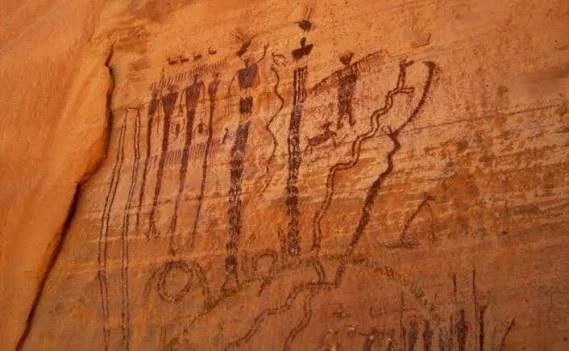
Some cultures imagined the sky as a solid dome covering the Earth, with stars embedded in it like lights. Others believed the universe consisted of multiple layers—heavens above, underworlds below, and the human world in between. These layers were often connected through myth, with gods, spirits, or celestial beings moving between them.
These cosmologies were not random ideas. They were based on real observations of the natural world, interpreted through cultural and religious perspectives. For example, the regular rising and setting of the sun suggested order and stability, while eclipses or comets were often seen as disruptions to that order.
Celestial Alignments and Architecture
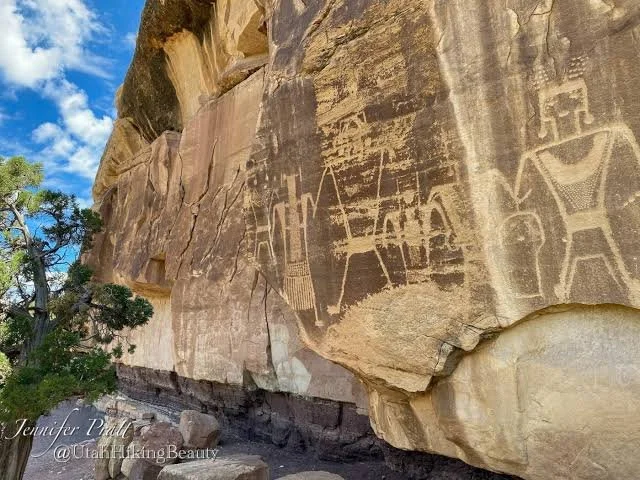
One of the most impressive ways ancient people measured the universe was through architecture. Across the world, structures were built to align with specific celestial events. These alignments were not accidental—they required careful planning, observation, and long-term record-keeping.
Monuments, temples, and stone circles were often positioned to mark the solstices (the longest and shortest days of the year) or equinoxes (when day and night are equal). By observing where the sun rose or set on the horizon, ancient people could track the passage of time with remarkable accuracy.
Some structures also aligned with specific stars or constellations. This suggests that ancient astronomers not only tracked the sun and moon but also understood patterns in the night sky over long periods.
Early Models of the Cosmos
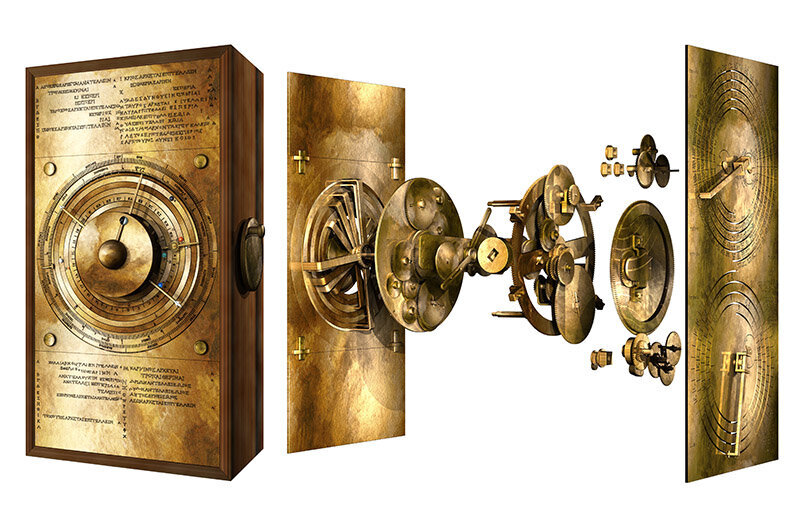
As observations became more detailed, ancient scholars began to create models to explain how the universe worked. They tracked the movements of planets, which appeared to wander differently than stars, and attempted to predict events like eclipses.
While many early models placed Earth at the center (a geocentric view), they still required careful calculation and reasoning. These systems were complex and often surprisingly accurate for their time.
In some cultures, mathematical systems were developed to support these models. This connection between astronomy and mathematics became a foundation for later scientific discoveries.
Measuring Time Through the Sky
Timekeeping and cosmology were closely connected. By observing celestial cycles, ancient people created calendars that guided agriculture, rituals, and daily life.
Solar calendars tracked the sun’s movement, while lunar calendars followed the phases of the moon. Some societies combined both systems, creating complex calendars that required regular adjustments.
These timekeeping systems allowed societies to plan ahead, organize labor, and celebrate important events. They also reinforced the idea that human life was connected to cosmic cycles.
A Universe of Meaning
For ancient people, measuring the universe was not just about understanding physical space—it was about understanding existence itself. The cosmos was seen as a reflection of order, balance, and meaning.
The movements of celestial bodies were often linked to divine will. Observing the sky became a way of connecting with the gods, seeking guidance, or understanding fate.
A Lasting Influence
The work of ancient observers laid the foundation for modern astronomy. Their careful observations, recorded over generations, helped future scholars build more accurate models of the universe.
Even today, we continue to use concepts first developed by ancient civilizations, such as calendars, constellations, and astronomical measurement. Their legacy reminds us that the desire to understand the universe is one of humanity’s oldest and most enduring pursuits.