Monuments That Defy Explanation
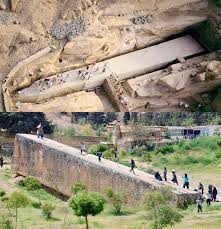
Across continents, massive stone structures stand as silent witnesses to ancient engineering. These megaliths—some weighing dozens or even hundreds of tons—were created long before modern machines. Their size, precision, and durability raise an important question: how did ancient people build them?
Far from being primitive, these builders demonstrated remarkable knowledge, planning, and cooperation. Their achievements challenge modern assumptions about ancient technology.
Transporting Massive Stones
Moving giant stones was one of the greatest challenges. Without engines or cranes, ancient builders relied on creativity and teamwork. Evidence suggests they used wooden rollers, sledges, ropes, and possibly lubricated surfaces like wet sand or mud to reduce friction.
In some cases, stones were transported over long distances, sometimes from quarries located miles away. This required not only physical effort but also careful coordination and planning.
Communities may have worked together in large groups, using synchronized effort to move heavy loads. This level of organization suggests strong leadership and shared purpose.
Shaping and Precision Engineering
Once transported, the stones had to be shaped and fitted together. Ancient artisans used tools made from harder stones or early metals to carve surfaces with surprising accuracy.
Many megalithic structures feature tightly fitted stones without the use of mortar. This precision indicates an advanced understanding of geometry and measurement.
Builders also considered weight distribution and stability, ensuring that structures could withstand time, weather, and natural forces.
Construction Techniques
Various methods may have been used to raise and position stones. Ramps made of earth or wood could have been built to lift stones gradually. Lever systems allowed builders to adjust placement with control.
Some theories suggest the use of counterweights or simple machines. While the exact methods may differ by region, it is clear that ancient builders were skilled problem-solvers.
Purpose and Symbolism
Megaliths were not just technical achievements—they held deep cultural and spiritual meaning. Many were used as burial sites, ceremonial spaces, or markers of important events.
Some structures align with celestial bodies, suggesting a connection to astronomy and timekeeping. Others may have served as symbols of power, unity, or identity within a community.
Social Organization and Cooperation
The construction of megaliths required large groups of people working together. This implies organized societies with leadership, planning, and shared goals.
Building such structures may have strengthened social bonds, reinforcing a sense of community and purpose.
A Lasting Mystery and Inspiration
Despite ongoing research, many details about megalith construction remain unknown. However, what is clear is that ancient builders possessed remarkable ingenuity.
These structures continue to inspire awe, reminding us that human creativity and determination have always pushed the limits of what seems possible.