The strange burial belonged to a middle aged man who lived between 2050 and 1750 B.C. and contained an unexpected vessel whose contents have left boffins baffled

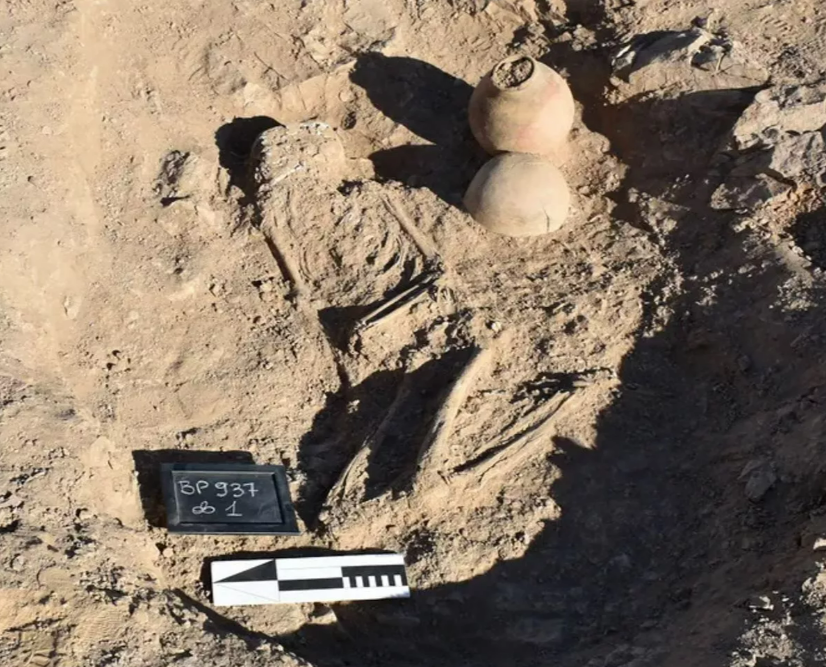
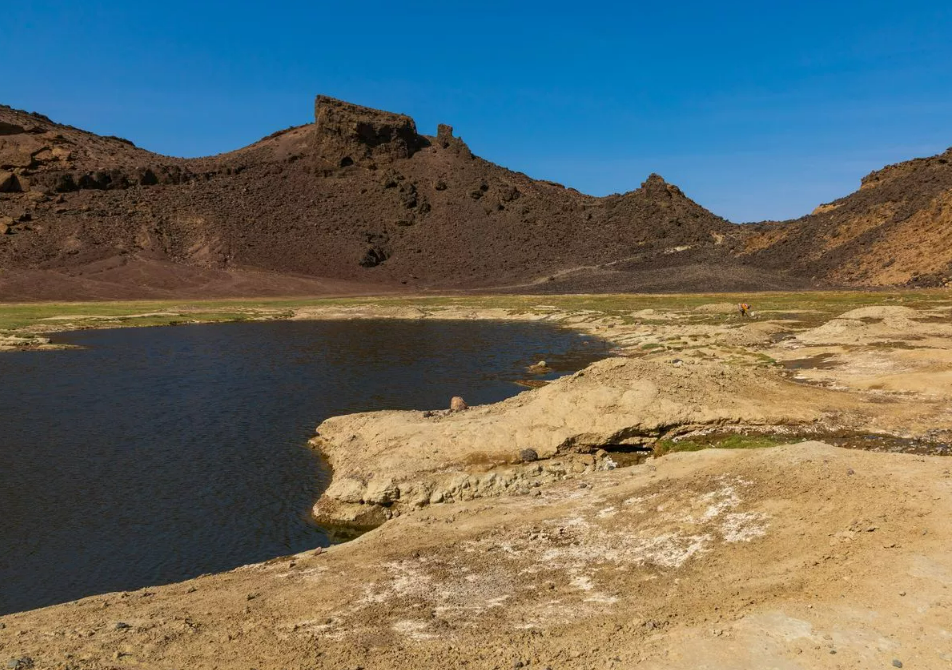
A solitary grave discovered in Sudan is offering new insights into early civilizations, revealing the first evidence of an unknown funeral ritual that took place nearly 4,000 years ago.
The burial, uncovered during a 2018 archaeological survey in the Bayuda Desert of northeast Sudan, belonged to a middle-aged man who lived between 2050 and 1750 B.C., during the Kingdom of Kerma, an early Nubian civilization neighboring ancient Egypt.
While the grave itself appeared modest, it contained a ceramic vessel with surprising contents: charred remains of plants, wood, animal bones, insects, and coprolites. Researchers believe these fragments were remnants of a funeral feast deposited during the burial.
The grave, described in a study published November 13 in Azania, consisted of a simple oval mound containing the skeleton, two ceramic vessels behind his head, and 82 blue-glazed disc beads around his neck. These items were typical for the region, with the beads and vessels being common burial goods.
However, one vessel stood out. Its contents acacia wood, legumes (likely lentils and beans), cereal grains, weevils, and animal bonessuggest remnants of food consumed during a funeral feast, some of which were charred, possibly in association with the ritual. The vessel itself was not burned, indicating that these materials were deliberately deposited rather than incinerated in place.
The charred plant remains also revealed that the environment around the burial site was once a more humid savanna, contrasting with the modern desert landscape. The second ceramic vessel in the grave was found upside down and empty.
This burial represents the first evidence from the Kingdom of Kerma of such a ritual, suggesting that even modest graves can provide valuable insights into past human practices, environments, and climate. Researchers note that the absence of similar finds may reflect complex cultural exchanges across ancient Africa, highlighting the need for further study to understand how goods, beliefs, and practices moved across the region—potentially reshaping aspects of human history.