Introduction
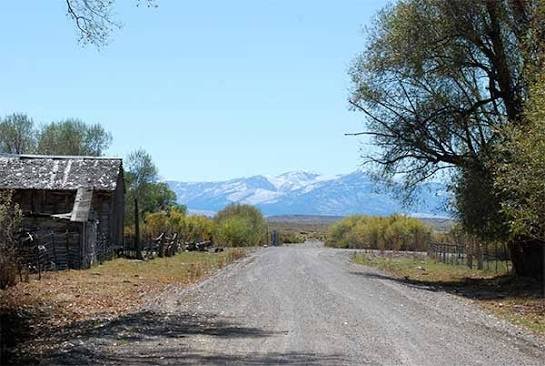
Ibapah lies in western Utah near the Deep Creek Mountains and the Nevada border. The community occupies a landscape with a long Indigenous history and is strongly associated with Goshute people.
Although the title uses the term "Western Shoshone," the historical identity of the community must be handled carefully because Indigenous territorial, linguistic, and political boundaries do not always correspond neatly to modern state or county lines.
Ibapah is especially important as a place where Indigenous continuity can be studied alongside the transportation, ranching, and settlement history of western Utah.
Indigenous Geography
The Great Basin was home to numerous Indigenous communities whose economies depended upon detailed knowledge of an arid environment.
The region's peoples hunted, gathered, traveled seasonally, traded, and managed relationships with springs and other water sources.
Rather than being an empty desert, the Great Basin was a culturally organized landscape.
The Deep Creek Region
The Deep Creek Mountains provided water, elevation, plants, wildlife, and shelter.
Communities could move between ecological zones according to seasonal availability.
This flexibility was crucial in an environment where rainfall was unpredictable.
European-American Settlement
During the nineteenth century, ranchers, miners, travelers, and transportation companies entered the region.
New settlement patterns introduced fences, private property claims, agricultural fields, livestock, and roads.
These changes affected Indigenous access to traditional resources.
Deep Creek Station
The nearby Deep Creek transportation station became part of the Pony Express and Overland Stage network.
This increased the strategic importance of the region.
Transportation corridors encouraged additional settlement.
Ibapah as a Community
Ibapah survived beyond the temporary transportation era.
This is historically important.
Many western transportation settlements disappeared when railroads and highways replaced earlier routes.
Indigenous communities, however, cannot be understood simply as transportation settlements.
Their histories extend across much longer periods.
Cultural Continuity
Modern Indigenous communities preserve language, traditions, family relationships, religious practices, and cultural knowledge.
Historical interpretation should therefore avoid presenting Indigenous communities as remnants of a vanished past.
The existence of Ibapah demonstrates continuity through enormous economic and political changes.
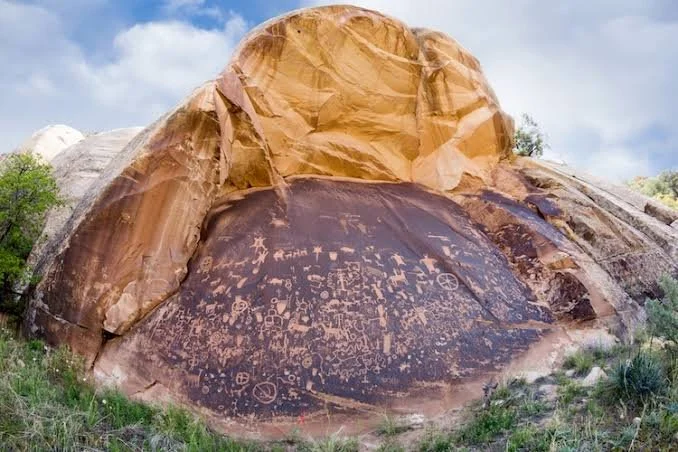
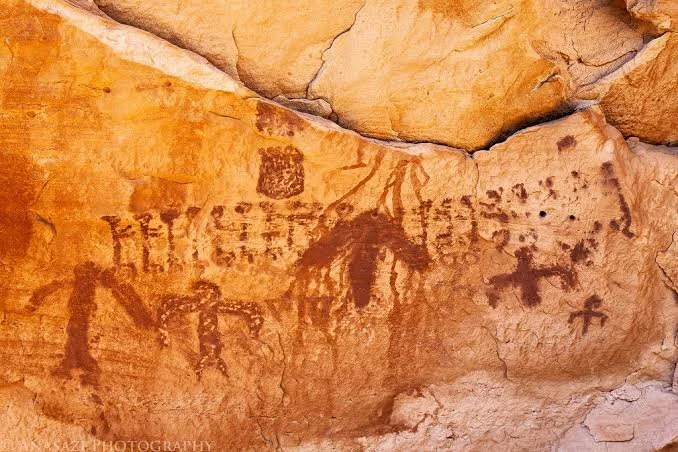
Archaeological Evidence
Archaeological research in the Great Basin has documented long sequences of human occupation.
Stone tools, food remains, hearths, shelter sites, and other evidence reveal adaptations extending thousands of years.
The modern community belongs to this much larger cultural landscape.
Water
Water remains one of the central themes of western Utah history.
Springs and streams determined settlement patterns.
Deep Creek supported both Indigenous lifeways and later agricultural and transportation enterprises.
This continuity illustrates how the same environmental resources can support very different economic systems over time.
Transportation and Change
The arrival of stage routes, telegraph lines, railroads, and highways transformed the region.
Each new technology altered distances and accessibility.
Yet none completely replaced the importance of local environmental knowledge.
Conclusion
Ibapah is significant because it represents Indigenous continuity within a landscape dramatically transformed by nineteenth- and twentieth-century transportation.
Its history connects Goshute and neighboring Great Basin traditions with ranching, stage routes, and modern settlement.
Rather than viewing Indigenous history as something confined to the distant past, Ibapah demonstrates that Indigenous communities remain active participants in the cultural landscape of the American West.