Playful Mosaic Discovered in the Ancient City of Syedra
A Remarkable Find on Türkiye’s Mediterranean Coast
Archaeologists excavating the ancient city of Syedra have uncovered a beautifully preserved mosaic floor dating back roughly 1,500 years. The discovery was made near Alanya, along Türkiye’s Mediterranean coastline.
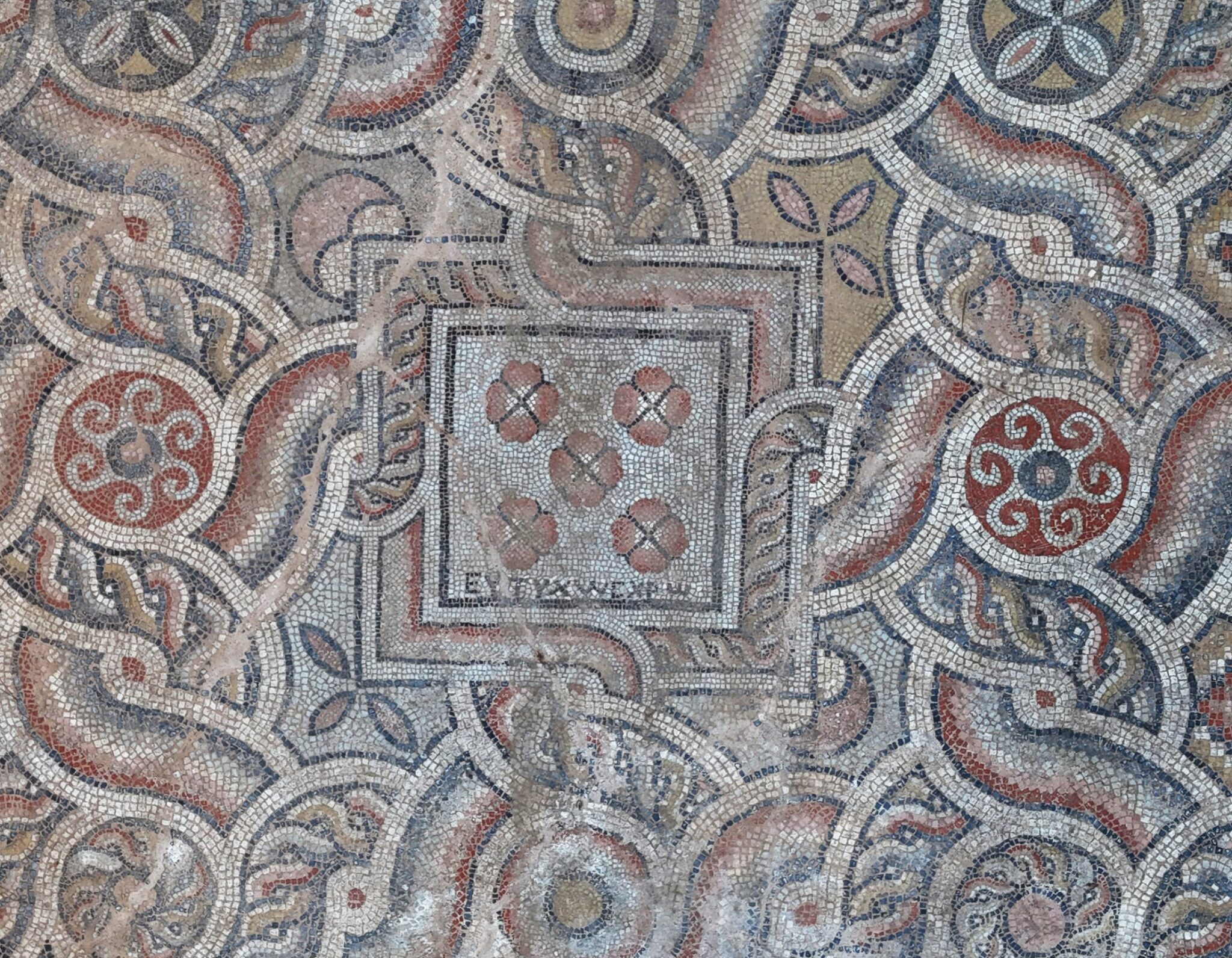
The mosaic immediately caught researchers’ attention—not only because of its excellent condition but also because of its humorous and expressive Greek inscriptions. Among the phrases are welcoming and playful messages that translate roughly to “Use it with joy” and “May the envious burst with jealousy.”
Part of a National Heritage Project
The discovery comes from ongoing excavations overseen by the Ministry of Culture and Tourism of Türkiye and the General Directorate of Cultural Heritage and Museums.
These excavations are part of the “Heritage for the Future” initiative, a nationwide effort dedicated to preserving and researching important archaeological sites across the country.
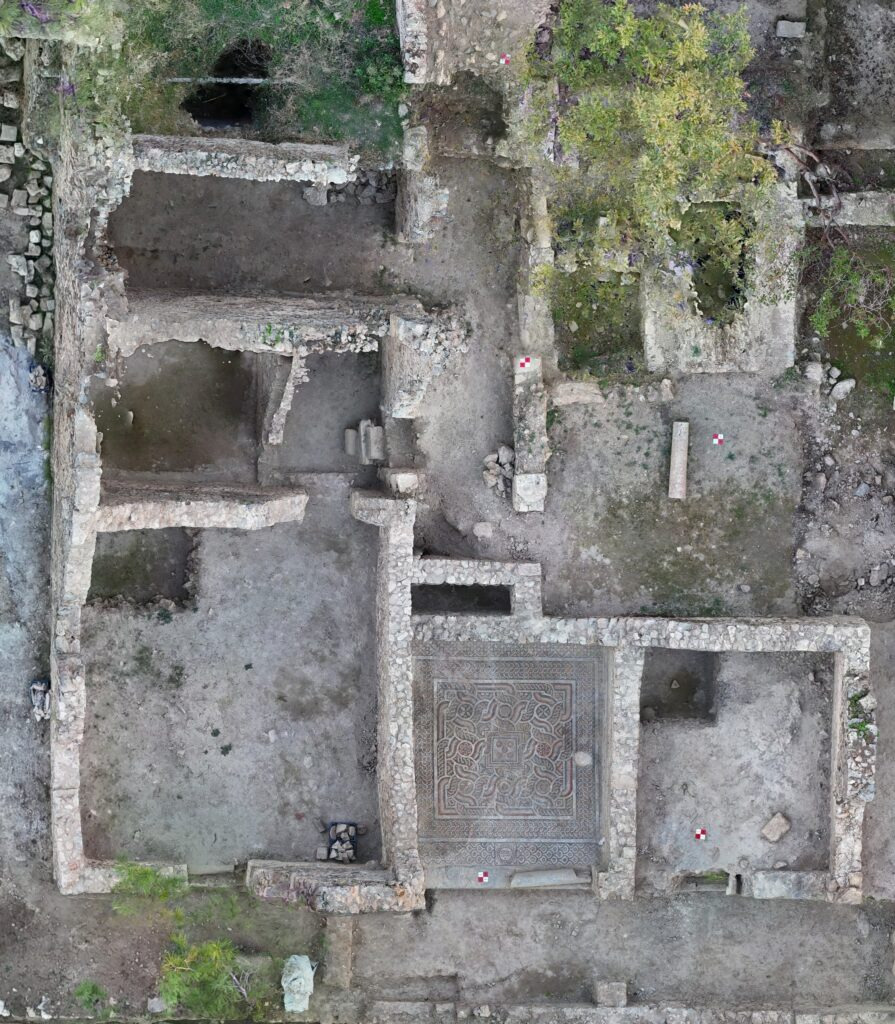
The excavation project is led by Ertuğ Ergürer, an associate professor at Alanya Alaaddin Keykubat University. According to Ergürer, the mosaic was uncovered within a large residential complex in the ancient city.
A House That Evolved Over Centuries
Researchers believe the structure where the mosaic was found served as a substantial domestic residence. Evidence suggests the building remained in use for several centuries, undergoing repeated renovations and structural changes.
Archaeological analysis indicates that the complex was occupied from around the 2nd century AD until approximately the 7th century AD, revealing multiple phases of construction and habitation over time.
Details of the Mosaic
The mosaic measures roughly 4.5 by 4.5 meters and likely dates to the 5th or 6th century AD. Positioned near the entrance of the building, the artwork is remarkably intact despite its age.
The floor decoration combines geometric patterns, floral designs, and two Greek inscriptions. One inscription appears in the central panel and offers a friendly greeting similar to “Use it with joy.” Another inscription located on the southern section conveys a more humorous sentiment, interpreted as “Let those who envy burst with jealousy.”
Hospitality, Humor, and Ancient Personality
Messages like these were fairly common in mosaics from the Late Antique period. Homeowners often included inscriptions that reflected hospitality, pride in their property, or lighthearted protection against jealousy and ill wishes.
In this case, the blend of warmth and playful defiance gives a rare glimpse into the personality and social attitudes of the people who once lived there. It suggests that the residents welcomed guests while also displaying a confident sense of humor about their home and status.
Preservation Efforts
After the mosaic was uncovered, specialists carried out conservation and restoration work to stabilize and protect the artwork. These efforts ensure the floor can be preserved for future study and potentially for public viewing.
The Historical Significance of Syedra
Situated on a hill about 20 kilometers east of Alanya, Syedra is one of the most intriguing yet lesser-known archaeological sites along the Mediterranean coast.
The city was originally established during the Hellenistic period and later flourished under the Roman Empire. Between the 1st century BC and the 7th century AD, Syedra developed into an important regional center.
Archaeologists working at the site have uncovered a wide range of structures, including:
Defensive city walls
Paved streets
Public baths
Temples and civic buildings
A council chamber
An impressive colonnaded avenue
One particularly impressive aspect of Syedra is its advanced water management system. Because freshwater sources in the area were limited, the inhabitants built large rock-cut cisterns designed to capture and store rainwater—an engineering solution that allowed the city to thrive despite environmental challenges.
A Window Into Everyday Life
The newly discovered mosaic adds another fascinating chapter to Syedra’s history. Beyond its artistic beauty, the playful inscriptions provide a rare and personal glimpse into the lives of the people who once walked across this floor more than a millennium ago.
As excavations continue, researchers hope to uncover more details about daily life, culture, and architecture in this remarkable Mediterranean city.
Syedra’s Role in Trade and Regional Politics
Historical records indicate that Syedra was not just a quiet coastal settlement—it played an active role in regional commerce and political life. Evidence from coins minted in the city during the Roman era suggests that Syedra supported a prosperous urban population connected to wider Mediterranean trade networks.
These coins reveal strong economic links with other cities around the Mediterranean, highlighting Syedra’s participation in the vibrant exchange of goods, culture, and ideas that defined the ancient world.
The city also gained recognition in antiquity during the reign of Septimius Severus. Historical accounts report that the emperor honored the city’s residents after they successfully resisted pirate attacks that had been threatening coastal communities in the region. Their defense of the area earned imperial appreciation and reinforced Syedra’s reputation as a loyal and resilient city within the Roman Empire.
A Scenic Site Overlooking the Mediterranean
Today, Syedra’s location remains as impressive as it was in ancient times. The city sits high on a hill roughly 20 kilometers east of Alanya, offering sweeping views of both the Mediterranean Sea and the rugged Taurus Mountains.
Because of its dramatic setting and well-preserved ruins, the site is not only valuable to archaeologists but also a visually striking destination for visitors interested in ancient history.
Insights Into Daily Life in Late Antiquity
Finds like the recently discovered mosaic provide an important glimpse into everyday life during the later centuries of antiquity, particularly during the transition from the Roman Empire to the Byzantine Empire.
While monumental buildings such as temples, baths, and theaters reveal the public face of ancient cities, residential structures tell a more personal story. Homes show how people decorated their living spaces, welcomed guests, and expressed their cultural identity.
The witty inscriptions preserved in the Syedra mosaic demonstrate that even 1,500 years ago, homeowners enjoyed greeting visitors with humor while subtly protecting their households from jealousy or ill will. These playful messages remind us that despite the centuries that separate us, the human desire for hospitality, pride in one’s home, and a touch of humor has remained remarkably consistent throughout history.