Introduction
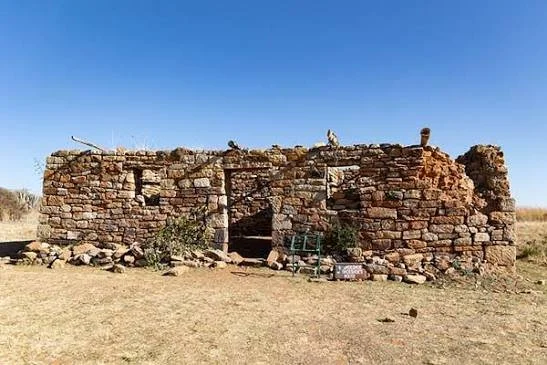
The name Letsie occupies an important place in the history of Lesotho because several members of the Basotho royal family carried the name, most notably King Letsie I and the modern King Letsie III. A title such as Letsie: Lesotho's Royal Kraal Ruins therefore immediately evokes the relationship between royal authority, settlement, architecture, and the historical landscape of the Basotho kingdom.
The term "royal kraal" should be used carefully. A kraal traditionally refers to an enclosed settlement or livestock enclosure, and royal compounds could contain residential, administrative, ceremonial, and defensive spaces. However, not every ruined stone enclosure associated with a royal name can automatically be identified as a royal residence.
The study of such places is valuable because the history of Lesotho is preserved not only in written documents but also in settlement patterns, stone architecture, oral traditions, and landscapes associated with chiefly and royal authority.
Royal Settlement in Basotho History
The Basotho kingdom emerged during a period of profound political transformation in southern Africa.
Moshoeshoe I established his authority during the nineteenth century, bringing together communities that had experienced warfare, displacement, migration, and political instability.
Royal settlements became important centers of administration.
They were places where political decisions were made, visitors received, disputes negotiated, livestock managed, and relationships between communities maintained.
A royal settlement was therefore much more than a house.
The Kraal as a Social Institution
The traditional kraal had multiple functions.
Livestock enclosures were economically essential because cattle, sheep, goats, and horses represented wealth and security.
Residential structures were often organized around social relationships.
The arrangement of buildings and open spaces could communicate hierarchy.
A chiefly or royal kraal could consequently become a physical expression of political authority.
Its architecture reflected the organization of society.
Stone Architecture in Lesotho
Lesotho's mountainous environment encouraged extensive use of locally available stone.
Stone walls could serve many purposes.
They could define compounds, protect livestock, divide agricultural land, support terraces, or provide defensive barriers.
Over time, abandoned settlements could become difficult to distinguish from ordinary agricultural structures.
This creates an important challenge for archaeologists.
The historical identity of a site cannot be established from stonework alone.
Oral History
Royal and chiefly landscapes are particularly suitable for combining archaeology with oral history.
Local communities may preserve names for hills, springs, ruins, graves, fields, or former settlements.
Such names can provide clues about historical occupation.
Oral traditions may also explain why a particular settlement was important.
However, oral traditions can change over generations.
Researchers therefore compare them with genealogies, written records, archaeological evidence, and historical maps.
The Meaning of Ruins
Ruins are not simply abandoned buildings.
They are evidence of changing political geography.
A royal settlement may decline because a ruler moves elsewhere, political circumstances change, population patterns shift, or economic priorities change.
The abandonment of a royal kraal therefore does not necessarily represent political collapse.
It may reflect the normal movement of a royal household.
Archaeological Research
Research at a possible royal kraal would examine:
wall construction,
foundations,
domestic structures,
livestock enclosures,
pottery,
metal objects,
hearths,
agricultural terraces,
burial areas,
and landscape relationships.
Dating would be particularly important.
A stone wall could belong to several different periods.
Heritage Protection
Royal sites are also important cultural heritage resources.
Uncontrolled construction, erosion, stone removal, agriculture, and tourism can damage archaeological remains.
Recording the location and condition of ruins helps preserve historical information.
Community participation is particularly important because local residents often possess knowledge unavailable in formal archives.
Conclusion
Letsie: Lesotho's Royal Kraal Ruins provides a useful framework for examining how Basotho political authority became embedded in physical landscapes.
A specific ruin should not be labeled a royal residence solely because of its name.
Instead, archaeology, oral history, genealogy, historical documents, and architectural analysis must be combined.
The broader significance of royal kraals lies in what they reveal about Basotho society: political power was expressed through settlement, livestock, family networks, hospitality, landscape, and the organization of everyday life.