Introduction
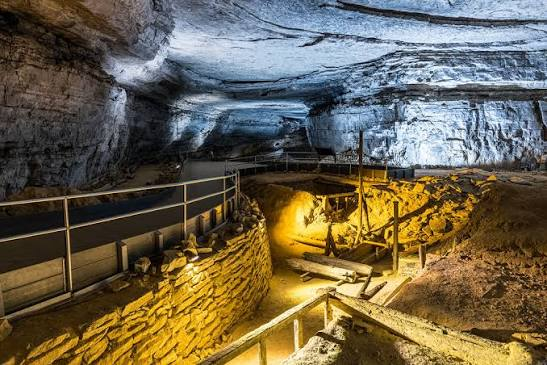
Located in central Kentucky, Mammoth Cave is the world's longest known cave system, extending for more than 680 kilometers (420 miles) of mapped passages. Long before becoming a modern national park, Mammoth Cave was extensively explored and utilized by prehistoric Native American peoples. Between approximately 3000 BCE and 1000 BCE, Indigenous communities entered the vast cave network to mine valuable minerals, particularly gypsum and other cave deposits, while later historic periods saw the extraction of saltpeter (potassium nitrate) for gunpowder production. Archaeological discoveries have made Mammoth Cave one of the most significant prehistoric mining sites in North America.
Prehistoric Mining Activities
Using reed torches, stone hammers, shell tools, and woven carrying bags, prehistoric miners traveled deep into the cave's dark passages. They extracted gypsum and other minerals by carefully breaking deposits from cave walls before transporting them to the surface.
The cave's dry, stable environment preserved footprints, torch fragments, woven sandals, mining tools, and other organic materials with exceptional clarity, providing direct evidence of prehistoric mining techniques.
Researchers have documented numerous torch charcoal deposits, demonstrating that miners repeatedly entered the cave over many centuries.
Engineering and Navigation
Exploring Mammoth Cave required remarkable courage and planning. Miners navigated narrow tunnels, steep chambers, and underground passages illuminated only by burning reed torches. Stone cairns and other markers may have helped guide travelers through the complex cave system.
The sophisticated organization required for repeated underground expeditions reflects considerable knowledge of cave geography and resource management.
Archaeological Importance
Excavations have uncovered preserved footwear, woven textiles, wooden implements, human remains, and mining equipment that rarely survive in ordinary archaeological sites. These discoveries provide unparalleled insight into prehistoric technology, labor organization, and adaptation to underground environments.
Although the cave later became famous for historic saltpeter mining during the War of 1812, its prehistoric use demonstrates that Native American communities had already been exploiting its resources for thousands of years.
Conclusion
Mammoth Cave represents one of North America's most remarkable archaeological landscapes. Its exceptionally preserved evidence of prehistoric mining reveals the ingenuity, technical skills, and resourcefulness of ancient Indigenous peoples who explored one of the world's largest cave systems thousands of years before modern exploration.