A Silent Army Beneath the Earth
Hidden beneath the fields of Shaanxi Province lies one of the most extraordinary archaeological discoveries in human history: the Terracotta Army. Built to guard the tomb of China’s first emperor, Qin Shi Huang, this vast collection of life-sized clay soldiers has fascinated researchers since its discovery in 1974.
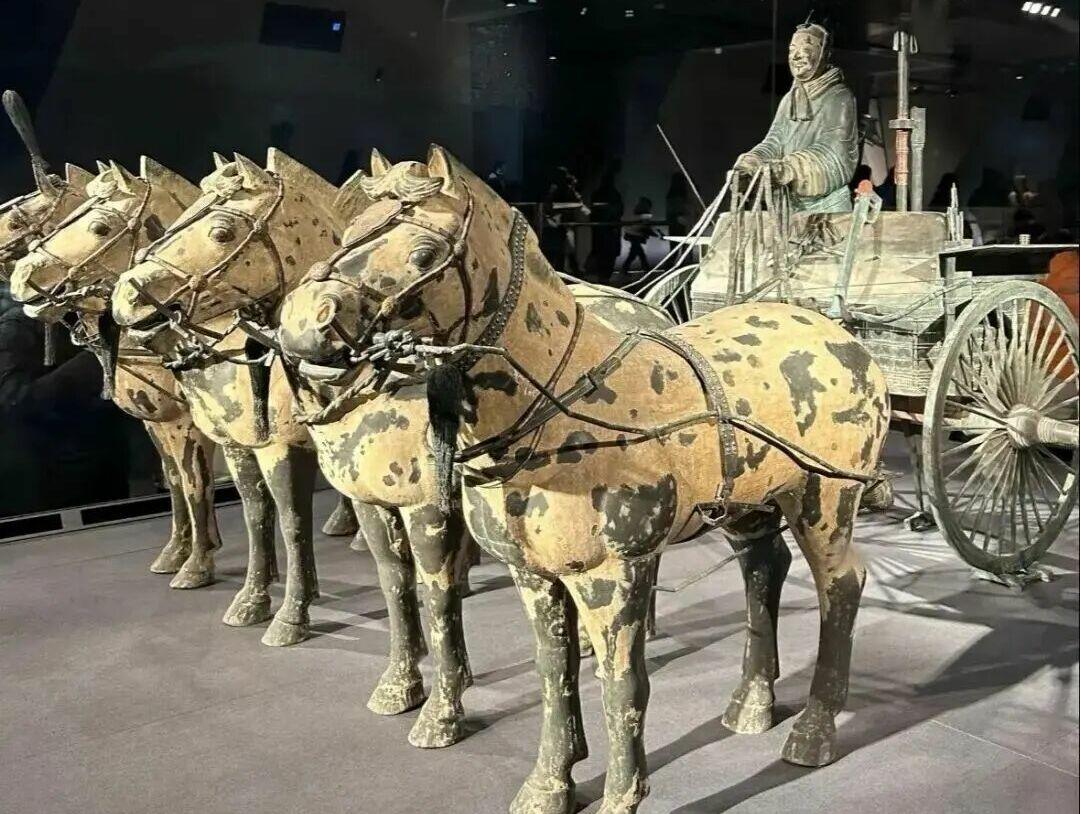
In recent years, however, a controversial and intriguing idea has emerged: could elements of the Terracotta Army show signs of indirect contact with the ancient Greek world?
The Question of Artistic Influence
The debate does not suggest direct Greek construction of the army, but rather possible cultural exchange through intermediary trade routes long before formal Silk Road systems fully developed.
Some scholars point to:
Highly naturalistic body proportions
Individualized facial features
Advanced sculptural realism
These features are unusual in earlier Chinese funerary art, which tended to be more stylized.
Possible Pathways of Contact
If any influence existed, it would likely have traveled through a chain of interactions across Central Asia, possibly involving early trade networks that predate the formal Silk Road.
Key mechanisms may have included:
Steppe nomadic intermediaries
Exchange of artistic techniques
Shared metallurgical knowledge
Movement of craftsmen across regions
While evidence remains debated, the possibility highlights how interconnected ancient Eurasia may have been.
The Greek Connection Hypothesis
Some researchers compare Terracotta figures with Hellenistic sculpture traditions that emphasize realism and anatomical accuracy. After Alexander the Great’s campaigns, Greek artistic styles spread across parts of Asia, raising the question of whether earlier contact could have occurred indirectly.
However, most mainstream scholars argue that the Terracotta Army developed independently within Chinese artistic traditions.
Independent Innovation vs. Cultural Diffusion
The key academic question is whether similarities arise from:
Independent innovation (parallel development)
Cultural diffusion (shared influence across regions)
Both explanations remain plausible, but no definitive evidence confirms direct Greek involvement.
A Monument to Imperial Power
Regardless of external influence, the Terracotta Army primarily reflects the political ideology of the Qin dynasty. It symbolizes:
Absolute imperial authority
Military organization
Belief in an afterlife court
Each soldier represents the emperor’s desire to maintain power beyond death.
Conclusion: A Global Puzzle Still Unsolved
Whether or not Greek influence played a role, the Terracotta Army stands as a masterpiece of ancient engineering and artistry. It also reminds us that ancient civilizations may have been more connected than we once believed.