The Hidden Islamic Secrets of Sintra: What Portugal’s Fairy-Tale Palaces Don’t Tell You
Sintra is internationally famous for its romantic palaces, mist-covered mountains, extravagant nineteenth-century architecture, and royal residences. Yet long before the colorful towers of Pena Palace became symbols of Portugal, the hills surrounding Sintra were part of a very different political and cultural world.
For centuries, the Iberian Peninsula was home to al-Andalus, the Islamic civilization that emerged after the Muslim conquest of much of Iberia in the early eighth century. Portugal, including the region around Sintra, was deeply affected by this period. Fortifications were constructed, agricultural systems developed, settlements expanded, and artistic traditions crossed religious and political boundaries.
The surviving Islamic past of Sintra is not always immediately visible. It exists beneath later Christian, royal, Romantic, and modern layers of history. The most important surviving monument connected with this earlier period is the Castle of the Moors, or Castelo dos Mouros, which occupies a commanding position above the town.
The story of Sintra demonstrates an important truth about European monuments: what visitors see today is often only the latest layer of a much older historical landscape.
Sintra Before the Fairy-Tale Palaces
The modern image of Sintra is dominated by monuments constructed or transformed during Portugal's royal and Romantic periods. However, the Serra de Sintra had strategic importance long before the nineteenth century.
The hills provided several advantages.
They offered:
Elevated positions for surveillance.
Natural defensive terrain.
Access to surrounding routes.
Visibility toward the Atlantic region and surrounding lowlands.
A defensible location for fortified settlements.
Human occupation in the region extends far beyond the Islamic period. Archaeological evidence demonstrates that the wider Sintra area contains traces of prehistoric and ancient communities. This means that the Islamic occupation was itself only one stage in a much longer sequence of settlement.
However, the Islamic period fundamentally changed the political landscape of the region.
The Arrival of al-Andalus
In 711 CE, Muslim armies crossed from North Africa into the Iberian Peninsula. Within a relatively short period, much of the peninsula came under Islamic political control.
The territory became known as al-Andalus.
Over the following centuries, al-Andalus was governed by different political powers, including:
The Umayyad rulers of Córdoba.
Regional taifa kingdoms.
North African dynasties such as the Almoravids.
The Almohads.
The boundaries of these states changed repeatedly.
Portugal did not yet exist as an independent kingdom.
The territory that would later become Portugal formed part of the larger political geography of medieval Iberia.
Sintra's Islamic fortifications developed within this world.
The Castle of the Moors
The Castle of the Moors occupies one of the most dramatic locations in the Sintra Mountains.
Its walls follow the irregular contours of the rocky landscape.
From the elevated position, defenders could observe wide areas of the surrounding region.
This was not simply an aesthetic choice.
Medieval military architecture depended heavily on geography.
A fortress built on high ground could provide:
Early warning of approaching enemies.
Difficult access for attacking forces.
Greater visibility.
Natural defensive barriers.
Strategic control over nearby settlements and routes.
The Islamic fortification at Sintra was therefore part of a wider system of defensive organization.
Why the Walls Follow the Mountain
One of the most visually striking features of the castle is the way its walls appear to move across the mountaintop.
Unlike a perfectly symmetrical palace, a mountain fortress must adapt to terrain.
Builders could not simply impose a rectangular plan on steep and irregular rock formations.
Instead, the walls followed the available geography.
This produced an architecture that appears almost to emerge from the mountain itself.
The fortress is an excellent example of the relationship between military engineering and landscape.
Islamic Sintra and the Reconquista
The political situation of medieval Iberia changed dramatically between the eighth and thirteenth centuries.
Christian kingdoms gradually expanded southward.
This long and complex process is commonly described as the Reconquista, although historians increasingly recognize that the term can oversimplify centuries of warfare, alliances, coexistence, migration, diplomacy, and political change.
Sintra eventually came under Christian control during the expansion of the Portuguese kingdom.
The conquest of Lisbon in 1147 was especially significant in the consolidation of Portuguese power in the region.
The Castle of the Moors subsequently entered a new political and religious world.
But conquest did not mean that the physical structures of the previous period disappeared.
The fortress was reused.
Modified.
Repaired.
And incorporated into the developing kingdom of Portugal.
The Meaning of “Moorish”
The term “Moorish” is widely used in discussions of Iberian architecture, but it requires caution.
Historically, “Moor” was a broad European term applied to Muslim populations associated with North Africa and Iberia. It did not refer to a single ethnic group.
The people who lived in al-Andalus included communities of diverse backgrounds.
These could include:
Arabs.
Amazigh, or Berber, populations.
Local Iberian converts to Islam.
Christians living under Islamic rule.
Jewish communities.
Migrants from different parts of the Mediterranean.
Therefore, describing the castle as “Moorish” provides a general historical reference but should not erase the diversity of al-Andalus.
Islamic Influence Did Not End With Political Conquest
One of the most important aspects of Iberian history is that political conquest did not immediately eliminate earlier cultural traditions.
Islamic influence continued in many forms.
Agricultural knowledge remained important.
Arabic vocabulary entered Iberian languages.
Artistic and architectural ideas survived.
Craft traditions continued.
This is where the concept of Mudéjar becomes especially significant.
The term traditionally refers to Muslims living under Christian rule in medieval Iberia and, by extension, to artistic and architectural traditions associated with Islamic craftsmanship within Christian-controlled territories.
Mudéjar art is therefore evidence that cultural exchange did not end when political borders changed.
A Christian ruler might commission artisans influenced by Islamic traditions.
Decorative motifs could cross religious boundaries.
Architectural techniques could survive for generations.
Was Sintra a “Mudéjar Palace”?
The phrase “Mudéjar Sintra” should be understood carefully.
Sintra contains architectural layers from Islamic occupation, medieval Portuguese rule, Manueline royal architecture, and nineteenth-century Romanticism.
It is not accurate to treat the entire modern palace landscape as a surviving medieval Islamic complex.
Instead, Sintra represents a layered cultural environment in which Islamic, Christian, Portuguese royal, and later European artistic traditions intersect.
This distinction is important because popular history often turns complicated heritage into a simple story.
The real story is more fascinating.
Sintra was repeatedly transformed.
The National Palace of Sintra and Cultural Layers
The Palácio Nacional de Sintra, famous for its distinctive twin chimneys, represents centuries of royal development.
Although primarily associated with Portuguese monarchy, its architecture and decorative traditions reveal the broader history of Iberian cultural exchange.
The palace contains artistic elements influenced by changing European and Iberian traditions.
Over time, rulers rebuilt and expanded the complex.
The result is not a single historical building frozen in one century.
It is an architectural archive.
The Archaeology of Hidden History
Much of Sintra's ancient past is difficult to identify because later construction transformed earlier landscapes.
Archaeologists must therefore work carefully.
A wall may have been rebuilt.
Foundations may contain material from different periods.
Objects may have been moved.
Researchers examine:
Stratigraphy.
Construction techniques.
Ceramic evidence.
Coins.
Organic materials.
Architectural relationships.
Archaeology is especially important in places like Sintra because visible monuments can conceal much older structures.
Romanticism Changed How the World Saw Sintra
By the nineteenth century, Sintra experienced another extraordinary transformation.
European Romanticism celebrated:
Medieval ruins.
Dramatic landscapes.
Exotic architecture.
Gothic imagery.
Islamic-inspired forms.
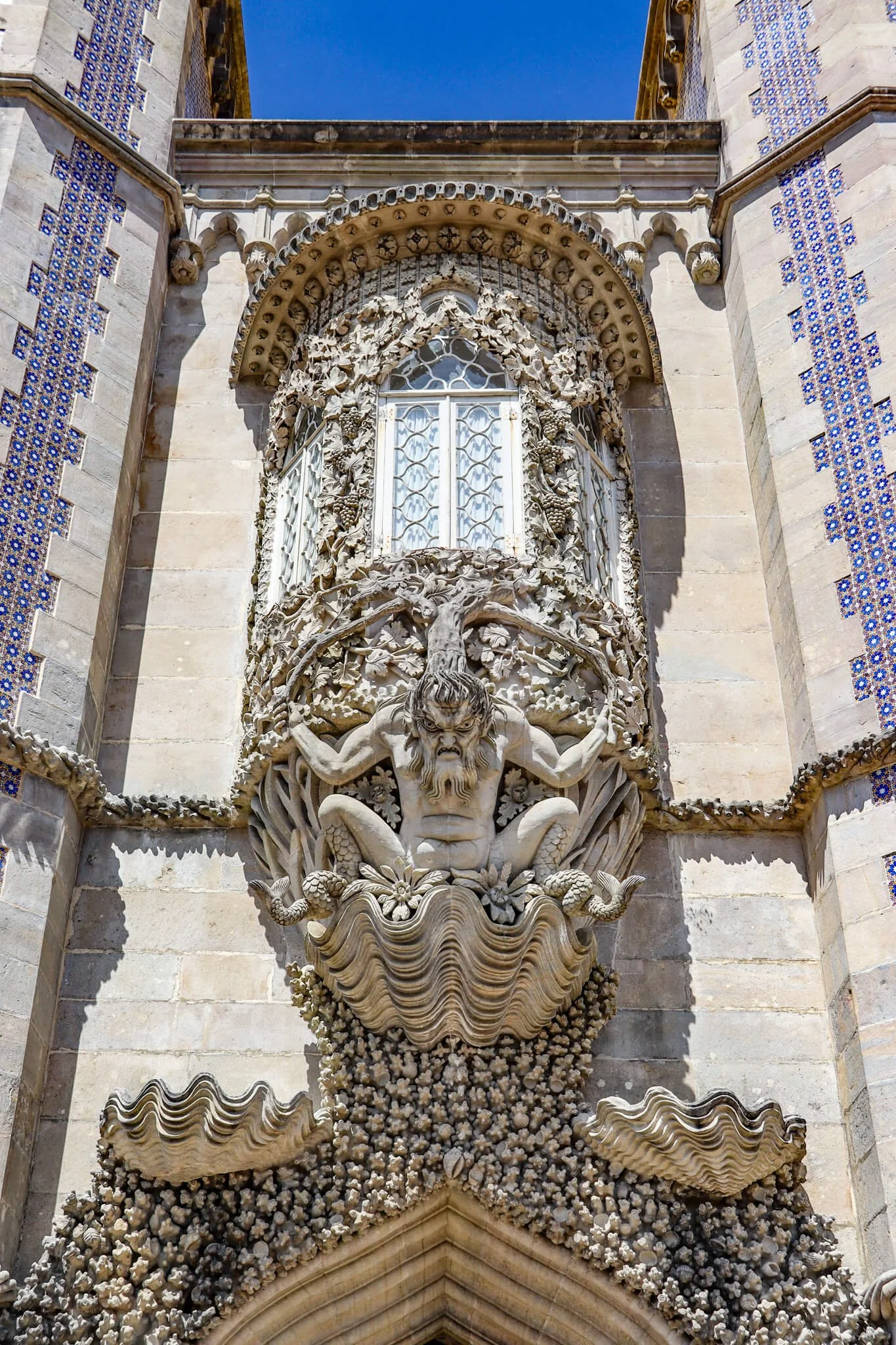
King Ferdinand II transformed the hilltop landscape through the construction of Pena Palace, creating one of Europe's most famous Romantic monuments.
Ironically, the nineteenth-century fascination with “Moorish” and medieval imagery sometimes made the distinction between authentic medieval Islamic remains and later architectural fantasy more difficult for modern visitors.
This is why historical interpretation matters.
A building inspired by Islamic architecture is not necessarily an Islamic building.
A Romantic reconstruction of a medieval ruin is not identical to the original medieval structure.
Conservation and Restoration
The Castle of the Moors has undergone extensive restoration.
This raises a major question in heritage studies:
How much should a ruined monument be rebuilt?
If nothing is repaired, the structure may collapse.
If too much is reconstructed, modern additions may create an inaccurate image of the past.
Conservation therefore involves constant decision-making.
The goal is not simply to make a monument look ancient.
It is to preserve evidence while making the site understandable and structurally secure.
Why Sintra's Islamic History Matters
Sintra is often presented as a world of Portuguese kings, Romantic palaces, and fairy-tale towers.
But beneath this famous image lies a much older and more complicated story.
The Islamic fortress on the mountain reminds us that Portugal was once part of al-Andalus.
The walls preserve evidence of a medieval world in which the political boundaries of modern Europe did not yet exist.
Later Portuguese rulers transformed the landscape.
Nineteenth-century architects reimagined it.
Modern tourism turned it into a global destination.
Yet the mountain still preserves the traces of the civilization that occupied it centuries before Portugal became the nation known today.
Sintra's greatest secret is not hidden inside a palace.
It is built into the mountain itself.