Introduction
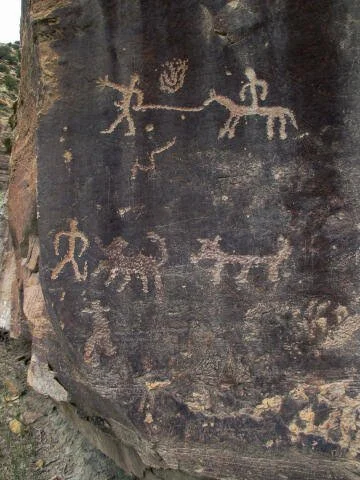
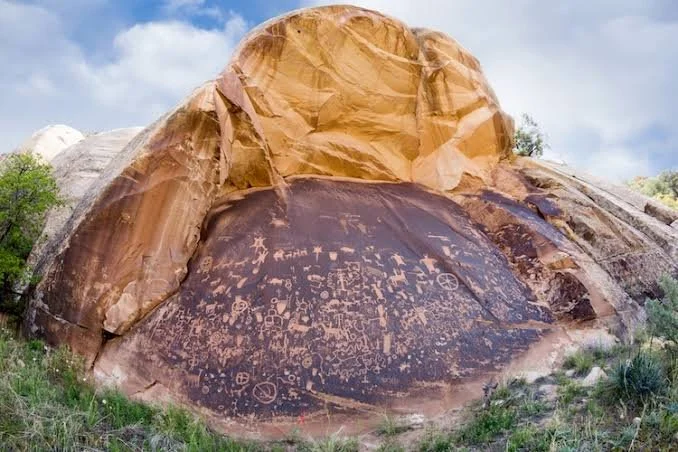
Newspaper Rock is one of Utah's most famous rock-art panels.
Located near the Needles district of Canyonlands country, the panel contains a dense collection of petroglyphs created by multiple generations of Indigenous artists.
Its name is especially appropriate in a metaphorical sense.
The sandstone surface resembles a newspaper filled with symbols, figures, animals, and marks created at different times.
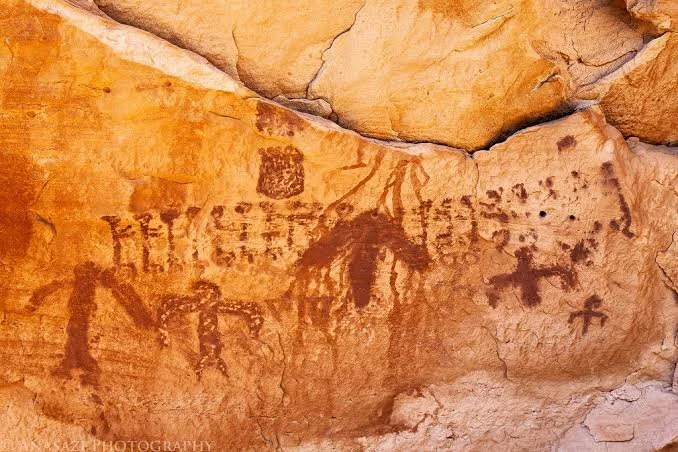
But the title "2,000-Year Pictograph" requires an important archaeological correction.
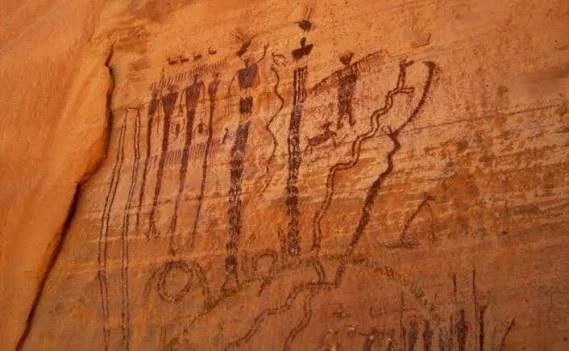
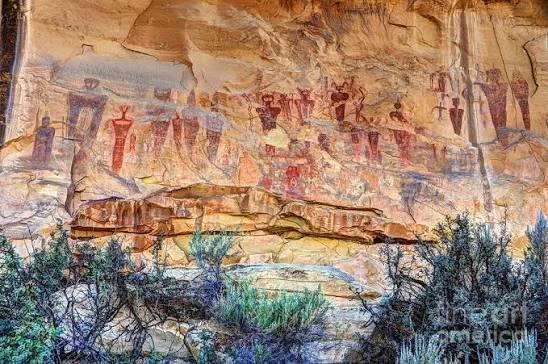
Newspaper Rock is primarily known as a petroglyph panel, not a pictograph. The images were carved or pecked into the rock rather than painted onto it.
The panel also contains imagery representing different periods, meaning that not every figure is necessarily 2,000 years old.
The Rock Surface
The panel is located beneath a sandstone overhang.
This provided some protection from weather.
The rock surface became a natural canvas.
Artists repeatedly modified it.
Older images were sometimes joined by newer ones.
The result is a dense accumulation of visual information.
Petroglyph vs. Pictograph
A petroglyph is created by modifying the rock.
A pictograph is painted.
Newspaper Rock's famous imagery is predominantly petroglyphic.
This distinction matters because the techniques produce different preservation patterns.
Petroglyphs depend on contrast between modified and unmodified rock.
Pictographs depend on the survival of pigment.
The Earliest Imagery
Some imagery at Newspaper Rock is associated with ancient Indigenous traditions dating back many centuries.
Researchers generally connect portions of the panel with Archaic, Fremont, and later Ute or historic periods.
The panel is therefore not the product of one artist or one community.
It is a cumulative record.
Why Did People Return?
The repeated addition of images suggests that the location remained meaningful.
Possible reasons include:
proximity to travel routes
water
hunting areas
ceremonial significance
cultural memory
territorial relationships
The exact reason remains uncertain.
But repeated use demonstrates that the place had continuing importance.
The Images
The panel includes:
human figures
animals
geometric designs
handprints or hand-like forms
abstract markings
later historic inscriptions
Some figures are clearly recognizable.
Others are difficult to interpret.
Animals
Animal imagery includes representations of species important to the region.
Bighorn sheep are particularly common in Southwestern rock art.
Their presence may reflect hunting.
But animals could also have symbolic significance.
An image cannot automatically be interpreted as a record of an actual hunt.
Fremont Figures
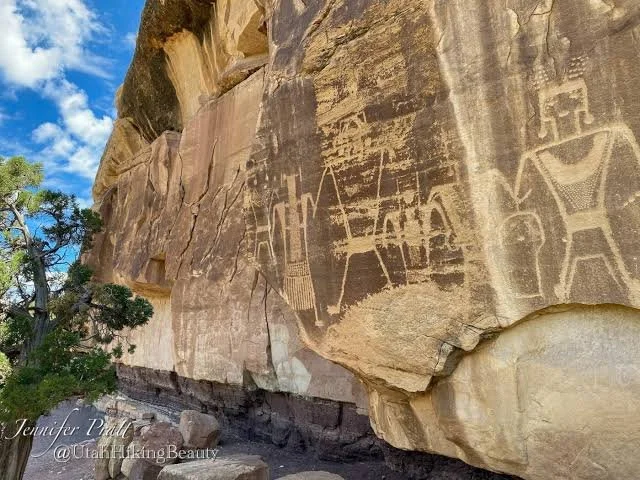
Some imagery reflects Fremont artistic traditions.
Fremont anthropomorphic figures often have distinctive body shapes and elaborate headgear.
These figures differ from the older abstract forms found in some Archaic traditions.
The panel therefore provides evidence of cultural change.
Historic Ute and Euro-American Marks
Newspaper Rock also contains later imagery.
Ute people continued to use the broader region.
Historic travelers eventually added inscriptions.
These later marks create another archaeological layer.
Some may be historically significant.
Others constitute vandalism.
The distinction depends on age, context, and cultural-resource assessment.
Superimposition
Superimposition is especially important at crowded rock-art sites.
If one image overlaps another, the underlying image is older.
By mapping these relationships, archaeologists can reconstruct relative sequences.
The technique turns what appears to be a chaotic collection of marks into a chronological record.
Preservation
Newspaper Rock is protected because of its archaeological significance.
Visitors are generally expected to stay on designated paths and avoid touching the rock surface.
Modern graffiti is especially damaging because it competes visually with the original imagery.
The Meaning of the Name
"Newspaper Rock" is a modern English name.
It describes the appearance of the panel rather than translating an Indigenous term.
The metaphor is powerful because the panel really does resemble a dense visual publication.
But unlike a newspaper, its symbols do not come with captions.
Archaeological Interpretation
Archaeologists can identify:
technique
relative chronology
artistic style
superimposition
environmental context
They cannot always determine:
exact meaning
language
individual identity
specific historical event
This distinction is crucial.
Why the Panel Matters
Newspaper Rock is valuable because it demonstrates continuity.
Different peoples used the same landscape.
Each generation inherited a place that already contained marks from earlier generations.
The panel therefore became a form of cumulative cultural memory.
Conclusion
Newspaper Rock is best understood as a multi-period petroglyph panel, rather than simply a 2,000-year-old pictograph.
Its significance lies in its layered history.
Archaic artists, Fremont communities, later Indigenous peoples, and historic travelers all contributed to the visual record.
The sandstone surface therefore preserves not one message but generations of interaction.
It is an extraordinary example of how a landscape can become a long-term archive of human expression.