Introduction
Stretching for approximately 46 miles through eastern Utah, Nine Mile Canyon is one of the most remarkable rock-art landscapes in the American West.
Despite its name, the canyon is far longer than nine miles.
Its modern name has been explained in connection with historic transportation routes and measurements, but the archaeological importance of the canyon has little to do with its name.
What makes Nine Mile Canyon exceptional is the extraordinary concentration of archaeological and historic resources found along its length.
The canyon contains evidence associated with Archaic, Fremont, and Ute peoples, as well as later ranching and transportation history. Carbon County describes more than 1,000 cataloged sites in the canyon and surrounding landscape.
A Canyon as an Archive
Nine Mile Canyon can be understood as an archaeological archive carved into sandstone.
Its cliffs preserve:
petroglyphs
pictographs
archaeological shelters
camps
Fremont remains
Ute imagery
historic inscriptions
ranching structures
The canyon therefore contains multiple periods of human history.
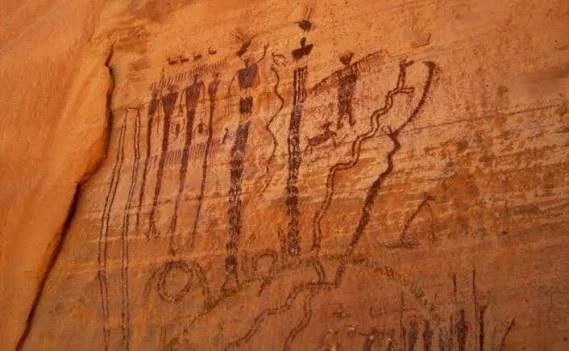
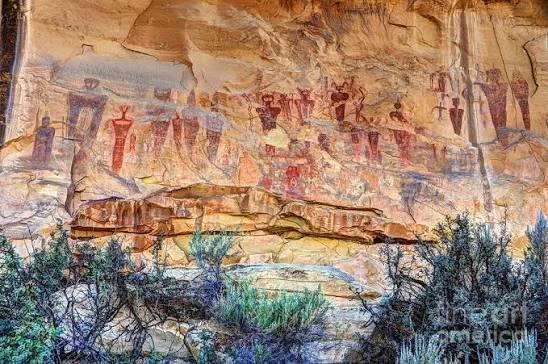
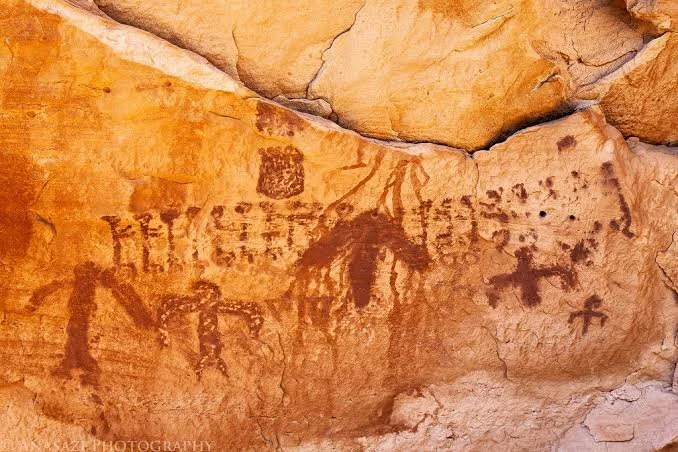
Barrier Canyon Style
The title emphasizes Barrier Canyon Art.
Barrier Canyon Style is an archaeological rock-art tradition associated particularly with Utah and surrounding regions.
Some of its most recognizable images are large anthropomorphic figures.
These figures can have:
elongated bodies
large heads
elaborate features
geometric designs
unusual proportions
They often appear visually different from later Fremont rock art.
Dating the Rock Art
Dating rock art is difficult.
A painted figure may not contain organic material suitable for conventional radiocarbon dating.
Researchers therefore use several methods:
superimposition
weathering
pigment analysis
archaeological association
stylistic comparison
varnish development
Each method has limitations.
A panel may contain images created centuries apart.
Later artists sometimes carved or painted over earlier imagery.
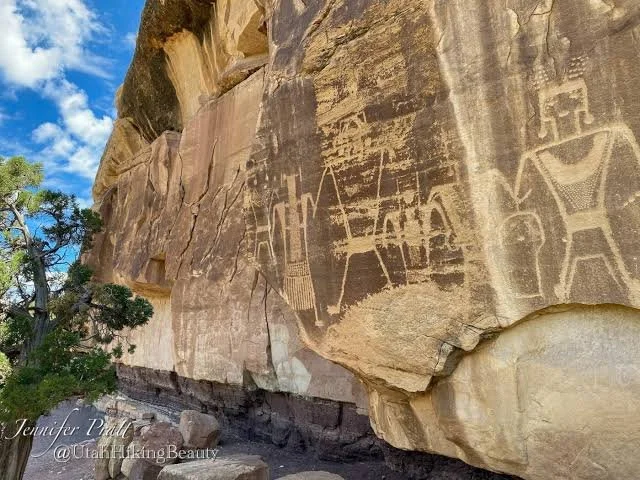
Fremont Rock Art
Nine Mile Canyon is particularly rich in Fremont imagery.
Fremont figures are often recognizable by their trapezoidal bodies and elaborate headdresses.
Some appear to carry shields or other objects.
Animals frequently occur alongside human figures.
The Utah State Historic Preservation Office identifies Nine Mile Canyon as one of the areas where Fremont rock imagery is especially well represented.
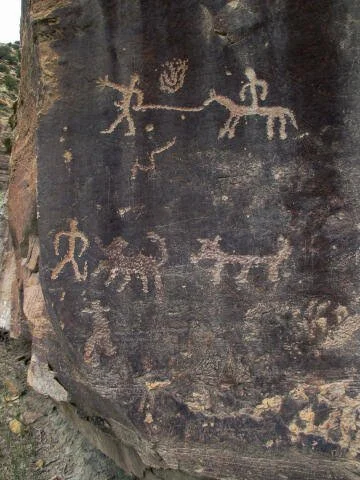
Hunting Scenes
Some panels appear to show hunting.
Animals may include deer, bighorn sheep, or other species.
Human figures can appear beside them.
However, archaeologists must be careful about interpreting such scenes literally.
An animal figure does not necessarily represent an actual hunting event.
It may instead have symbolic, ceremonial, mythological, or social meaning.
The Big Buffalo Panel
The Big Buffalo is one of the best-known rock-art locations in Nine Mile Canyon.
Large animal imagery is visually striking because it remains recognizable after centuries of weathering.
Such panels demonstrate the ability of ancient artists to manipulate the natural surface of sandstone.
The natural contours of rock could become part of the composition.
Technique
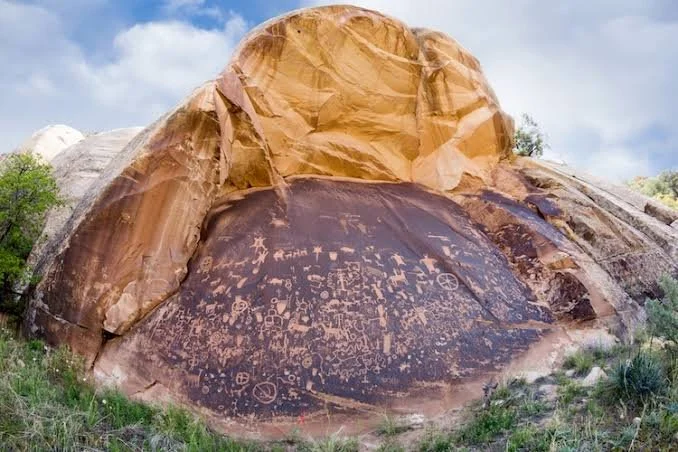
Petroglyphs were created by removing the dark weathered surface of sandstone.
The lighter stone underneath could then become visible.
The artist could peck away the surface point by point.
The resulting contrast produced an image.
Pictographs were created differently.
Pigments were applied to the rock surface.
Mineral pigments, charcoal, plant materials, and other substances could produce different colors.
Rock Varnish
Desert rock surfaces often develop a dark coating known as desert varnish.
This coating forms slowly.
When artists peck through it, lighter rock becomes visible.
Over time, weathering gradually changes the contrast.
This can help archaeologists assess relative age, although it cannot normally provide an exact calendar date by itself.
Fremont and Ute Heritage
Nine Mile Canyon is not exclusively a Fremont landscape.
Later Ute peoples also used the region.
The canyon therefore contains layers of Indigenous history.
This is important because archaeologists sometimes divide landscapes into periods for analytical convenience.
Real people did not experience the world as archaeological "periods."
The canyon remained a useful landscape across generations.
A Transportation Corridor
The canyon later became important for Euro-American transportation.
Historic roads followed portions of the canyon.
Ranching developed.
Cabins, corrals, and other structures were constructed.
These historic remains now coexist with prehistoric archaeological sites.
Ranching History
Historic ranches demonstrate how later settlers adapted to the same landscape.
Water availability remained crucial.
Canyon bottoms could provide grazing.
Sheltered areas offered locations for buildings.
The sandstone cliffs remained landmarks.
The cultural landscape therefore continued evolving.
Archaeological Density
Carbon County reports more than 1,000 cataloged sites in the canyon.
This density makes Nine Mile Canyon exceptionally valuable.
It allows researchers to study relationships among different site types.
A rock-art panel may be located near a habitation site.
A hunting area may be near a water source.
A historic ranch may occupy a location that had already been used by Indigenous people for centuries.
Preservation Challenges
Rock art is fragile.
Touching the surface can transfer oils and moisture.
Chalk, paint, or other attempts to make images more visible can permanently damage them.
Graffiti is especially destructive.
A modern inscription across an ancient petroglyph can obscure the original image.
Energy Development
Nine Mile Canyon has also been affected by modern energy development.
Oil and gas infrastructure exists in parts of the surrounding region.
This creates complex cultural-resource management challenges.
Road construction, vehicle traffic, dust, vibration, erosion, and industrial development can affect archaeological sites.
The challenge is to balance modern economic activity with preservation of irreplaceable cultural resources.
Digital Documentation
Modern technology has transformed rock-art research.
Researchers can use:
high-resolution photography
3D scanning
photogrammetry
GIS
digital elevation models
multispectral imaging
Digital documentation can preserve detailed records of panels.
This becomes increasingly important as natural weathering continues.
Indigenous Perspectives
Modern archaeological interpretation should not treat the rock art simply as anonymous prehistoric artwork.
The people who created these images had their own identities, communities, traditions, and spiritual systems.
Their descendants remain part of the broader Indigenous world of Utah.
Respectful interpretation therefore requires acknowledging that rock art can have cultural significance beyond its value as archaeological evidence.
Why the Art Survived
The dry Utah climate contributes to preservation.
Low humidity can reduce biological deterioration.
Sheltered cliff faces protect some panels from direct precipitation.
But preservation is not guaranteed.
Wind, water, freeze-thaw cycles, lichen, mineral alteration, and human activity continue to affect the artwork.
Nine Mile Canyon as a Cultural Landscape
The canyon should not be understood simply as an outdoor art gallery.
It is an interconnected cultural landscape.
The rock art is one component.
Others include:
archaeological camps
farming areas
trails
water sources
hunting locations
historic ranches
transportation routes
The meaning of the art is partly connected to this wider landscape.
Conclusion
Nine Mile Canyon is one of Utah's richest archaeological landscapes because it preserves thousands of years of interaction between people and place.
Barrier Canyon imagery provides a window into ancient symbolic traditions.
Fremont rock art reveals later cultural developments.
Ute imagery demonstrates continuing Indigenous use.
Historic ranches and roads reveal another chapter.
Together, these layers show that the canyon was never simply an empty passage through the desert.
It was a place where people lived, traveled, hunted, farmed, gathered, created art, told stories, and maintained relationships with the landscape.
Its rock walls preserve only fragments of those histories, but the fragments are extraordinary.
Protecting Nine Mile Canyon therefore means protecting more than beautiful images.
It means preserving an archaeological record of human life across thousands of years.