• MAIN PAGE
  • LATEST NEWS
    • Lost Cities
    • Archaeology's Greatest Finds
    • Underwater Discoveries
    • Greatest Inventions
    • Studies
    • Blog
  • PHILOSOPHY
  • HISTORY
  • RELIGIONS
    • Africa
    • Anatolia
    • Arabian Peninsula
    • Balkan Region
    • China - East Asia
    • Europe
    • Eurasian Steppe
    • Levant
    • Mesopotamia
    • Oceania - SE Asia
    • Pre-Columbian Civilizations of America
    • Iranian Plateau - Central Asia
    • Indus Valley - South Asia
    • Japan
    • The Archaeologist Editor Group
    • Scientific Studies
    • Aegean Prehistory
    • Historical Period
    • Byzantine Middle Ages
    • Predynastic Period
    • Dynastic Period
    • Greco-Roman Egypt
  • Rome
  • PALEONTOLOGY
  • About us
Menu

The Archaeologist

  • MAIN PAGE
  • LATEST NEWS
  • DISCOVERIES
    • Lost Cities
    • Archaeology's Greatest Finds
    • Underwater Discoveries
    • Greatest Inventions
    • Studies
    • Blog
  • PHILOSOPHY
  • HISTORY
  • RELIGIONS
  • World Civilizations
    • Africa
    • Anatolia
    • Arabian Peninsula
    • Balkan Region
    • China - East Asia
    • Europe
    • Eurasian Steppe
    • Levant
    • Mesopotamia
    • Oceania - SE Asia
    • Pre-Columbian Civilizations of America
    • Iranian Plateau - Central Asia
    • Indus Valley - South Asia
    • Japan
    • The Archaeologist Editor Group
    • Scientific Studies
  • GREECE
    • Aegean Prehistory
    • Historical Period
    • Byzantine Middle Ages
  • Egypt
    • Predynastic Period
    • Dynastic Period
    • Greco-Roman Egypt
  • Rome
  • PALEONTOLOGY
  • About us
No results found

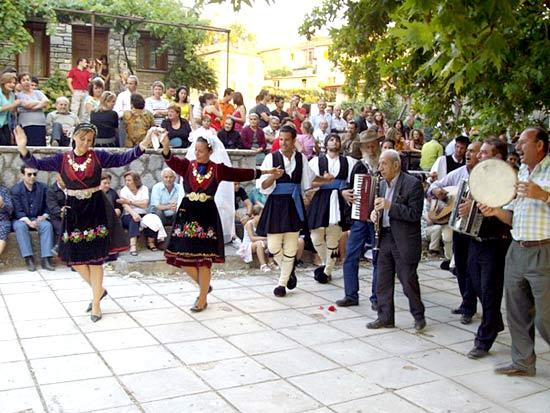
Obscure Archaic Wedding Songs in North Epirus

November 19, 2026

Marriage and social organization in ancient Greece

Marriage was an important institution in ancient Greek society. It connected families, established social relationships, and played a role in the organization of households and the transmission of property.

Wedding ceremonies could involve rituals, processions, offerings, songs, celebrations, and symbolic actions. The details varied between communities and historical periods.

The Archaic period, broadly associated with the eighth through sixth centuries BCE, witnessed significant changes in Greek communities, including the development of city-states, expanding trade, colonization, artistic expression, and social organization.

Wedding songs from this period would be difficult to reconstruct directly, but later literary and cultural sources can provide broader information about marriage-related practices.

Songs and ceremonial transitions

Wedding songs often accompany important transitions in a person's life. They may express joy, separation, family affection, wishes for prosperity, fertility, protection, and the beginning of a new household.

In traditional Greek communities, songs could be performed during preparations, processions, celebrations, and other stages of a wedding. Some forms might be associated with particular participants or moments within the ceremony.

Songs can serve as both entertainment and ceremonial expression. Their lyrics may communicate expectations about marriage, family roles, social relationships, and the responsibilities of adulthood.

North Epirus and regional traditions

North Epirus is associated with a diverse cultural landscape that includes Greek-speaking communities and other linguistic and cultural traditions. Music and oral traditions in the region reflect historical interactions, migration, religious life, and local identities.

However, a specific Archaic wedding-song tradition in North Epirus cannot be established without evidence. The geographical reference in the title is best treated as a proposed setting for investigating the broader history of marriage songs and regional oral culture.

The value of comparative folklore

Researchers can compare later wedding songs with ancient literary descriptions, artistic representations, and ritual evidence. Such comparisons may reveal recurring themes, but they should not be used to assume uninterrupted survival from antiquity.

A study of wedding songs would contribute to understanding how communities express social transitions through music and how cultural practices change across generations.


← Hidden Thracian Dirges in Rhodopi HamletsHidden Byzantine Ship Blessings in Argos →
Featured
image_2026-11-19_222129997.png
November 19, 2026
Obscure Fluorite in a Dirfi Cave
November 19, 2026
Read more →
November 19, 2026
image_2026-11-19_222051327.png
November 19, 2026
Hidden Zeolite in Aeolian Coastal Cliffs
November 19, 2026
Read more →
November 19, 2026
image_2026-11-19_222017770.png
November 19, 2026
Obscure Travertine Terraces in Voidomatis
November 19, 2026
Read more →
November 19, 2026
image_2026-11-19_221939397.png
November 19, 2026
Submerged Basalt Columns in a Saronic Cove
November 19, 2026
Read more →
November 19, 2026
image_2026-11-19_221855657.png
November 19, 2026
Hidden Petrified Trees Near Meteora’s Base
November 19, 2026
Read more →
November 19, 2026
image_2026-11-19_221811443.png
November 19, 2026
Obscure Thracian Plough Blessings in Drama
November 19, 2026
Read more →
November 19, 2026
read more

Powered by The archaeologist