Introduction
Peers Cave, also known as Skildergatkop, is an archaeological locality in the Western Cape of South Africa. It forms part of the region’s broader record of Later Stone Age occupation and research into the lives, burial practices, and environments of ancient hunter-gatherer communities.
The title “South Africa's 15,000-Year Burials” refers to a specific chronological claim that requires careful verification. Although the Western Cape contains important prehistoric burial sites, the date of a burial must be established from the relevant human remains, associated materials, and documented archaeological context. A general date associated with the cave or a nearby site cannot automatically be assigned to every burial.
This distinction is important because human remains provide evidence not only of ancient populations but also of the circumstances in which individuals were buried, preserved, excavated, and later studied.
The Archaeological Setting
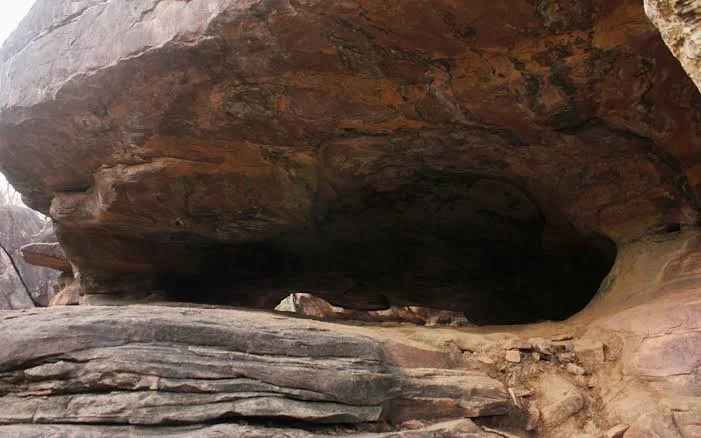
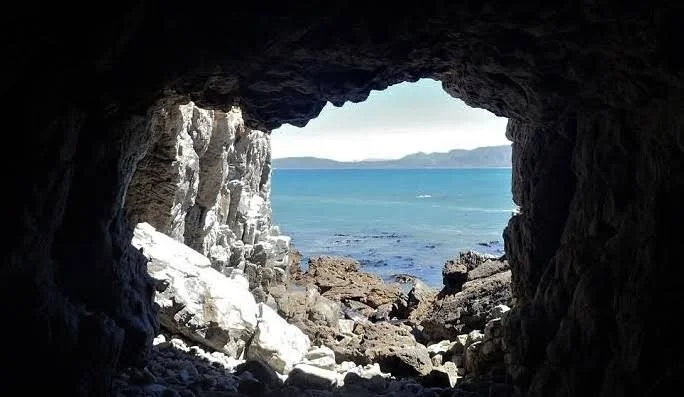
Peers Cave lies within a landscape of rocky outcrops and sheltered spaces that could have been used by people for a variety of purposes. Rock shelters and caves often preserve evidence of repeated visits, including stone tools, animal remains, hearth-related deposits, and human burials.
Such deposits can form over long periods. A cave used by one community during a particular period might later be visited by different groups. Sediment layers can therefore contain material from multiple episodes of activity.
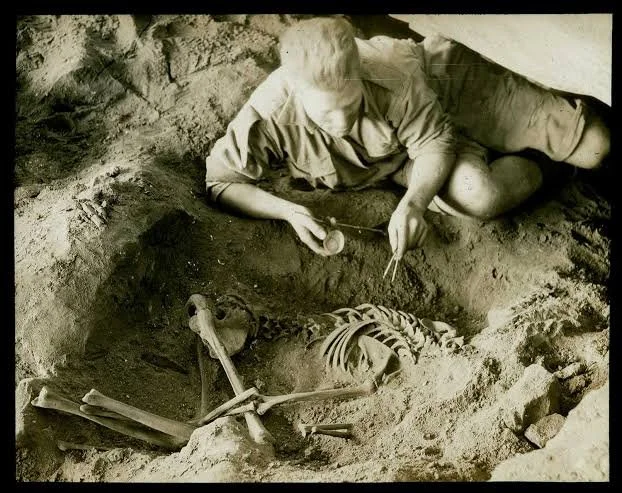
The archaeological context is crucial when interpreting a burial. Researchers document the position of the body, its orientation, the surrounding sediment, and any objects that may have been deliberately placed with it. They also assess whether later disturbance could have moved bones or associated artefacts.
Without these details, it may be difficult to determine whether an object was part of the original burial or entered the deposit much later.
Human Burials as Archaeological Evidence
Burials can reveal information about ancient communities that is not always available from stone tools or animal remains. Human bones may preserve evidence of age, biological sex, disease, injury, and patterns of physical activity.
Dental remains can provide information about diet and oral health, while skeletal features may reveal aspects of growth and bodily stress. Stable-isotope analysis, when suitable material is preserved, can contribute to investigations of diet and mobility.
However, human remains must be interpreted cautiously. A single individual cannot represent an entire population, and skeletal characteristics can vary for many reasons. Researchers must also distinguish biological observations from assumptions about social identity.
Burial practices may include body positioning, the use of grave goods, and the deliberate treatment of particular parts of the body. Yet not all differences necessarily reflect social rank or ritual distinctions. Preservation, excavation methods, and later disturbance can produce apparent differences between burials.
The Challenge of the 15,000-Year Date
A date of approximately 15,000 years ago falls within the Late Pleistocene, a period of major environmental change. However, establishing that a particular burial belongs to this period requires evidence specific to the burial itself.
Radiocarbon dating can be used on suitable organic materials, including human bone under appropriate conditions. Researchers must account for contamination, preservation, and the possibility that dietary factors could affect results. Dates also require calibration before they can be translated into calendar-year estimates.
If a burial was excavated before modern recording and dating standards were widely used, the original context may be difficult to reconstruct. In such cases, later researchers must evaluate the surviving documentation and collection history rather than assume that an older published date is definitive.
For this reason, the title should not be interpreted as confirming that every burial at Peers Cave is 15,000 years old. The age and context of each burial must be established independently.
Mortuary Practices and Social Life
Burial practices are often used to investigate how ancient communities understood death and maintained relationships with the deceased. The placement of a body and the treatment of associated objects may reveal deliberate choices.
Nevertheless, the interpretation of mortuary behaviour is difficult because the beliefs behind a burial are not directly preserved. An object placed with a body may have had practical, symbolic, or personal significance, and its meaning may have differed from modern interpretations.
Researchers can compare burials across sites to identify recurring patterns, but similarities do not necessarily prove that communities shared identical beliefs. Local traditions, historical relationships, and changing social conditions must be considered.
It is also important to recognise that ancient hunter-gatherer societies were not culturally uniform. Communities across southern Africa developed varied practices, and those practices changed over time.
Burial Research and Ethical Responsibilities
The study of human remains carries responsibilities beyond the usual analysis of archaeological artefacts. Human remains are the remains of individuals who once lived within families and communities. Their excavation, storage, study, and display should be conducted with respect.
Researchers must follow relevant heritage laws and institutional standards. Decisions about the study or display of remains should consider cultural sensitivities, descendant communities where identifiable, and the scientific value of proposed investigations.
Historical collections also require careful documentation. Older excavations sometimes removed remains without recording the detail expected today. Re-examining those collections can provide valuable information, but researchers should acknowledge the limitations of the original records.
Why Peers Cave Matters
Peers Cave contributes to the broader archaeological history of the Western Cape. Its importance lies in the potential to connect human remains and artefacts with the environments and activities of ancient communities.
The site should be studied alongside other regional shelters and burial localities to investigate variation in diet, mobility, technology, and mortuary practices. Comparisons can help establish whether a particular pattern was widespread or restricted to a specific place and period.
The cave also illustrates why accurate chronology matters. Without secure dates, researchers cannot confidently relate a burial to changes in technology or the wider environmental history of the region.
Conclusion
Peers Cave is part of the rich archaeological record of South Africa’s Western Cape, where caves and shelters preserve evidence of ancient communities and their treatment of the dead. Human burials can reveal information about health, diet, and mortuary practices, but these interpretations depend on careful documentation and secure dating.
The specific claim of 15,000-year-old burials should be supported by evidence from the relevant individuals and excavation contexts rather than inferred from the general age of the site. By combining scientific analysis with ethical stewardship, researchers can investigate the lives of ancient people while respecting the significance of their remains.