Trade Before Written History
Trade is often associated with organized civilizations, written contracts, and established markets. Yet archaeological evidence shows that long-distance trade existed long before written records.
Even prehistoric societies exchanged materials across vast distances, creating early networks that connected distant communities.
The Importance of Obsidian
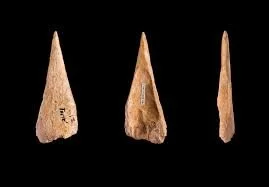
One of the clearest signs of prehistoric trade is obsidian, a volcanic glass used to make extremely sharp tools and weapons.
Obsidian can be traced back to specific volcanic sources. Archaeologists have discovered obsidian artifacts hundreds—and sometimes thousands—of kilometers away from their original sources.
This suggests that ancient communities transported or traded the material across large regions. These obsidian routes are some of the earliest known trade networks in human history.
Early Sea Travel
Trade was not limited to land routes. Evidence shows that prehistoric people were capable sailors.
Archaeologists have found materials such as shells, stones, and tools transported between islands and coastal regions long before advanced ships existed.
These discoveries suggest that early humans developed boats and navigational skills earlier than once believed.
Exotic Goods and Cultural Exchange
Certain artifacts found far from their origins indicate that prehistoric people valued rare or unusual materials.
These included items such as:
Decorative shells
Rare stones
Pigments used for art
Unusual minerals
Such goods were often used for symbolic or ceremonial purposes, making them highly valued in distant communities.
More Than Just Trade
Prehistoric trade networks did more than move objects. They also spread ideas, technologies, and cultural practices.
Techniques for making tools, art styles, and even spiritual beliefs could travel along the same routes as traded goods.
These early exchanges helped shape human culture long before the rise of cities and written languages.
A Connected Ancient World
The evidence of prehistoric trade networks reveals that early humans were far more interconnected than once believed.
Even in the Stone Age, people were exploring, exchanging resources, and building relationships across vast distances.
These early networks laid the foundation for the global trade systems that would emerge thousands of years later.