Urgent Mission to Preserve Scotland’s Earliest Human Settlements
Scotland’s earliest inhabitants—hunter-gatherers who roamed the Cairngorms more than 10,000 years ago—left behind traces of their daily lives that are now at risk of disappearing forever. Experts warn that erosion and flooding are threatening a prehistoric site that has already provided a rare glimpse into the lives of these Stone Age communities.
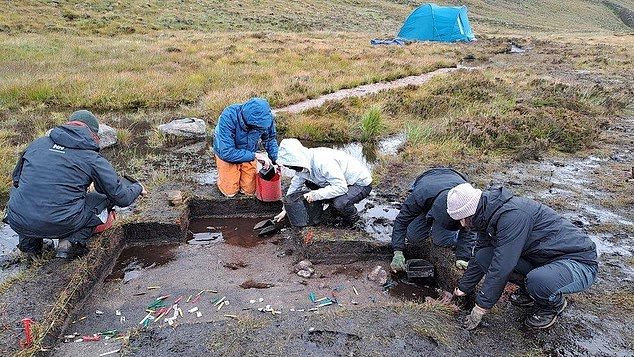
The National Trust for Scotland (NTS) is launching an urgent archaeological rescue operation to excavate and preserve the area before invaluable evidence is lost.
A Glimpse into Scotland’s Mesolithic Past
Dr. Daniel Rhodes, senior archaeologist at NTS, explained the significance of the site:
“What we’ve uncovered gives insight into Scotland’s earliest occupants, hunter-gatherers moving through this landscape between 9,000 BC and 4,000 BC.”
Charcoal from ancient fire pits suggests that, around 7,500 BC, the valley floors were covered with open woodland of pine, birch, hazel, and rowan—very different from the treeless mountain wilderness seen today.
Archaeologists believe these early people traveled through low mountain passes, possibly following herds of game. Campsites indicate they dug pits for fires to cook food and stay warm. Flint tools, including blades and scrapers, show they were actively processing animals, plants, and other resources from the environment.
A Race Against Time
The site, located along the River Dee at Chest of Dee on the Mar Lodge Estate near Braemar, Aberdeenshire, faces a growing threat. Rising riverbanks, extreme wet weather, and dry periods caused by climate change are accelerating erosion and washing away artifacts.
Dr. Rhodes emphasized:
“We have seen erosion accelerate in the past couple of years, which creates a real sense of urgency. Without intervention, Scotland’s earliest archaeological heritage could be lost forever.”
The Archaeology Rescue Project
To protect the site, NTS is recruiting skilled archaeologists for the Archaeology Rescue Project. The work will include:
Mapping and documenting the site in detail
Planning and managing careful excavations
Logging and preserving all artifacts found
According to project documents, the banks of the River Dee at Chest of Dee contain rare prehistoric remains, including flint tools and evidence of Stone Age activity, which are slowly eroding into the river. The excavation aims to record and safeguard this material before it is lost.
Life of Scotland’s Mesolithic People
Archaeologists believe these hunter-gatherers arrived in the hills carrying provisions and supplemented their diet by hunting deer, birds, and fish, and foraging for plants and fungi. Larger animals also provided skins for clothing and shelters, sinews for bindings, and antler and bone for tool-making.
The evidence paints a picture of resourceful, highly mobile communities able to thrive in a challenging mountain environment.
The Discovery and Ongoing Work
The first evidence of Stone Age occupation in the area was found by accident in 2003, when NTS staff maintaining footpaths uncovered a collection of shaped stones—later identified as prehistoric flint tools. Over the following two decades, archaeologists conducted multiple excavations around the Chest of Dee, a series of waterfalls in a remote gorge along the upper River Dee in the Cairngorms.
This ongoing research has revealed layers of human activity spanning thousands of years, offering a rare insight into Scotland’s earliest residents and their adaptation to the environment.
Protecting Scotland’s Cultural Heritage
Owned and managed by the National Trust for Scotland, the Mar Lodge Estate is not only a natural sanctuary but also a repository of Scotland’s prehistoric human history. By rescuing and preserving the archaeological remains at Chest of Dee, NTS ensures that future generations can study and appreciate the story of Scotland’s first inhabitants.
Dr. Rhodes concluded:
“This area is incredibly rich in archaeological material, but without swift action, we risk losing it. This project is about safeguarding a piece of Scotland’s earliest human history before it vanishes forever.”