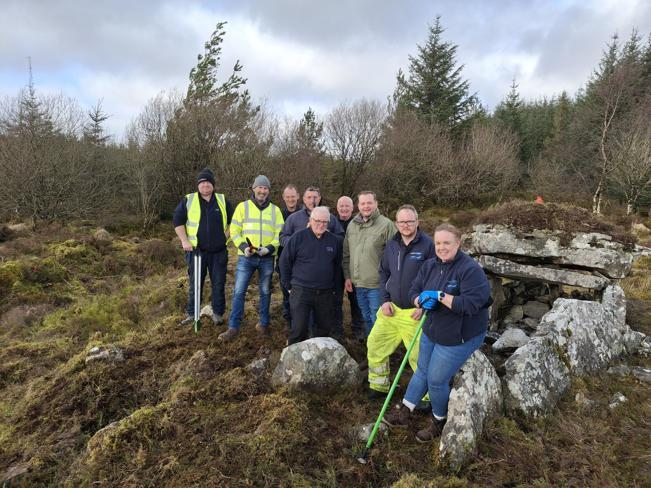
NI Water worked closely with Historic Monuments Branch and Forest Service to obtain the required permissions for restoration at the Ally Hill site
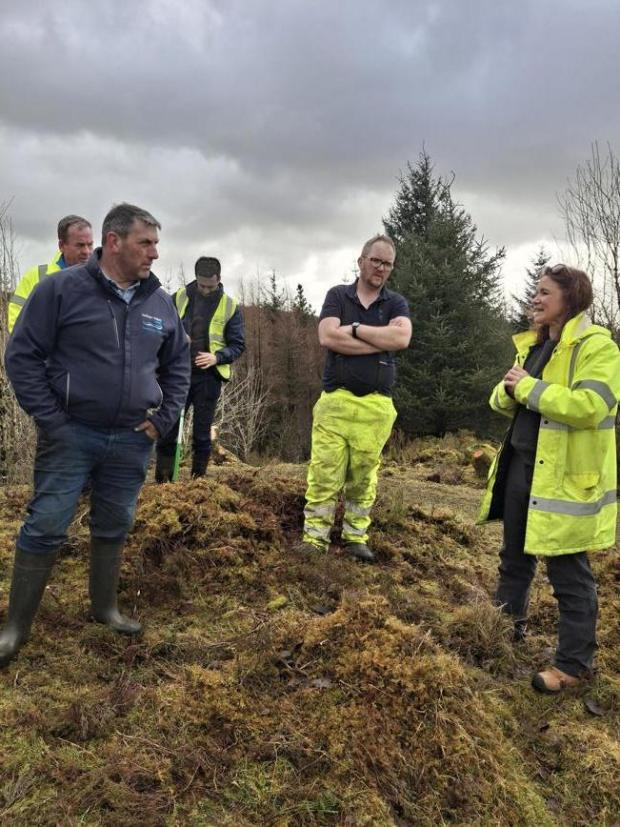
NI Water worked closely with Historic Monuments Branch and Forest Service to obtain the required permissions for restoration at the Ally Hill site.
Ancient Neolithic Court Tomb Preserved in County Tyrone
A 5,500-year-old Neolithic court tomb has been carefully restored and preserved following a collaborative project in County Tyrone. The monument, known as the Ally Hill court tomb, is considered a significant part of Northern Ireland’s prehistoric heritage, offering insights into early human society and burial practices.
Understanding Court Tombs
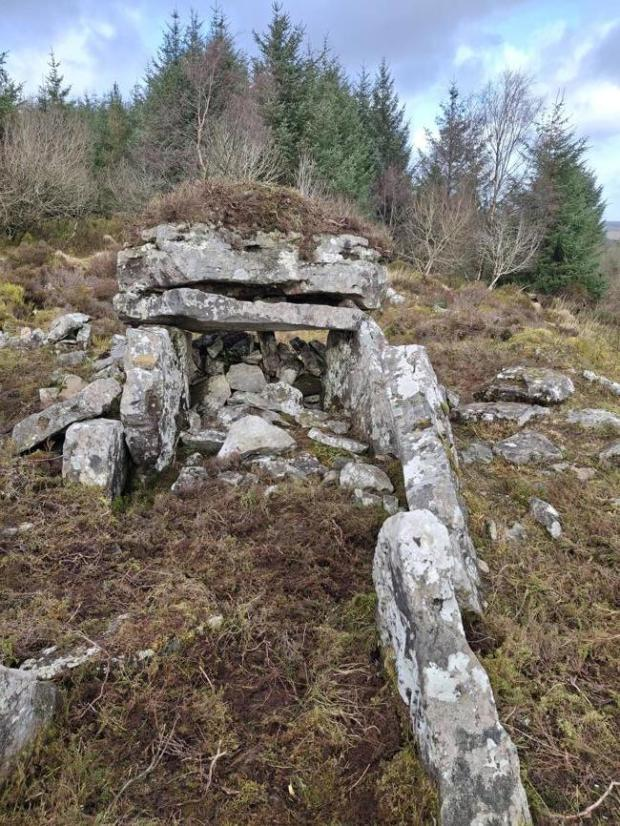
Court tombs are an ancient type of stone monument, built during the Neolithic period. They typically feature an open forecourt leading to one or more roofed burial chambers, which were used for communal burials and ceremonial activities. The Ally Hill tomb, situated near the Lough Bradan Water Treatment Works, provides a rare opportunity to study these structures in a relatively well-preserved state.
Over the decades, however, the site had become heavily overgrown with heather and encroaching trees. This natural overgrowth, combined with its proximity to a working water facility, posed risks to the long-term preservation of the stones.
Community-Led Conservation Effort
The initiative began when the Drumquin Historical Society approached NI Water for assistance. Recognizing the monument’s importance, NI Water partnered with the society and worked closely with the Historic Monuments Branch and Forest Service to secure the necessary licences and permissions under the Historic Monuments and Archaeological Objects (Northern Ireland) Order 1995.
This collaborative approach ensured that restoration work complied with all legal and conservation standards, preserving the site while minimizing disruption to its natural setting.
Restoration in Action
Under the guidance of Dr. Vicki Ginn from the Historic Environment Division, the restoration team carried out careful clearing of the site. The work included:
Cutting back overgrown heather that obscured the stone structure
Removing encroaching tree branches that threatened the tomb’s stability
Ensuring that all stones and features remained intact and undamaged
The practical work was led by Anthony McGirr, Wastewater Networks Area Manager for NI Water, with support from staff including Kevin McAleer and Francis Bradley. The team also received assistance from Lowry Building and Civil Engineering, which provided a welfare vehicle to support the day’s activities.
Local Support and Engagement
Seamus Gormley, Chairperson of the Drumquin Historical Society, attended the restoration and praised the collaboration. He highlighted that the project “ensures that the Ally Hill tomb will be preserved within our local landscape for generations to come,” underlining the importance of combining community interest with professional expertise.
NI Water emphasized that such projects reflect their commitment not only to modern water services but also to protecting cultural heritage. By maintaining the tomb in situ, they help safeguard a tangible connection to Northern Ireland’s distant past.
The Tomb’s Significance
The Ally Hill court tomb is more than just an archaeological site; it is a window into Neolithic life. Court tombs offer valuable information about prehistoric social organization, religious practices, and construction techniques. Preserving them allows both researchers and the public to understand how early communities lived, commemorated the dead, and interacted with their environment.
A Model for Heritage Preservation
The successful restoration of the Ally Hill tomb demonstrates the power of cooperation between public utilities, local societies, and heritage authorities. By working together, these groups ensure that ancient monuments are protected while remaining accessible for education and study.
The project also sets a precedent for similar initiatives across Northern Ireland, showing how modern organizations can actively contribute to preserving archaeological treasures while respecting their historic and cultural significance.
Looking Ahead
With the overgrowth cleared and the stones stabilized, the Ally Hill court tomb is now safeguarded for future generations. Researchers can continue to study the site, and local residents and visitors can appreciate a part of Northern Ireland’s rich prehistoric landscape that might otherwise have been lost.
Through careful planning, professional guidance, and community engagement, the Ally Hill tomb stands as a symbol of how heritage preservation can bridge past and present, keeping history alive in the landscape today.