Rare Roman Lead Ingots Discovered in West Wales
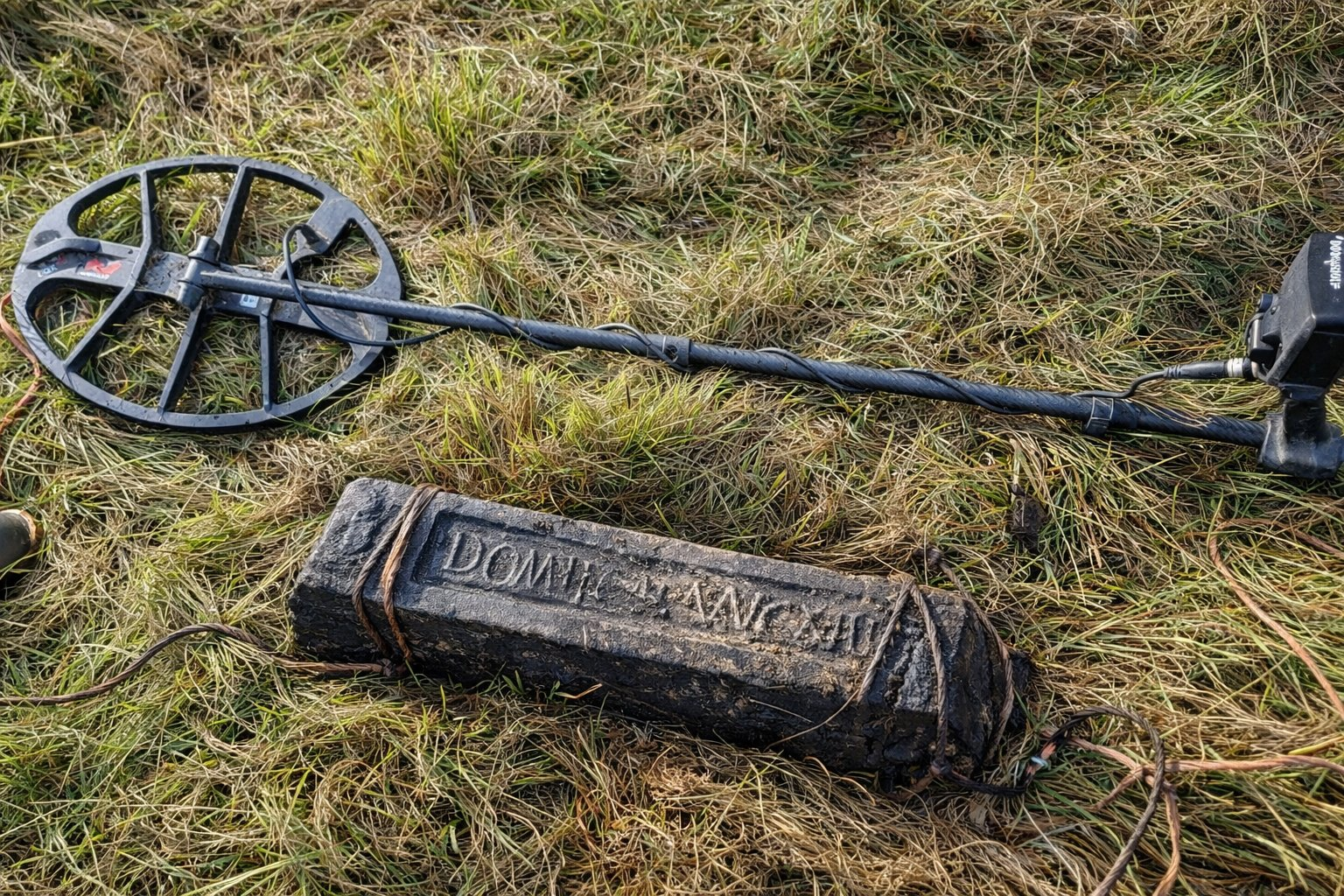
Two exceptionally rare Roman lead ingots, nearly 2,000 years old, have been uncovered on farmland in west Wales—offering a remarkable glimpse into the region’s ancient industrial past.
The rectangular lead blocks, often referred to as “pigs,” were found on grazing land in Llangynfelyn, Ceredigion, by metal detectorists Nick Yallope and Peter Nicholas. Cast into the surface of the metal is an inscription dating the ingots to AD 87. The text references Emperor Domitian, who ruled from AD 81 to 96 and played a key role in expanding and strengthening Roman Britain.
Evidence of Roman Control and Industry
During the Roman era, lead ingots were produced from locally extracted ore and distributed throughout the empire. The metal was widely used for manufacturing tools, weapons, plumbing systems, and construction materials.
Official inscriptions stamped into the ingots signified imperial oversight of mining and production. In Roman Britain, mineral resources were strategically important, and such markings reinforced state authority over valuable raw materials.
The newly discovered ingots highlight the economic and political significance of Wales within the broader Roman Empire.
A Tangible Link to Wales’ Roman Past
Geraint Jenkins, the landowner who permitted the search, described the find as extraordinary. He noted how striking it is to imagine that land now used for organic farming once formed part of a vast Roman industrial network.
For the detectorists, the discovery was equally meaningful. Nick Yallope expressed pride in uncovering an artefact of such rarity and historical value, calling it an exciting contribution to local heritage. Peter Nicholas added that his aim is always to preserve important finds for the benefit of the community and future generations.
First of Their Kind in West Wales
Carrie Canham of Ceredigion Museum in Aberystwyth confirmed that these are the first Roman lead ingots of this type ever found in west Wales. She emphasized that the discovery underscores Ceredigion’s importance during Domitian’s reign.
According to Canham, the region’s rich deposits of minerals and ore were a major reason the Romans sought to control the area. Lead extracted here would have been transported across the empire, supporting construction and military operations far beyond Britain.
The museum hopes to acquire the ingots and display them in a new archaeology gallery scheduled to open in 2027.
Treasure Law in Wales
Under the Treasure Act 1996, anyone who discovers potential treasure in Wales must report it to a Finds Liaison Officer within 14 days. Failure to comply can lead to fines or even imprisonment.
Once reported, experts assess whether the object meets the legal criteria for treasure. If it does, museums are given the opportunity to acquire the artefact, ensuring that significant discoveries remain accessible to the public.
The west Wales lead ingots not only illuminate Britain’s Roman industrial history but also serve as a powerful reminder of how everyday landscapes can still hold extraordinary stories from the ancient world.