• MAIN PAGE
  • LATEST NEWS
    • Lost Cities
    • Archaeology's Greatest Finds
    • Underwater Discoveries
    • Greatest Inventions
    • Studies
    • Blog
  • PHILOSOPHY
  • HISTORY
  • RELIGIONS
    • Africa
    • Anatolia
    • Arabian Peninsula
    • Balkan Region
    • China - East Asia
    • Europe
    • Eurasian Steppe
    • Levant
    • Mesopotamia
    • Oceania - SE Asia
    • Pre-Columbian Civilizations of America
    • Iranian Plateau - Central Asia
    • Indus Valley - South Asia
    • Japan
    • The Archaeologist Editor Group
    • Scientific Studies
    • Aegean Prehistory
    • Historical Period
    • Byzantine Middle Ages
    • Predynastic Period
    • Dynastic Period
    • Greco-Roman Egypt
  • Rome
  • PALEONTOLOGY
  • About us
Menu

The Archaeologist

  • MAIN PAGE
  • LATEST NEWS
  • DISCOVERIES
    • Lost Cities
    • Archaeology's Greatest Finds
    • Underwater Discoveries
    • Greatest Inventions
    • Studies
    • Blog
  • PHILOSOPHY
  • HISTORY
  • RELIGIONS
  • World Civilizations
    • Africa
    • Anatolia
    • Arabian Peninsula
    • Balkan Region
    • China - East Asia
    • Europe
    • Eurasian Steppe
    • Levant
    • Mesopotamia
    • Oceania - SE Asia
    • Pre-Columbian Civilizations of America
    • Iranian Plateau - Central Asia
    • Indus Valley - South Asia
    • Japan
    • The Archaeologist Editor Group
    • Scientific Studies
  • GREECE
    • Aegean Prehistory
    • Historical Period
    • Byzantine Middle Ages
  • Egypt
    • Predynastic Period
    • Dynastic Period
    • Greco-Roman Egypt
  • Rome
  • PALEONTOLOGY
  • About us

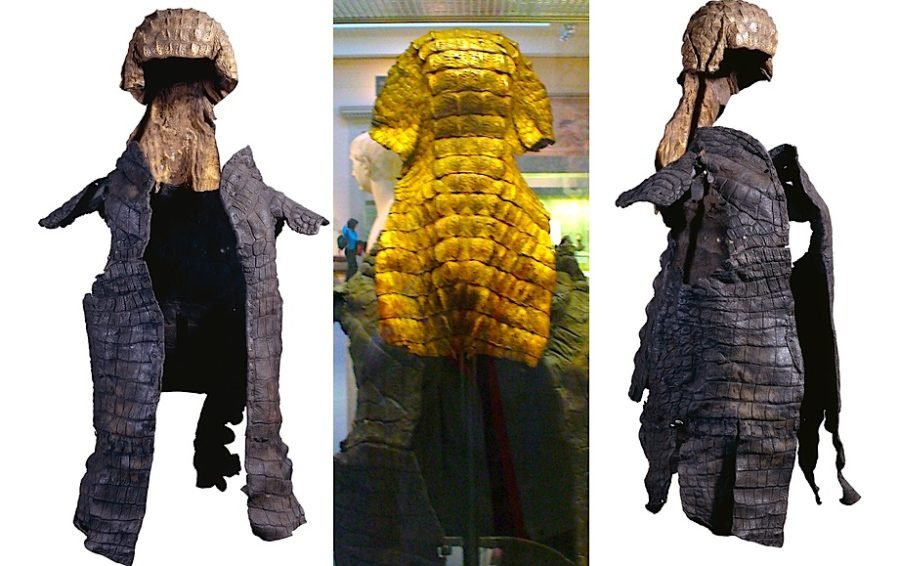
Roman Crocodile Armor is the Closest Thing Reality has to Dungeons & Dragons gear

June 8, 2022

In the past, we've examined some hilarious forms of body armor for both human and hound.But in terms of sheer flamboyance, it's hard to beat this suit of Roman crocodile armor from the third century, AD.

It's unclear if this suit bestows any sort of defense bonus against ochre jelly, so you'll have to ask a nonplussed curator if you can try it on. This priceless suit — which was discovered around Manfalut, Egypt preserved in a grotto — was ceremonial garb typical of the neighborhood crocodile cult. The Egyptians weren't the only culture to use crocodile skin for clothing, but this regalia is perhaps the most magnificent. As the British Museum explains:
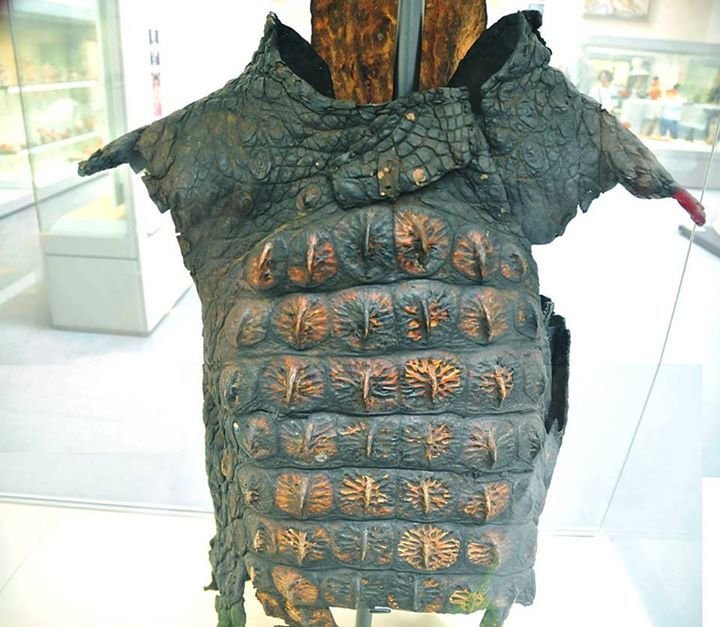
In Egypt Roman garrisons were closely integrated into civic and religious life and participated in local cults. Around Manfalout, on the banks of the Nile in central Egypt, Roman soldiers were particularly attracted to the crocodile cult centred on the sacred grottoes of the region. This imposing armour is made from the skin of a crocodile. It comprises a helmet and cuirass (body armour) and would have been used in military-style ceremonies of the regional crocodile cult.

It's giving me flashbacks to Serpentor from G.I. Joe, but then again, most things do.

Author: Cyriaque Lamar - gizmodo

In Rome
← Limestone Wall In Bolivia Has Over 5000 Dinosaur Footprints Belonging To 10 Different SpeciesA Greek-language 'Bloody' Curse Inscription Against Robbers Found in Galilee, Israel →
Featured
image_2026-04-15_232853833.png
Apr 17, 2026
The Sutton Hoo Helmet: Symbolism and Power in Anglo-Saxon England
Apr 17, 2026
Read More →
Apr 17, 2026
image_2026-04-15_232812659.png
Apr 17, 2026
Neanderthal Art: Challenging the Notion of Our "Primitive" Cousins
Apr 17, 2026
Read More →
Apr 17, 2026
image_2026-04-15_232658559.png
Apr 17, 2026
The Mystery of the Moai: How the Rapa Nui Truly Moved Their Giants
Apr 17, 2026
Read More →
Apr 17, 2026
image_2026-04-15_232557087.png
Apr 17, 2026
Lost Civilizations of the Sahara: Evidence of a Once-Green Desert Empire
Apr 17, 2026
Read More →
Apr 17, 2026
image_2026-04-15_232332327.png
Apr 17, 2026
The Voynich Manuscript: New Linguistic Approaches to History’s Most Mysterious Book
Apr 17, 2026
Read More →
Apr 17, 2026
image_2026-04-15_223718373.png
Apr 17, 2026
Archaeologists Unearthed a 6,200-Year-Old Megastructure. Its Purpose Is Still a Mystery.
Apr 17, 2026
Read More →
Apr 17, 2026
read more

Powered by The archaeologist