The valetudinarium (plural: valetudinaria) represents one of the most sophisticated aspects of Roman military infrastructure—a dedicated, institutionalized medical facility built into legionary fortresses to maintain the fighting strength of the legions.
While historical interpretations have evolved and are currently subject to some scholarly debate regarding the "uniformity" of these facilities, they remain the clearest archaeological evidence of a Roman commitment to preventative and restorative healthcare.
I. The Architectural Blueprint
The standard valetudinarium typically followed a distinct architectural plan, designed to prioritize hygiene and patient recovery:
Layout: Most identified hospitals featured a central courtyard—which provided light and ventilation—surrounded by a corridor that gave access to rows of small, individual patient rooms (cubicula). This design allowed for the isolation of the sick and injured, a crucial factor in preventing the spread of contagion.
Sanitation and Location: Romans understood that cleanliness was vital to survival. Hospitals were often situated in areas of the fort with access to clean water, carefully planned so that waste and drainage did not contaminate the water supply. They were typically positioned away from the noisiest and busiest parts of the camp to ensure the quiet necessary for healing.
Sanctuary and Ritual: Some valetudinaria included small shrines or sacred precincts dedicated to healing deities like Asclepius or Hygieia. This reminds us that Roman "practical" medicine often coexisted with spiritual appeals for divine favor in the recovery process.
II. Medical Personnel: The Medici and Capsarii
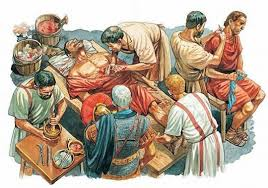
The Roman army maintained a formal, professionalized medical corps that was part of the immunes (soldiers exempt from standard labor duties).
Professionalization: The medical staff, collectively referred to as medici, were not merely "camp followers" but trained experts. Inscriptions found across the provinces document titles such as medicus legionis (legionary doctor) and medicus cohortis (cohort doctor).
The Capsarii: These were essentially battlefield medics—a critical innovation in casualty collection. Their name is derived from the capsa, the cylindrical box they carried containing bandages, salves, and instruments. They were trained to provide immediate, life-saving triage on the battlefield before evacuating the wounded to the rear.
Status and Privilege: To ensure the presence of quality surgeons, the Roman state granted medical personnel significant privileges, including exemptions from taxes, civic duties, and heavy manual labor, reflecting their high value to the state’s military readiness.
III. Equipment and Practice
Archaeologists have recovered a wide variety of medical instruments from military sites, though scholars warn that the presence of a few probes or scalpels does not always "prove" a hospital existed. However, cache finds at sites like Vindonissa (Switzerland) and Carnuntum (Austria) provide a clear picture of the tools available:
Surgical Toolkit: Scalpels, forceps, bone drills, catheters, and various types of probes (for examining wounds) have been found. These tools were often made of iron, bronze, or silver.
Wound Treatment: Romans used vinegar and wine as rudimentary antiseptics. Cauterization was a standard procedure for stopping hemorrhage or removing diseased tissue.
Pharmacology: They relied on an extensive knowledge of herbal medicine, including plants identified by military doctors like Dioscorides, who traveled with the legions and cataloged the medicinal properties of local flora.
IV. Scholarly Debate: Uniformity vs. Variation
It is important to note that modern scholarship is becoming more cautious about the "universal hospital" narrative. Some experts argue that:
No Single System: There may not have been a strictly mandated, uniform "national health service" across all legions. Medical care likely varied depending on the region, the commander's preferences, and the specific needs of the frontier.
Cultural Context: What we define as a "hospital" today may have functioned differently in the Roman mind. The valetudinarium served as a hub for recovery, but individual care—led by personal physicians or self-care—remained a significant part of the experience.
The valetudinarium represents a pivotal moment in the history of medicine: the transition from "heroic" individual medicine to the systematic, institutional care of a population.