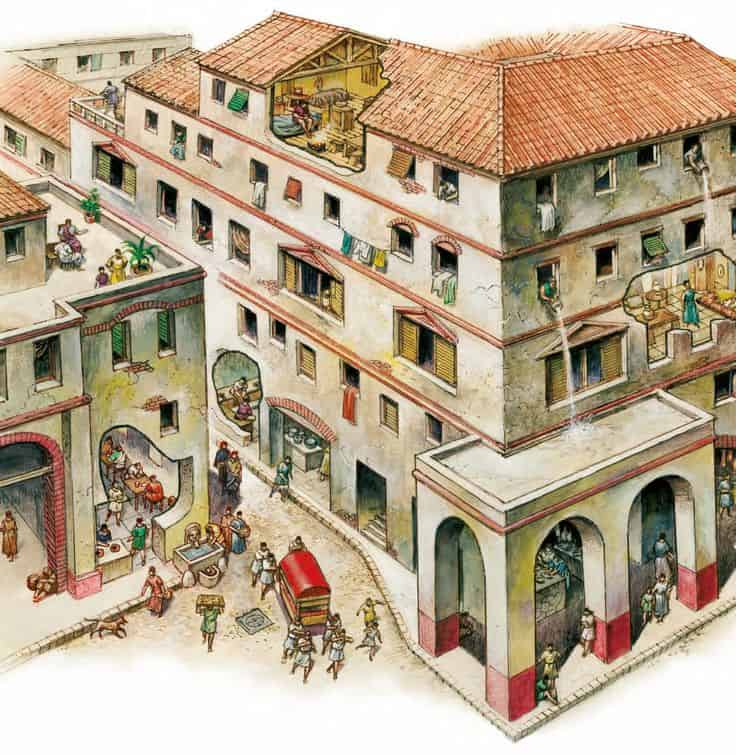
While the wealthy elites of ancient Rome lounged in sprawling, single-family townhouses (domus) or luxurious countryside villas, the vast majority of Rome's urban population lived a radically different reality.
To house an unprecedented metropolis of over one million people, Roman architects engineered the insula (plural: insulae—literally meaning "islands"). These multi-story, high-density apartment blocks were the true engines of Roman urban life. They were overcrowded, structurally volatile, and profoundly unequal, serving as a stark architectural reflection of the Roman class divide.
1. The Anatomy of an Insula
An insula was a multi-tiered apartment complex that took up an entire city block, surrounded on all sides by the narrow, chaotic streets of Rome. Typically rising between five to seven stories high, these structures operated on a strict vertical hierarchy of wealth: the higher you climbed, the poorer you were.
The Ground Floor (Tabernae)
The ground level was premium real estate. It featured a series of open-fronted shops and workshops called tabernae, where artisans hammered metal, bakers sold bread, and hot-food cafes (thermopolia) served the public. The back or mezzanine levels of these shops often housed the shopkeeper's family.
The Upper Levels (Cenacula)
Above the shops sat the apartments (cenacula).
The Low-Level Luxury: The first and second floors featured spacious, high-ceilinged apartments with multiple rooms and sturdy concrete balconies. These were rented out to well-to-do merchants or minor aristocrats.
The High-Level Slums: As the staircases narrowed and ascended, the apartments deteriorated into dark, single-room cubicles called pergulae. These attic rooms were rented out by the day or week to Rome’s poorest citizens: dockworkers, weavers, prostitutes, and destitute immigrants.
2. Structural Instability and the Concrete Scams
Living in an insula was a highly hazardous gamble. Because land prices in central Rome were astronomical, speculative landlords and corrupt contractors sought to maximize their profits by building as high as possible while spending as little as possible on materials.
Instead of utilizing expensive, fireproof kiln-baked bricks and high-quality volcanic concrete, contractors frequently constructed insulae out of opus craticium—a cheap, flimsy framing method consisting of a lattice of wooden laths covered in mud plaster.
Furthermore, to save money, landlords built walls incredibly thin and skimped on foundations. As a result, structural collapse was a daily occurrence in Rome. The contemporary writer Juvenal famously joked that Roman landlords propped up their rotting buildings with flimsy wooden beams, telling the tenants to sleep soundly while the walls were on the verge of cave-in.
3. The Constant Terror: Fire in the Metropolis
If structural collapse didn't claim an insula, fire inevitably did. The upper floors of an insula lacked any form of running water or ventilation. To survive the winter or cook a meal, tenants relied entirely on open charcoal braziers, portable oil lamps, and torches.
When you combine thousands of open flames with highly flammable wooden frameworks, dry thatch roofs, and overcrowded rooms, the result was a permanent urban powder keg.
Because there were no building codes or zoning laws for centuries, insulae were built incredibly close together. If a fire broke out on the ground floor of an insula, it would tear upward through the wooden staircases like a chimney.
Because there were no fire escapes and the windows were tiny, the poor living in the attic apartments were completely trapped. While the rich on the ground floor could step out onto the street instantly, the poor were frequently burned alive or forced to jump to their deaths.
4. Daily Life: No Water, No Toilets, No Kitchens
For the Roman poor, the apartment block was not a cozy sanctuary; it was merely a place to sleep. The physical limitations of the upper-floor cenacula forced human life out into the public squares:
The Plumbing Void: Only the wealthy ground-floor tenants had direct hookups to Rome’s famous aqueduct system and public sewer lines (Cloaca Maxima). The poor had to carry heavy ceramic jars of water up multiple flights of steep stairs.
The Chamber Pot Dilemma: Without toilets, tenants used communal earthenware chamber pots. While some would carry these down to the street to empty them into public vats, many took the lazy, highly illegal route of dumping their waste straight out the window into the narrow alleys below, routinely drenching passing pedestrians.
The Public Diet: Because the upper floors lacked kitchens and proper chimneys, cooking at home was a massive fire hazard. Consequently, the Roman working class rarely ate at home. They relied almost entirely on the street-food culture of Rome, buying cheap stews, lentil porridges, and coarse bread from local thermopolia.
5. The Imperial Reforms: Post-64 CE
The total vulnerability of the insulae system was laid bare during the Great Fire of Rome in 64 CE, which destroyed huge swathes of these wooden apartment blocks. Following the disaster, Emperor Nero implemented Rome's first comprehensive urban planning and building safety codes:
He banned the use of flammable wooden opus craticium for exterior walls, mandating fire-resistant volcanic tufa stone instead.
He capped the legal height of insulae to roughly 60–70 Roman feet (about 5 to 6 stories) to prevent collapses and allow for easier firefighting.
He mandated that all new apartment blocks be built with open, stone-vaulted porticoes along the front facades, providing wider streets to act as natural firebreaks and ensuring clear evacuation routes for tenants.
Despite these imperial upgrades, the insulae remained symbols of systemic urban inequality. They allowed Rome to pack over a million people into a tight geographic footprint, creating a vibrant, chaotic, and hyper-dense street culture that served as the true heart of the empire—proving that while the legions conquered the world, it was the working-class poor crammed into stone-and-wood islands who kept the capital running.