The expansion of the city of Rome from a modest volcanic hilltop settlement into a sprawling metropolis of over one million inhabitants was not merely a triumph of military conquest; it was an unparalleled feat of hydraulic engineering. At the absolute core of Roman urban survival was its sophisticated infrastructure for water management.
By constructing a vast, gravity-powered network of aqueducts and public fountains, Roman engineers transformed water from a scarce natural commodity into a highly regulated, publicly accessible civic utility. This infrastructure powered the city's famous public baths, flushed its subterranean sewer networks, and served as the ultimate visual propaganda for imperial wealth and engineering dominance.
1. The Engineering of Gravity: How Aqueducts Worked
Between 312 BCE and 226 CE, the city of Rome constructed eleven major aqueduct lines, spanning a combined length of over 500 kilometers. Remarkably, this entire network operated without mechanical pumps. It relied entirely on a single physical principle: constant, gravity-powered downhill flow.
To harvest water from pristine mountain springs located up to 90 kilometers away in the Apennine Mountains, Roman hydraulic engineers (aquarii) executed precise surveying calculations using specialized tools:
The Groma: A cross-shaped sighting instrument used to align straight lines across long distances.
The Chorobates: A massive 20-foot wooden leveling device utilizing water-filled grooves and plumb bobs to calculate exceptionally shallow slopes.
To maintain a steady, uniform incline—frequently dropping as little as 30 centimeters per kilometer ($1:3000$)—the aqueducts had to adapt to changing terrain:
Underground Conduits: Roughly 80% to 90% of Rome’s aqueduct network was actually hidden underground. Channels (specus) were tunneled directly through solid rock or dug into trenches, lined with waterproof concrete (opus signinum), and fitted with vertical inspection shafts to protect the water from evaporation, thermal fluctuations, animal contamination, and enemy sabotage.
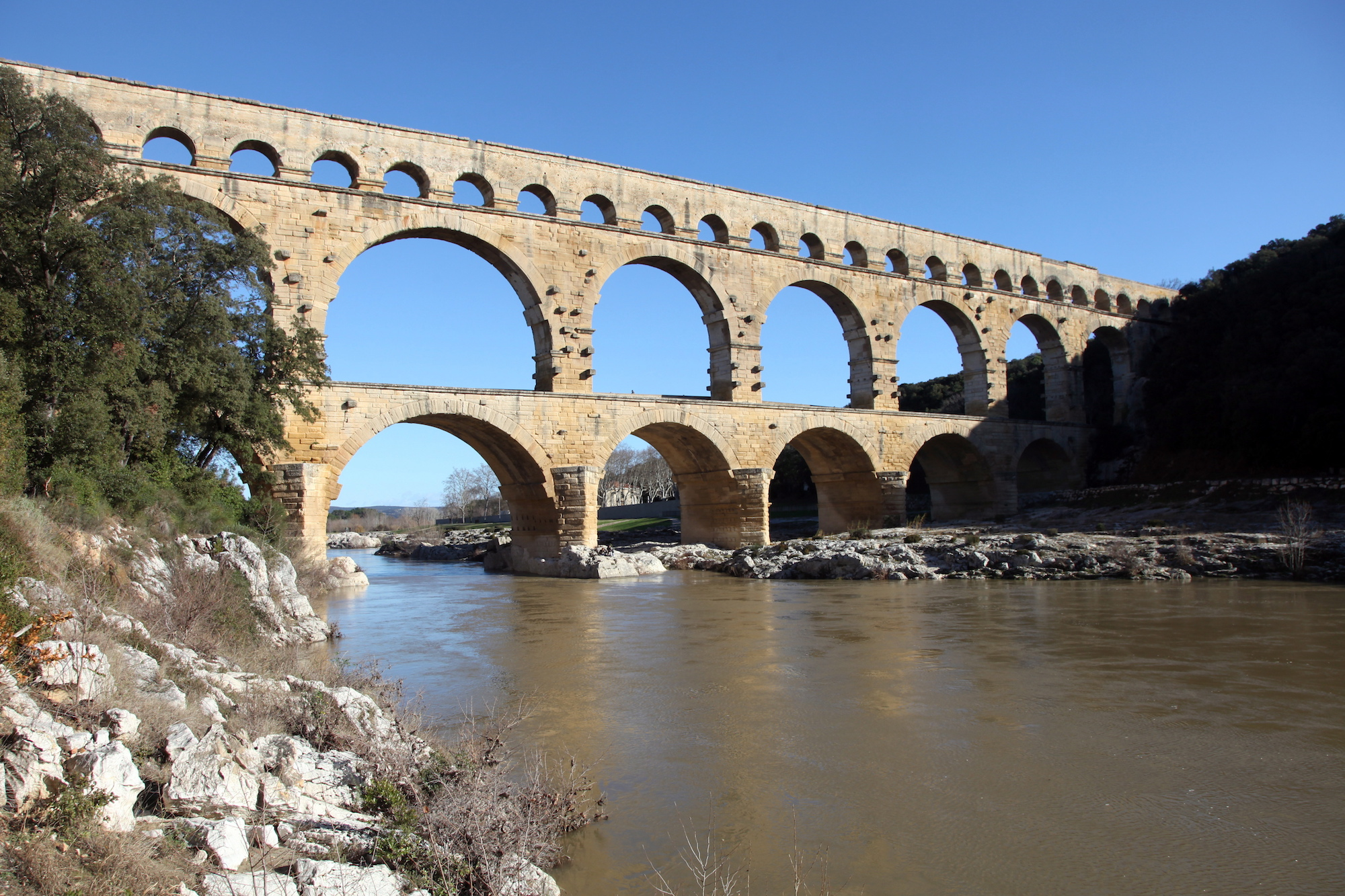
Arched Bridges: When an aqueduct encountered a deep valley or a low-lying plain approaching Rome, engineers elevated the channel atop monumental stone or brick arched arcades. The arch design provided immense structural strength while minimizing wind resistance and saving precious building materials.
The Inverted Siphon: If a valley was too deep to bridge with arches, engineers utilized fluid dynamics to construct an inverted siphon. Water was collected in a header tank on one side of the valley, funneled down through pressurized lead or clay pipes, rushed across the valley floor under intense kinetic pressure, and naturally ascended into a receiving tank on the opposite side, matching its original height.
2. Urban Distribution: The Castellum Aquae
When an aqueduct line finally reached the city walls of Rome, it emptied its cargo into a massive, centralized distribution fortress called a Castellum Aquae (water castle). This chamber acted as a sediment settling tank and a pressure regulator.
Inside the Castellum Aquae, the incoming water was divided into three distinct pipe networks to ensure a strict, legally mandated triage of water priority during shortages or droughts:
The Public Fountains: The lowest, baseline chamber supplied the city’s hundreds of public street fountains. This water was free and open to all citizens, ensuring a baseline of survival for the poorest inhabitants.
The Public Baths and Theaters: The secondary chamber supplied the grand imperial bath complexes (thermae), public latrines, and water features in theaters. This network was vital for public hygiene and state-sponsored entertainment.
Private Luxury Homes: The highest chamber supplied private villas and wealthy apartments (insulae). Wealthy patricians paid a specialized water tax (calix) for the privilege of tapping into the public lines, drawing water through calibrated lead pipes directly into their private fountains, gardens, and private baths.
3. The Public Fountains: Civic Lifelines and Propaganda
For the average Roman citizen living in cramped, wooden apartment blocks without indoor plumbing, the local street fountain (lacus) was an absolute daily lifeline. Rome was home to over 1,300 public basins and fountains, meaning no citizen was ever more than a few minutes' walk from fresh, running water.
   [ CONSTANT AQUEDUCT INFLOW ] ───► Public Street Basins (Lacus) ───► Excess Overflow
                                                                               │
                                                                   (Gravity Flushing System)
                                                                               │
   [ SUBTERRANEAN SEWERS ] ◄─────── Flushes Public Latrines ◄──────────────────┘
These fountains were engineered with a brilliant, continuous-flow design. Unlike modern fountains that recirculate water using electric pumps, Roman fountains ran 24/7, constantly spilling fresh water over the edges of their monolithic stone basins.
This constant overflow was not wasted; it ran directly down the stone streets, scrubbing the roadways clean of horse manure and garbage, before emptying into the public latrines and flushing the city's massive subterranean sewer main, the Cloaca Maxima.
Beyond utility, public fountains functioned as grand monuments of political propaganda. Major intersections featured nymphaea—elaborate, theatrical fountains adorned with marble statues of water nymphs, gods, and emperors, complete with cascading waterfalls designed to showcase the generosity and technological mastery of the ruling imperial dynasty.
4. Regulation, Theft, and the Water Curator
Managing this monumental infrastructure required a massive, dedicated bureaucratic task force. At the apex of this hierarchy stood the Curator Aquarum (Water Curator), a high-ranking Roman official responsible for the maintenance, security, and legal regulation of the entire city's water supply.
The most famous Curator, Sextus Julius Frontinus (who took office in 97 CE), left behind a definitive text, De Aquaeductu, which meticulously detailed the administrative challenges of running Rome’s water network.
Frontinus dedicated much of his career to combating water theft (fraus). Wealthy landowners and corrupt industrial operators frequently hired rogue plumbers to illegally pierce underground aqueduct conduits or install oversized lead pipes (fistulae) to steal water without paying the imperial tax. Frontinus instituted a rigorous system of stamping every authorized lead pipe with an official imperial seal, tracking the exact volumetric delivery (quinaria) of each line to protect the integrity of the public fountains.
5. Summary of Urban Water Architecture
Source Gathering: Gravity-powered channels (specus) running primarily underground, transitioning to monumental arched bridges over low valleys to maintain a minimal, steady downward slope from mountain springs.
Centralized Regulation: Central distribution hubs (castella aquae) that segregated water into three distinct chambers, prioritizing public basins over recreational baths and private luxury villas.
Civic Application: Continuous-flow street basins (lacus) acting as primary drinking water sources, while the constant overflow naturally cleansed public streets and flushed the subterranean sewer network.
Administrative Control: Regulated by a dedicated imperial agency led by the Curator Aquarum, using stamped lead pipes and standard volumetric measurements to combat widespread illegal water tapping.
The water management system of ancient Rome remains one of the most striking achievements of the classical world. By viewing water as an essential public right and a primary pillar of urban sanitation rather than a commercial luxury, Roman engineers successfully sustained a megacity under conditions that would not be replicated until the industrial era. The aqueducts and fountains did not merely keep Rome hydrated; they created a highly advanced civic ecosystem where engineering, law, and architecture merged to elevate the quality of human life.