Introduction
Few places demonstrate the long history of rock art in Utah as clearly as Sego Canyon.
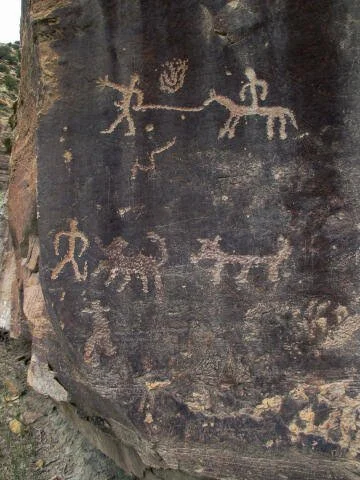
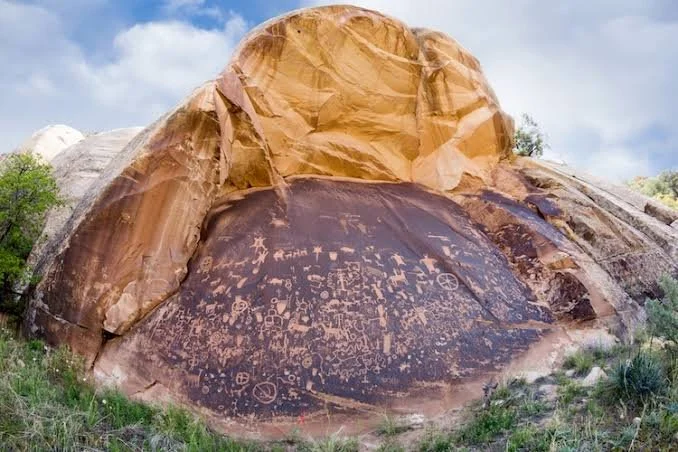
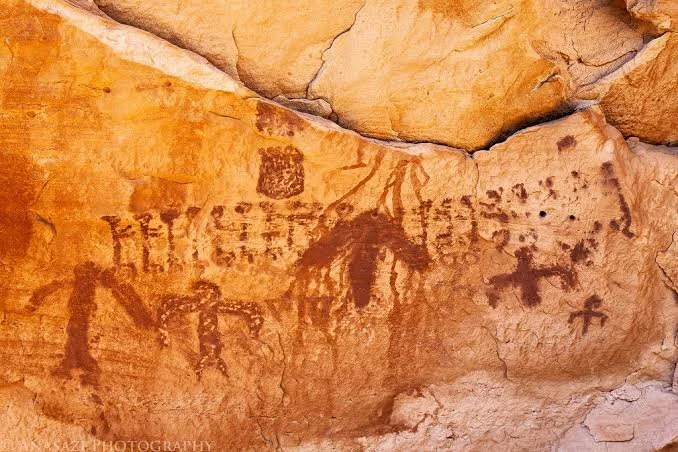
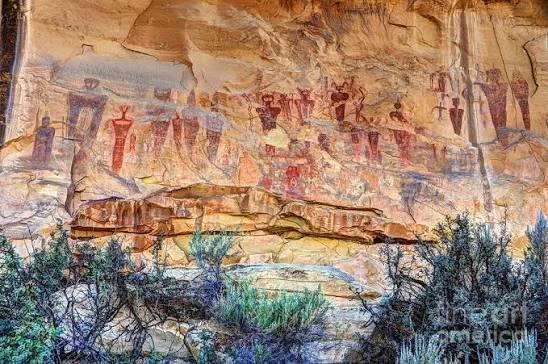
Located in Grand County, near the Book Cliffs, Sego Canyon contains panels representing multiple periods and artistic traditions. Anthropomorphic figures, geometric imagery, animal representations, and later inscriptions appear across the canyon walls.
The result is not one unified style.
It is a visual record created across thousands of years.
Sego Canyon therefore provides an important case study in the archaeological interpretation of rock art, cultural continuity, and landscape use.
A Long Human History
The archaeological record of the American Southwest extends deep into prehistory.
Hunter-gatherers occupied the region long before agriculture.
Later, Fremont communities developed agricultural settlements.
Still later, Ute peoples continued using the landscape.
Each population interacted with the canyon differently.
Rock art preserves fragments of those interactions.
Multiple Rock-Art Traditions
Sego Canyon is particularly famous because researchers have identified several different rock-art traditions.
These include imagery associated with:
Archaic traditions
Fremont traditions
later Indigenous use
historic inscriptions
The styles overlap in places.
This creates a chronological puzzle.
An image located beside another image is not necessarily contemporary.
One may have been produced centuries earlier.
Barrier Canyon Style
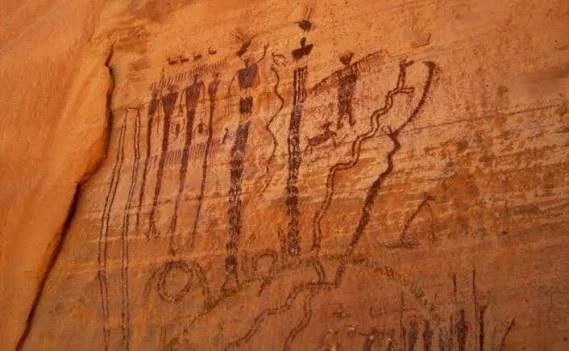
Some of the canyon's most dramatic figures belong to traditions associated with the Barrier Canyon Style.
These figures can have elongated bodies, large heads, and unusual proportions.
They may dominate entire panels.
Their visual impact has contributed to considerable speculation about their meaning.
Archaeologists generally avoid assigning a single interpretation.
The figures could have represented beings connected with ritual or cosmological traditions.
But without direct written explanations, certainty is impossible.
Fremont Imagery
Later Fremont artists created distinctive imagery.
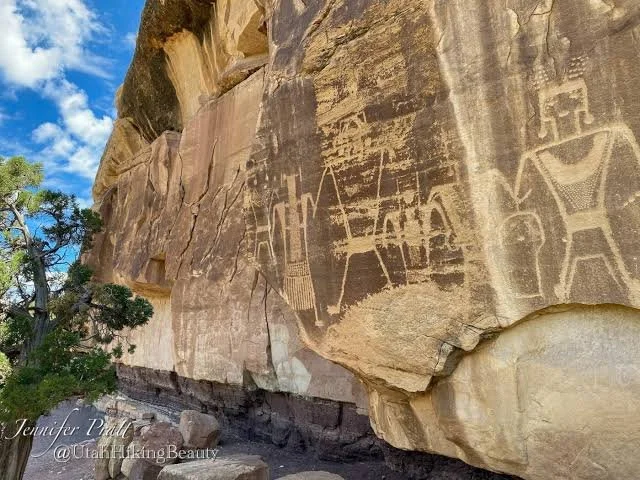
Fremont anthropomorphic figures often have trapezoidal bodies.
Some display elaborate headdresses, earrings, necklaces, or other features.
Animals and hunting-related imagery also occur.
These differences allow archaeologists to distinguish broad artistic traditions.
Why Styles Changed
Changes in rock art may reflect cultural transformation.
Different populations may have had different artistic traditions.
Religious concepts may have changed.
New social identities may have emerged.
Artists may have deliberately preserved older imagery while adding new images.
The canyon thus became a visual archive.
Superimposition
One of the most useful archaeological clues is superimposition.
If one image is painted or carved over another, the lower image must be older.
This does not necessarily provide an exact date.
But it establishes relative chronology.
A sequence can therefore be reconstructed.
Older figures may lie beneath newer ones.
Later artists may have added their own imagery to an already meaningful location.
The Canyon as a Route
Sego Canyon is not simply an art gallery.
It is a natural corridor through the landscape.
Canyons provide relatively easy movement through rugged terrain.
They can lead toward water sources, hunting areas, and other valleys.
This may help explain why multiple generations repeatedly returned.
The Role of Water
Water is one of the most important factors in Utah archaeology.
The desert environment makes permanent water sources especially valuable.
A canyon containing springs or seasonal drainage could support people, animals, and vegetation.
Rock-art locations near water may therefore have been strategically important.
Archaeological Context
Archaeologists study more than the rock walls.
They examine:
nearby camps
hearths
stone tools
pottery
animal remains
plant remains
trails
These materials can reveal the people who used the canyon.
Fremont Agriculture
Fremont communities practiced agriculture in parts of Utah.
Maize was an important crop.
Farmers also hunted and gathered.
The mixed economy allowed communities to survive variable environmental conditions.
Sego Canyon's archaeological record therefore belongs to a broader landscape of agricultural adaptation.
Historic Inscriptions
Later travelers left inscriptions on some canyon walls.
Historic graffiti is archaeologically different from prehistoric rock art.
Nevertheless, historic inscriptions can themselves become evidence of later history.
The challenge is distinguishing legitimate historic documentation from modern vandalism.
Preservation Problems
Rock art is extremely fragile.
Weathering cannot be stopped.
But human damage can often be prevented.
Touching panels, scratching names, applying chalk, or adding new graffiti can permanently alter the archaeological record.
Modern visitors should therefore observe rock art without touching or modifying it.
Indigenous Heritage
The canyon's Indigenous history extends beyond the prehistoric periods.
Ute peoples continued to use the broader region.
This demonstrates why terms such as "prehistoric" can sometimes be misleading.
Indigenous history did not end with the appearance of European settlers.
Conclusion
Sego Canyon is important because it preserves a long sequence of human artistic expression.
Its panels demonstrate that Utah's deserts were repeatedly visited and inhabited.
Different generations created different visual traditions.
Some produced monumental anthropomorphic figures.
Others created Fremont imagery.
Later peoples continued using the landscape.
The canyon is therefore a chronological archive written directly onto stone.
Its importance lies not merely in the beauty of the images but in what their layering tells us about cultural continuity, change, and the enduring human relationship with the Utah landscape.