Introduction
Sigtuna occupies a special position in the history of medieval Scandinavia. Founded in the late 10th century, it became one of the earliest planned urban settlements in what is now Sweden and developed into an important center of royal authority, Christianity, trade, craftsmanship, and administration.
Unlike the older agricultural settlements and aristocratic centers that dominated much of Iron Age Scandinavia, Sigtuna represented a different type of community. It was deliberately established as a town, with a concentration of inhabitants, workshops, merchants, religious institutions, and administrative functions.
Its emergence occurred during a period of profound transformation. Scandinavia was moving from the decentralized social structures of the Viking Age toward increasingly centralized kingdoms. Christianity was spreading, rulers were strengthening their authority, and commercial networks were connecting Scandinavia with the Baltic, eastern Europe, and the wider European world.
Sigtuna therefore provides archaeologists with evidence for the moment when Scandinavian society began developing recognizable medieval urban institutions.
The Foundation of Sigtuna
Sigtuna was established around the end of the 10th century, traditionally associated with King Erik Segersäll or the early Swedish royal dynasty, although the precise circumstances of its foundation remain debated.
Its location was strategically important.
The settlement stood on the shores of Lake Mälaren, within a water-based transportation system that connected the interior of Sweden with the Baltic Sea.
Before the development of extensive medieval road networks, waterways were among the most efficient means of transportation.
Sigtuna's position allowed goods, people, information, and political influence to move through the region.
The town was therefore not simply established because the landscape was convenient for settlement. Its location made it useful for economic and political purposes.
A New Kind of Scandinavian Settlement
Earlier Scandinavian communities could be large and influential without functioning as towns.
Royal halls, market sites, farms, and seasonal trading locations existed throughout the Viking world.
Sigtuna was different because permanent urban functions became concentrated in one location.
People could specialize in particular occupations rather than relying entirely on farming.
Archaeological excavations have revealed evidence for:
metalworking;
bone and antler working;
textile production;
leatherworking;
woodworking;
trade;
food preparation;
religious activity.
This concentration of specialized production indicates an increasingly complex economy.
Sigtuna and the Christianization of Sweden
Sigtuna developed during the same period in which Christianity was becoming increasingly influential in Scandinavia.
Christianization was not an instantaneous process.
Traditional religious beliefs continued alongside Christianity for generations, and archaeological evidence suggests that religious transformation occurred gradually.
Sigtuna nevertheless became an important Christian center.
Churches were established in and around the town, and Christian burial practices increasingly replaced older traditions.
The town's religious institutions also helped connect Sweden with Christian Europe.
Clergy, missionaries, merchants, and travelers carried new religious ideas into Scandinavia.
Christianity also introduced new forms of literacy, administration, architecture, and international communication.
The Sigtuna Runestones
One of the most remarkable features of Sigtuna is its connection with runic writing.
Runestones were not merely decorative monuments.
They could commemorate the dead, proclaim social relationships, record journeys, or express religious identity.
Sigtuna's runic evidence is especially valuable because it reflects a society undergoing rapid transformation.
Some inscriptions preserve names and personal relationships that would otherwise have disappeared from the historical record.
They demonstrate that ordinary individuals, craftsmen, merchants, warriors, and political figures participated in a literate culture even before Latin writing became dominant.
Coinage and the Growth of a Monetary Economy
Sigtuna is particularly important for the history of Scandinavian coinage.
The town became associated with some of Sweden's earliest coin production.
Coins represented more than money.
They were also instruments of political authority.
A ruler who issued coins could place his name and symbols into everyday economic transactions.
Coinage therefore helped communicate royal power.
The emergence of local minting also demonstrates that Sigtuna had developed an economy sufficiently sophisticated to support standardized currency.
International Trade
Sigtuna was connected to the broader commercial networks of the Viking and medieval worlds.
Archaeological discoveries demonstrate contact with regions extending far beyond central Sweden.
Imported materials and objects indicate connections with the Baltic, eastern Europe, and western European markets.
Merchants could exchange:
furs;
iron;
textiles;
wax;
amber;
imported ceramics;
glass;
metal goods;
luxury objects.
The town therefore participated in a much larger economic system.
Craftsmen and Urban Production
Craft specialization was one of the defining characteristics of Sigtuna.
Archaeological layers contain waste products associated with manufacturing.
Metalworking remains include slag, fragments, tools, and production debris.
Bone and antler workers produced handles, combs, decorative objects, and other useful items.
Textile production required spinning, weaving, dyeing, and sewing.
Leatherworkers manufactured shoes, straps, bags, and other products.
The concentration of these activities suggests that Sigtuna was not simply a residence for merchants and elites.
It was a productive urban community.
Houses and Streets
Archaeological excavations have revealed evidence of planned settlement organization.
Buildings were often arranged along plots or streets rather than being scattered randomly across the landscape.
Houses were primarily constructed from wood, making them vulnerable to decay, fire, and rebuilding.
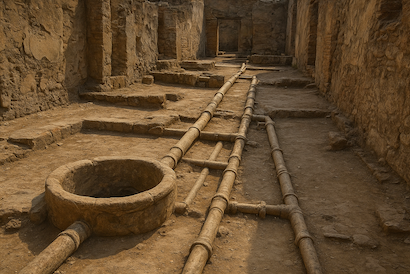
Consequently, modern archaeologists frequently reconstruct the history of the town through postholes, floor surfaces, hearths, wells, refuse pits, and layers of occupation.
Repeated rebuilding created complex archaeological stratigraphy.
A single location could contain evidence from several generations.
Everyday Life
Sigtuna's inhabitants experienced a mixture of urban and rural life.
Although agriculture remained essential, townspeople increasingly relied on commercial exchange for certain goods.
Food remains provide evidence of diets based on grains, meat, fish, dairy products, and locally available resources.
Animals also played an important role in transportation, food production, and craft industries.
The town would have been noisy and active.
Smiths hammered metal.
Merchants negotiated transactions.
Woodworkers constructed objects.
Children played around houses and streets.
Travelers arrived by boat.
Religious ceremonies brought communities together.
The archaeological record transforms Sigtuna from an abstract historical name into a living settlement.
Social Hierarchy
Sigtuna was not an egalitarian community.
Social differences can be identified through housing, burial practices, imported goods, and access to valuable materials.
Royal and aristocratic interests were particularly important.
The town's connection with early Swedish kings suggests that political authority played a major role in its development.
At the same time, merchants and craftsmen possessed specialized knowledge that gave them economic importance.
Urban society therefore consisted of multiple social groups whose interests sometimes overlapped and sometimes competed.
Sigtuna's Political Importance
The town became an important center of emerging Swedish state formation.
Royal authority required places where taxes could be collected, goods exchanged, officials could operate, and political messages could circulate.
Sigtuna provided precisely such an environment.
Its development illustrates the broader transformation of Scandinavian kingship.
Instead of authority being based primarily on personal relationships between a ruler and local elites, medieval kingdoms increasingly depended upon institutions, towns, churches, taxation, and administration.
Archaeology and the Reconstruction of Sigtuna
Because so little medieval architecture survives above ground, archaeology is essential.
Excavations have recovered enormous quantities of material.
These include:
pottery;
animal bones;
metal objects;
coins;
glass;
textiles;
combs;
tools;
weapons;
building remains;
runic inscriptions.
Each object contributes a small piece to the history of the town.
A broken comb may reveal local craftsmanship.
A coin may indicate trade or political connections.
A foreign object may demonstrate long-distance exchange.
A piece of animal bone may reveal dietary practices.
Archaeology therefore allows historians to reconstruct aspects of Sigtuna that written sources never recorded.
Sigtuna's Medieval Legacy
Sigtuna remained an important settlement after the Viking Age.
Christian institutions became increasingly established, and the town continued to participate in regional commerce.
Its historical importance eventually became overshadowed by larger Swedish urban centers, particularly Stockholm, but Sigtuna remained a significant settlement.
Its early foundation nevertheless makes it one of the most important archaeological sites for understanding Sweden's transition into the medieval period.
Conclusion
Sigtuna was more than an early Swedish town.
It was a manifestation of a changing Scandinavian world.
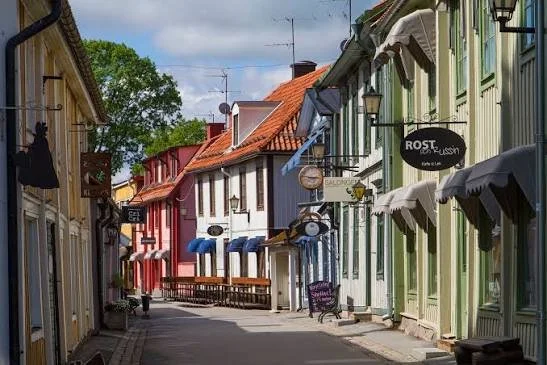
Its streets brought together craftsmen, merchants, religious specialists, travelers, political authorities, and ordinary families. Its workshops demonstrate increasing economic specialization. Its churches reveal the spread of Christianity. Its coins reflect emerging royal institutions. Its runestones preserve individual voices from a period of enormous social transformation.
The town's greatest importance lies in what it represents.
Sigtuna shows how Scandinavia moved from the decentralized communities of the Viking Age toward an increasingly urban, Christian, monetized, and politically centralized medieval society.
Beneath its modern streets lie the remains of one of the foundations upon which medieval Sweden was built.