Introduction
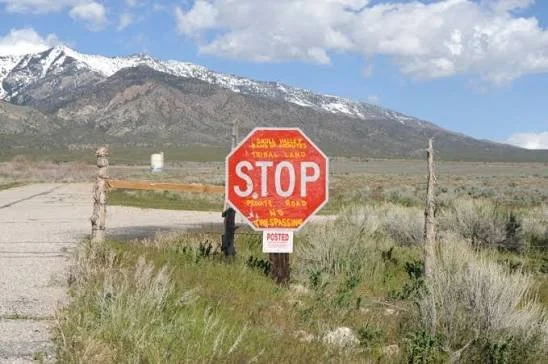
Skull Valley contains a long and complicated history of Indigenous adaptation, settlement, agriculture, ranching, transportation, and federal land policy.
The Goshute people have deep historical connections to the Great Basin, including western Utah's valleys and mountain ranges. Their traditional lifeways were highly adapted to an arid environment.
Later agricultural settlements and government policies introduced new economic pressures and land-use patterns.
The Goshute Homeland
The Great Basin is one of North America's most challenging environments for agriculture.
Rainfall is limited.
Water sources are scattered.
Temperatures vary dramatically.
Goshute communities developed strategies based on hunting, gathering, seasonal movement, and intimate knowledge of local ecological resources.
Seasonal Mobility
It is important not to interpret mobility as a lack of territorial organization.
Indigenous communities could have highly structured relationships with particular places while moving between them seasonally.
Knowledge of plant communities, animal habitats, springs, and weather patterns was essential.
The Arrival of Agriculture
European-American settlement introduced different concepts of land use.
Agricultural fields required fixed locations.
Fences established property boundaries.
Livestock competed with wildlife and Indigenous resource use.
Irrigation altered water distribution.
These changes transformed the landscape.
Farmsteads
Indigenous farmsteads, where documented, are important because they demonstrate adaptation to changing economic and political conditions.
Agriculture could become a strategy for maintaining communities under new circumstances.
Growing crops required access to water and labor.
It also created opportunities for greater food security.
Government Policies
Federal policies toward Indigenous peoples frequently encouraged or imposed agricultural settlement.
The stated goal was often assimilation into Euro-American farming systems.
In practice, these policies could restrict mobility and undermine traditional economic systems.
The history of Indigenous agriculture must therefore be understood within the context of colonial pressure.
Water
Water is central to the history of Skull Valley.
Irrigation required diverting or controlling scarce water resources.
The construction of wells, ditches, canals, and reservoirs changed hydrology.
For communities dependent upon both wild and cultivated foods, such changes could have significant consequences.
Archaeological Evidence
Farmsteads can preserve:
field boundaries;
irrigation features;
foundations;
storage structures;
agricultural tools;
ceramics;
animal remains;
food remains.
These materials reveal how people adapted to changing economic systems.
Continuity
Goshute history did not end with the arrival of settlers.
Indigenous communities continued to adapt.
Some incorporated wage labor.
Others engaged in ranching or agriculture.
Families maintained cultural practices while navigating new political realities.
Historical Interpretation
Older histories sometimes presented Indigenous agriculture as evidence that Native communities were becoming "civilized" according to Euro-American standards.
Modern scholarship treats the issue differently.
Agricultural adoption can be understood as strategic adaptation rather than cultural replacement.
Conclusion
Skull Valley's farmsteads represent an important chapter in Goshute history.
They reveal how Indigenous communities adapted to new economic and political conditions while maintaining relationships with their homeland.
The landscape demonstrates that Indigenous history in Utah is not simply an ancient archaeological story.
It continues into the modern era.