Introduction
Roman roads are commonly associated with large engineering projects, military routes, and major urban centers. However, transportation infrastructure also existed within rural estates, agricultural settlements, and villa complexes. Some rural Roman properties required carefully constructed internal routes to connect residential buildings, storage facilities, workshops, baths, courtyards, and agricultural areas.
Among the possible forms of this infrastructure were small-scale brick streets and paved surfaces. These routes were not necessarily miniature versions of major Roman roads. Instead, they may have been practical features designed to improve movement, drainage, cleanliness, and access within private or semi-private estates.
The study of these smaller paved routes provides insight into everyday engineering and the organization of rural life under Roman rule.
Understanding Roman Rural Villas
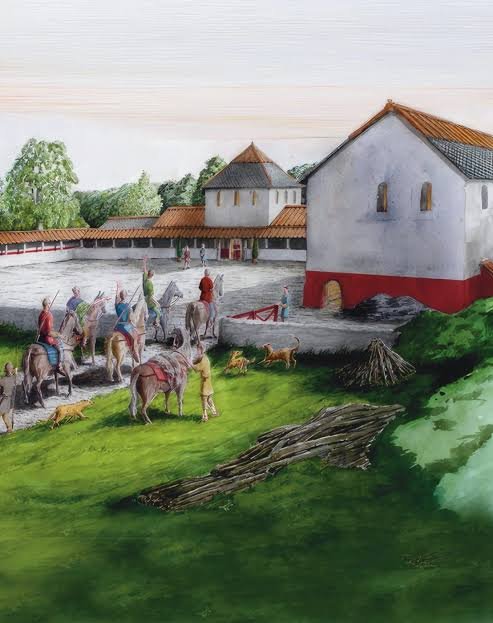
A Roman villa was a rural property that could serve residential, agricultural, administrative, and commercial functions. Villas varied greatly in size, wealth, and architectural complexity.
Some were modest farmsteads focused primarily on agricultural production. Others contained elaborate residential buildings, baths, courtyards, decorated rooms, storage facilities, and extensive working areas.
The organization of a villa reflected the economic activities and social status of its owners. A large agricultural estate might include facilities for processing crops, housing workers, storing equipment, and managing livestock.
Movement between these areas was essential. Paths, paved yards, drainage channels, and internal streets helped connect different parts of the property.
The Purpose of Small-Scale Brick Streets
Brick-paved routes could serve several practical functions within a rural villa.
They provided relatively stable surfaces for people, animals, carts, and other forms of movement. In wet weather, unpaved ground could become muddy and difficult to cross, particularly near storage buildings and work areas.
Paved surfaces could also reduce the accumulation of mud and make certain spaces easier to maintain. Routes connecting kitchens, baths, courtyards, and service buildings may have benefited from more durable flooring.
Brick streets may have been particularly useful in areas where water runoff needed to be controlled. Their surfaces could be arranged with slight slopes to direct rainwater toward drains or collection areas.
However, not every brick-paved surface should be interpreted as a street. Some may have been courtyards, working floors, animal areas, or decorative architectural features.
Roman Brick-Making Technology
Roman builders used several types of fired and unfired construction materials. Fired bricks were produced by shaping clay and heating it in kilns until it became sufficiently hardened.
The quality and dimensions of bricks varied according to local materials, manufacturing traditions, and construction requirements.
Some bricks were made specifically for flooring or paving, while others were used for walls, foundations, arches, and other structures.
Brick production could occur near large settlements, agricultural estates, or specialized workshops. Transport costs and access to suitable clay influenced where bricks were manufactured.
In rural areas, locally produced bricks may have been more economical than transporting heavy construction materials over long distances.
Construction Methods and Street Design
Small-scale brick streets could be constructed using several techniques.
Builders might prepare the ground by removing unstable soil and laying a compacted foundation of gravel, crushed stone, or other materials. Bricks could then be arranged in regular patterns to create a durable walking surface.
The layout might include a central pathway, narrow side routes, or paved sections connecting specific buildings. Some surfaces may have incorporated stone borders or drainage channels.
Brick orientation and spacing could vary. Bricks laid in a repeated pattern may distribute weight more effectively, while irregular arrangements could reflect repairs or the use of available materials.
The thickness of the foundation is particularly important because it influences how well a paved route withstands repeated movement and changing ground conditions.
Drainage and Water Management
Water management was a major consideration in Roman construction. Buildings and paved surfaces needed to handle rainfall, wastewater, and runoff.
A brick street could be designed with a slight slope that directed water away from buildings. Drainage channels may have been placed alongside the route or beneath sections of the pavement.
In some villa complexes, paved areas connected with cisterns, wells, or drainage systems. These installations helped manage water for domestic and agricultural purposes.
The relationship between a paved route and nearby drains can help researchers understand its function. A surface that directs water toward a drainage channel may have been designed for regular use in an exposed outdoor environment.
However, drainage features can also serve courtyards and work areas, so they must be interpreted alongside architectural evidence.
Archaeological Identification
Identifying small-scale brick streets requires careful examination of the surrounding villa layout.
Researchers study the arrangement of buildings, entrances, working areas, and paved surfaces to determine whether a feature functioned as a route.
A pathway connecting several important parts of a property is more likely to have served as an internal street than an isolated paved platform.
The presence of wheel ruts, repeated wear patterns, compacted surfaces, and repaired sections may provide additional evidence of movement.
Excavation also reveals construction layers beneath the bricks. These layers can help distinguish deliberately engineered paving from bricks scattered through later collapse or rebuilding.
Dating Brick Streets and Their Phases of Use
Dating brick streets can be difficult because bricks may have been reused from older structures or incorporated into later repairs.
Archaeologists may use associated pottery, coins, inscriptions, and other datable materials to establish the chronology of the surrounding deposits.
Stratigraphy can reveal whether the street was constructed before or after nearby buildings. If a paved surface covers an earlier occupation layer, it must postdate that layer.
Mortar analysis and brick manufacturing characteristics may provide further chronological clues, although these methods rarely produce an exact construction date on their own.
Evidence of resurfacing can also reveal multiple phases of use. A street may have been maintained and modified throughout the occupation of the villa.
Economic and Social Significance
Internal streets helped organize the movement of people, goods, and agricultural products within rural estates.
A route connecting storage buildings with processing areas could improve the movement of crops and equipment. Access routes near residential buildings may have supported domestic activities and communication between different parts of the estate.
The quality of paving may also reflect the resources available to the property owner. Extensive brick paving could indicate investment in durable infrastructure, while simpler surfaces may reflect more modest construction priorities.
Nevertheless, expensive materials do not automatically indicate high social status. Local availability and practical needs also influenced building decisions.
Regional Variation Across the Roman World
Roman villa architecture varied considerably across the empire. Local building traditions, climate, geology, and economic conditions influenced how rural properties were constructed.
In regions where suitable clay was abundant, brick paving may have been relatively practical. In areas with limited brick production, stone slabs, gravel, or compacted earth may have been more common.
The layout of a villa also depended on its function. Agricultural estates, coastal properties, and elite residences required different types of internal circulation.
Comparing paved routes across several regions can therefore reveal how Roman engineering practices adapted to local conditions rather than following a single standardized design.
Conclusion
Small-scale brick streets in rural Roman villas provide evidence of the practical infrastructure that supported everyday movement and estate management. These routes could connect residential buildings, agricultural facilities, workshops, and service areas while improving drainage and access during unfavorable weather. Their construction reflects the adaptation of Roman building techniques to the needs of individual properties. Through architectural analysis, excavation, dating, and comparison with other villa features, researchers can better understand how rural communities organized space and maintained their infrastructure throughout the Roman period.