Introduction
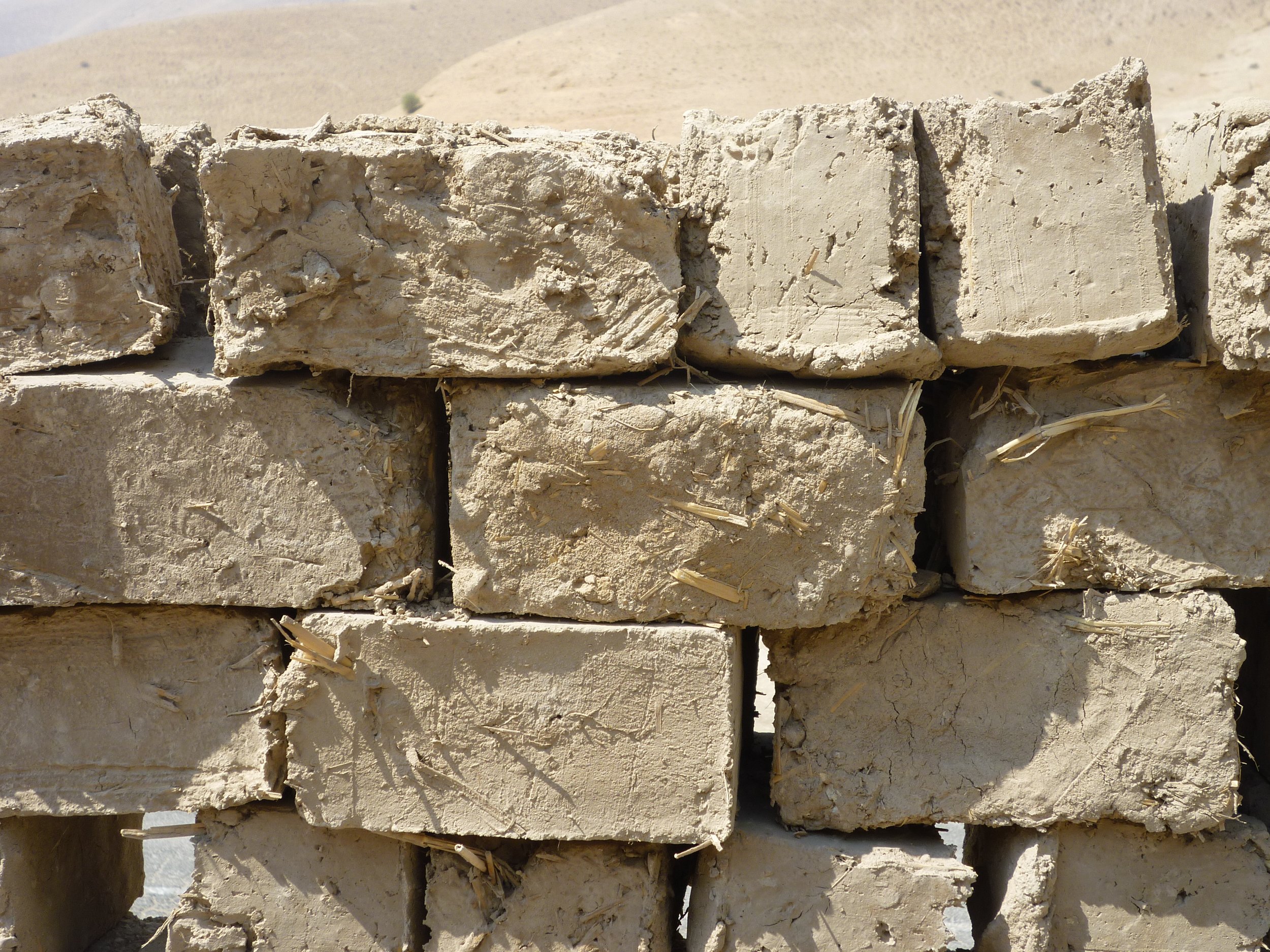
Mudbrick was one of the most widely used construction materials in ancient societies. It could be produced from locally available soil, water, and other natural materials, making it practical for communities without access to large quantities of stone or fired brick.
Although mudbrick was relatively inexpensive and easy to manufacture, it could be vulnerable to cracking, erosion, and structural weakness. Builders therefore experimented with different materials to improve its performance. Plant fibers, straw, chaff, and other organic substances were sometimes incorporated into earthen construction materials.
Animal hair is another possible reinforcement material. Its physical properties make it potentially useful in reducing certain forms of cracking and improving the cohesion of earthen mixtures. Archaeological research into this practice requires careful analysis because animal hair can be difficult to distinguish from other organic fibers and may not survive well in buried structures.
Understanding Mudbrick Construction
Mudbrick is generally made from a mixture of soil and water shaped into blocks and dried in the sun or under controlled conditions.
The composition of the mixture depends on the local environment. Clay provides binding properties, while sand and silt influence texture, shrinkage, and strength.
Builders may have added organic materials to modify the behavior of the mixture. Straw, chopped reeds, grasses, and other plant fibers could help reduce certain types of cracking and improve the handling of the material.
Once dried, mudbricks could be arranged into walls using mud mortar. Their performance depended on the quality of the mixture, construction technique, exposure to moisture, and maintenance.
Why Animal Hair Could Be Used as Reinforcement
Animal hair has several physical characteristics that make it a potential reinforcement material.
Individual hairs are flexible and can become embedded within a clay-rich mixture. When distributed throughout a mudbrick, they may help bridge small cracks and reduce the separation of material as it dries.
Hair fibers may also influence the texture and workability of the mud mixture. Depending on the type, length, quantity, and condition of the fibers, they could alter how the material behaves during shaping and drying.
The use of animal hair would not necessarily make mudbrick waterproof or capable of supporting unlimited structural loads. Its potential contribution would be more closely related to the behavior of the mixture during drying and the development of small cracks.
Possible Sources of Animal Hair
Ancient communities had access to hair from domesticated animals such as sheep, goats, cattle, horses, and camels, depending on the region and period.
Hair could have been collected during grooming, seasonal shedding, or the processing of animal hides and wool.
The use of waste material may have been economically practical. Fibers unsuitable for textile production could potentially be redirected toward construction activities.
However, identifying the exact animal source of hair in an archaeological brick is difficult. Fibers may become degraded during burial, and their microscopic features can overlap with those of other animal materials.
Archaeological Evidence and Identification
The archaeological identification of animal hair in mudbrick requires microscopic examination and careful sampling.
Researchers may begin by inspecting exposed brick surfaces and examining thin sections under a microscope. Fibers embedded within the clay matrix can sometimes be distinguished by their shape, structure, and surface characteristics.
Scanning electron microscopy may provide more detailed images of preserved fibers. Chemical analysis can also help characterize organic remains, although the survival of useful molecular signatures depends on burial conditions.
A key challenge is separating original construction materials from later contamination. Animal hair may enter a mudbrick through soil deposits, animal activity, or post-depositional processes.
Therefore, the strongest evidence comes from fibers consistently embedded throughout the original brick matrix rather than isolated hairs found on exposed surfaces.
Distinguishing Hair from Plant Fibers and Other Materials
Plant fibers and animal hair may appear similar in poorly preserved archaeological samples. Both can survive as elongated structures embedded within earthen materials.
Microscopic characteristics can help distinguish them. Animal hairs generally possess a cuticle and internal structures that differ from those of many plant fibers.
Researchers may also use chemical methods to identify proteins associated with animal materials. Proteomic analysis can sometimes detect surviving proteins, although ancient degradation and contamination make interpretation difficult.
The identification process should include comparison with reference materials and samples from surrounding soil.
Without such controls, an apparent animal fiber may be incorrectly classified.
Experimental Archaeology and Material Testing
Experimental archaeology offers a way to test whether animal hair could improve the properties of mudbrick.
Researchers can prepare several mixtures using the same soil and water proportions while varying the amount and type of reinforcement material. Some bricks can contain plant fibers, others animal hair, and additional samples can be produced without reinforcement.
After drying, the bricks can be tested for shrinkage, cracking, compressive strength, and resistance to erosion.
The results may reveal whether animal hair provides measurable advantages under particular conditions.
Experiments must also account for differences between modern materials and ancient construction practices. The quality of soil, preparation methods, climate, and drying conditions can all influence the outcome.
A successful experiment demonstrates technical possibility, not necessarily historical use.
Environmental Factors and Preservation
Mudbrick preservation depends heavily on environmental conditions.
Dry climates can allow earthen structures to survive for long periods, especially when they are protected from rainfall and flooding. In wetter environments, repeated exposure to water can weaken mudbrick and accelerate erosion.
Organic fibers may degrade through microbial activity, temperature changes, and moisture. Their survival is more likely in favorable conditions, such as exceptionally dry deposits or protected architectural contexts.
Even when the fibers disappear, their former presence may sometimes be suggested by microscopic voids or impressions within the brick. However, such features are not unique to animal hair and must be interpreted cautiously.
Cultural and Economic Implications
If animal hair reinforcement can be demonstrated at an archaeological site, it may reveal practical knowledge of construction materials and the efficient use of available resources.
It could suggest that builders recognized the value of combining different materials to improve the behavior of earthen structures.
The use of animal by-products may also reflect connections between pastoralism, household production, and construction. Communities that raised livestock could have had regular access to fibers that were not suitable for other purposes.
Nevertheless, the presence of animal hair would not necessarily indicate a specialized construction industry. It could have resulted from small-scale experimentation or household-level building traditions.
Regional Comparisons and Technological Knowledge
Mudbrick technology developed in many parts of the ancient world, but construction practices varied according to local resources and environmental conditions.
Some communities relied heavily on straw and other plant materials, while others may have used alternative organic substances.
Comparing the composition of bricks from different regions can help researchers identify shared techniques or local innovations. However, similar reinforcement practices may have developed independently because builders faced comparable problems with cracking and shrinkage.
The movement of construction knowledge may also have occurred through trade, migration, craft specialization, and contact between neighboring settlements.
Conclusion
The possible reinforcement of mudbrick with animal hair illustrates how ancient builders may have adapted natural materials to improve construction performance. Hair fibers could have helped influence cracking and cohesion, although their effectiveness would have depended on the composition of the mud mixture and the conditions of use. Archaeological identification requires careful microscopy, chemical analysis, and controls against contamination. By combining laboratory research with experimental reconstruction and architectural context, researchers can investigate whether animal hair was deliberately used in ancient building practices and what this reveals about technological knowledge and resource use.