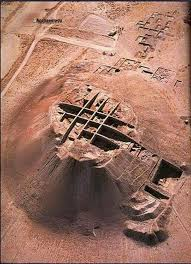
While standard historical models suggest that the world's very first cities developed in southern Mesopotamia (modern-day Iraq) at sites like Uruk, excavations at Tell Brak in northeastern Syria have turned this timeline upside down. Dating back to the late 5th and early 4th millennia BCE (c. 4200–3800 BCE), Tell Brak is evidence of an independent, massive "northern" urban experiment that grew simultaneously with—or perhaps even earlier than—its southern counterparts.
   [ TRADITIONAL URUK MODEL ] ────► Core-Periphery: Top-Down Southern Colonial Expansion
                                              │
                                   (The Tell Brak Evidence)
                                              │
                                              ▼
   [ REVISED ANCIENT MATRIX ] ◄─── Multi-Centric: Independent Northern Urbanization
Tell Brak grew not through a central, top-down decree, but through a unique process of amalgamation. Satellite surveys and spatial mapping reveal that it began as a cluster of distinct, separate villages that expanded inward toward one another until they fused into a single, massive urban sprawl covering over 130 hectares.
The Eye Temple and the Thousand Idols
The spiritual and ideological heart of this early metropolis was the monumental Eye Temple, a massive sacred building erected around 3500 BCE over the ruins of even older sanctuaries. When British archaeologist Max Mallowan excavated the complex, he discovered a staggering ritualistic time capsule: the temple platform was packed with thousands of miniature alabaster sculptures known as "Eye Idols."
These abstract, geometric figurines feature flat, rectangular bodies topped by oversized, heavily incised pairs of eyes. They represent a sophisticated, shared cognitive language:
The All-Seeing Ancestor: The eyes likely symbolized the constant, open-eyed vigilance of the gods or deceased ancestors watching over the early city.
Mass Production: The sheer volume of these idols indicates a highly organized, industrialized system of public devotion, where citizens could acquire standardized tokens to leave as permanent stand-ins for their own prayers.
Industrialization and Early Warfare
Tell Brak's urban experiment was fueled by massive industrial zones. Archaeologists have excavated large-scale workshops dedicated to mass-producing flint tools, fine obsidian beadwork, and standardized basalt grinding stones.
However, this massive concentration of wealth and population had a dark side. In the outer sub-tells, researchers uncovered massive mass graves filled with the disarticulated bones of hundreds of young men, showing clear signs of unhealed trauma. These sites represent the earliest documented evidence of large-scale urban warfare and systemic violence in human history, marking the moment when the pressures of city life triggered organized, devastating conflict.