• MAIN PAGE
  • LATEST NEWS
    • Lost Cities
    • Archaeology's Greatest Finds
    • Underwater Discoveries
    • Greatest Inventions
    • Studies
    • Blog
  • PHILOSOPHY
  • HISTORY
  • RELIGIONS
    • Africa
    • Anatolia
    • Arabian Peninsula
    • Balkan Region
    • China - East Asia
    • Europe
    • Eurasian Steppe
    • Levant
    • Mesopotamia
    • Oceania - SE Asia
    • Pre-Columbian Civilizations of America
    • Iranian Plateau - Central Asia
    • Indus Valley - South Asia
    • Japan
    • The Archaeologist Editor Group
    • Scientific Studies
    • Aegean Prehistory
    • Historical Period
    • Byzantine Middle Ages
    • Predynastic Period
    • Dynastic Period
    • Greco-Roman Egypt
  • Rome
  • PALEONTOLOGY
  • About us
Menu

The Archaeologist

  • MAIN PAGE
  • LATEST NEWS
  • DISCOVERIES
    • Lost Cities
    • Archaeology's Greatest Finds
    • Underwater Discoveries
    • Greatest Inventions
    • Studies
    • Blog
  • PHILOSOPHY
  • HISTORY
  • RELIGIONS
  • World Civilizations
    • Africa
    • Anatolia
    • Arabian Peninsula
    • Balkan Region
    • China - East Asia
    • Europe
    • Eurasian Steppe
    • Levant
    • Mesopotamia
    • Oceania - SE Asia
    • Pre-Columbian Civilizations of America
    • Iranian Plateau - Central Asia
    • Indus Valley - South Asia
    • Japan
    • The Archaeologist Editor Group
    • Scientific Studies
  • GREECE
    • Aegean Prehistory
    • Historical Period
    • Byzantine Middle Ages
  • Egypt
    • Predynastic Period
    • Dynastic Period
    • Greco-Roman Egypt
  • Rome
  • PALEONTOLOGY
  • About us
No results found

The Ancient Cult of Mithras: Secrets of the Roman Underground

December 6, 2025

Exploring the Hidden Rituals of Rome’s Most Enigmatic Mystery Religion

Beneath the bustling streets of the Roman Empire lay a secret world of dimly lit chambers, symbolic carvings, and sacred feasts. This was the domain of the Cult of Mithras, a male-only mystery religion that flourished from the 1st to 4th centuries CE.

A God Born from Stone

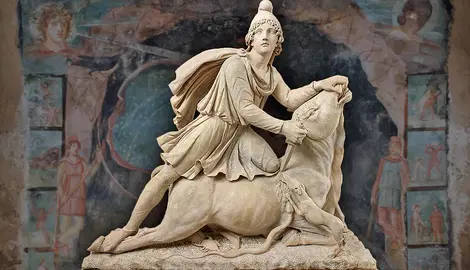
Mithras, often depicted emerging from rock, symbolized strength, rebirth, and cosmic order. His central myth shows him slaying a sacred bull, an act believed to bring life to the world. Members of the cult gathered underground to reenact aspects of this myth in ceremonies that emphasized loyalty and discipline.

Initiation and Secret Rites

Mithraic temples called mithraea were small, cavern-like spaces decorated with cosmic imagery and ritual iconography. Initiates progressed through seven ranks, each linked to a planet and spiritual transformation.

Meetings included shared meals, symbolic purification, and participation in encoded rituals. Because members swore secrecy, much of the cult’s practice remains a mystery.

A Brotherhood Across the Empire

Mithraism attracted soldiers, merchants, and officials who admired its values of courage and unity. Mithraea have been found from Britain to Syria, showing how widespread the cult became.

Although Christianity eventually overshadowed it, the Cult of Mithras remains one of the ancient world’s most intriguing secret societies.
← The Ancient Healing Powers of Hot Springs and Sacred WatersThe Role of Bees in Ancient Symbolism and Mythology →
Featured
images (85).jpeg
September 14, 2026
Birka: Sweden's Viking Trading Island
September 14, 2026
Read more →
September 14, 2026
images (84).jpeg
September 14, 2026
Uppåkra: Sweden's Iron Age Power Center
September 14, 2026
Read more →
September 14, 2026
images (83).jpeg
September 14, 2026
Tissø: Denmark's Viking Age Lake Village
September 14, 2026
Read more →
September 14, 2026
images (82).jpeg
September 14, 2026
Lejre: Denmark's Royal Iron Age Hal
September 14, 2026
Read more →
September 14, 2026
images (81).jpeg
September 14, 2026
Gudme: Denmark's Iron Age Gold Hoard Site
September 14, 2026
Read more →
September 14, 2026
images (80).jpeg
September 14, 2026
Nonnebakken: Odense's Viking Fort Remains
September 14, 2026
Read more →
September 14, 2026
read more

Powered by The archaeologist