The Ancient Library of Alexandria: Searching for the World’s Lost Knowledge
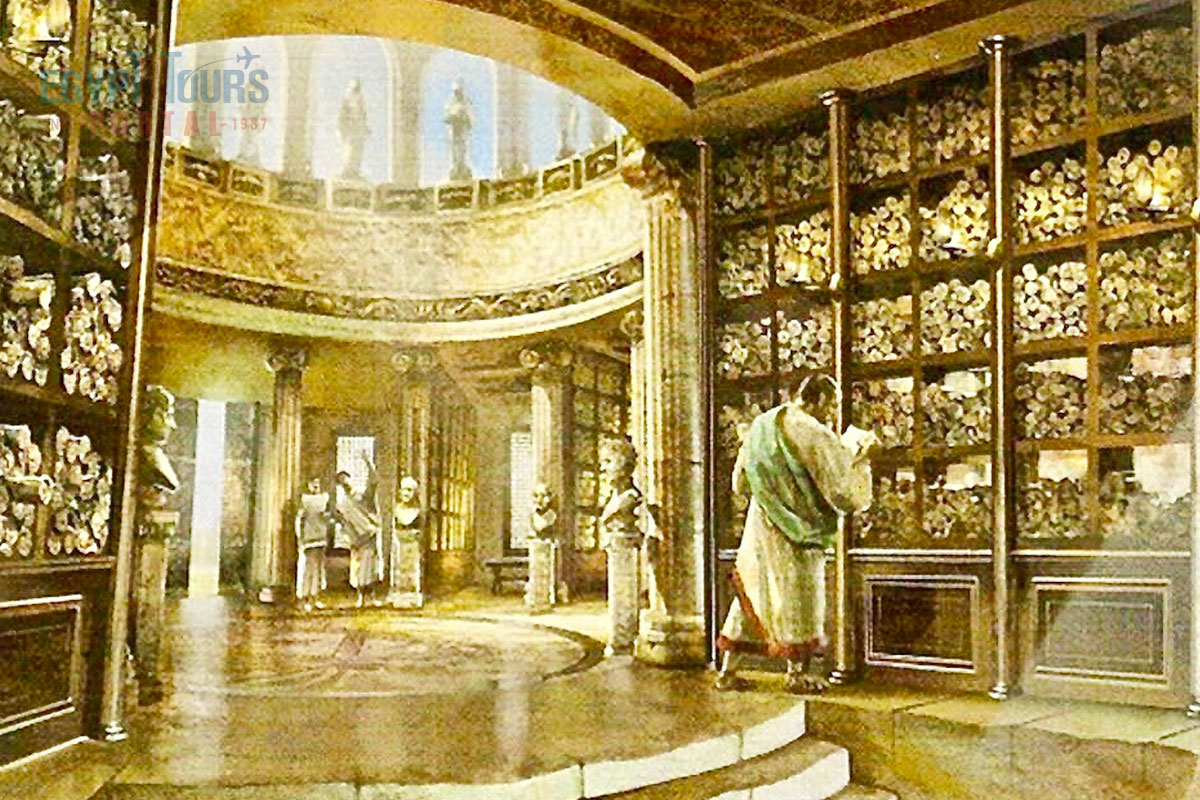
The Library of Alexandria is the ultimate symbol of human knowledge and its fragile nature. Founded in the 3rd century BCE by the Ptolemaic dynasty in Egypt, it was the first institution intended to house the "sum of all human wisdom."
However, the library’s fame is rivaled only by the mystery of its destruction. There is no single "fire" that ended the library; instead, its loss was a slow, centuries-long decline fueled by war, budget cuts, and religious upheaval.
1. The "Aggressive" Acquisition Policy
The Library of Alexandria didn't just wait for books to arrive; it hunted them. The Ptolemaic kings were obsessed with owning every scroll in existence.
"The Ships' Fund": A famous law required any ship docking in Alexandria to surrender any scrolls found on board. The library’s scribes would copy the scrolls; the library kept the originals and returned the copies to the owners.
The Athenian Heist: Ptolemy III reportedly borrowed the original, official scripts of the great Greek playwrights (Aeschylus, Sophocles, and Euripides) from Athens for a "deposit." He chose to lose the deposit and keep the original scrolls, sending Athens the copies instead.
The Scope: At its height, the library is estimated to have held between 400,000 and 700,000 scrolls.
2. More Than Just Books: The Mouseion
The Library was part of a larger research institution called the Mouseion (The Temple of the Muses—the origin of our word "museum"). It functioned like a modern university campus.
Residential Scholars: The world’s greatest minds—like Euclid (the father of geometry), Eratosthenes (who calculated the Earth's circumference), and Aristarchus (who first proposed the Earth revolves around the sun)—lived there, paid by the state to research, write, and teach.
Anatomy and Science: It housed an observatory, a botanical garden, and rooms for medical dissection. This was where the foundations of Western mathematics, grammar, and medicine were systematized.
3. The "Great Fire": Debunking the Myth
The popular image of a single Roman soldier tossing a torch and erasing the world's knowledge is historically inaccurate. The "destruction" was a series of unfortunate events:
Julius Caesar (48 BCE): During the Siege of Alexandria, Caesar set fire to his own ships to block the harbor. The fire spread to the docks and allegedly destroyed a warehouse containing 40,000 scrolls intended for export, but most scholars believe the main library survived this.
The Aurelian War (270 CE): The Roman Emperor Aurelian's forces destroyed the entire palace district, where the library was located, during a conflict with Queen Zenobia.
Religious Upheaval (391 CE): Following an edict by Emperor Theodosius I, the "Daughter Library" at the Serapeum was destroyed by a mob because it was seen as a center of pagan learning.
4. What Was Actually Lost?
The true tragedy of Alexandria isn't just the number of scrolls, but the unique knowledge that never made it to the modern era.
Lost Literature: We possess only a fraction of the works of the Greek tragedians. For example, we have 7 plays by Sophocles, but he wrote over 120.
Scientific Regression: Knowledge of the heliocentric solar system, advanced steam power (the Aeolipile), and precise anatomical maps were lost for over a thousand years, forcing the Renaissance to "rediscover" what was already known in 200 BCE.
The Aristarchus Gap: If his works on astronomy had survived, the "Copernican Revolution" might have happened 1,700 years earlier.
5. Archaeology: The Search for the Ruins
Because ancient Alexandria is buried beneath the modern, bustling city and partially submerged in the Mediterranean, finding the physical library has been difficult.
The Submerged Palace: In the 1990s, underwater archaeologists discovered the ruins of the royal district in the Eastern Harbor. They found statues, sphinxes, and columns that belonged to the complex where the library once stood.
The Classrooms: In 2004, a Polish-Egyptian team discovered a series of 13 lecture halls at the site of the Mouseion, each with a central podium for the teacher and rows of benches—the first physical evidence of the library’s educational function.
The Library of Alexandria reminds us that progress is not a straight line; it can be reversed by a lack of funding, political instability, or simple neglect.