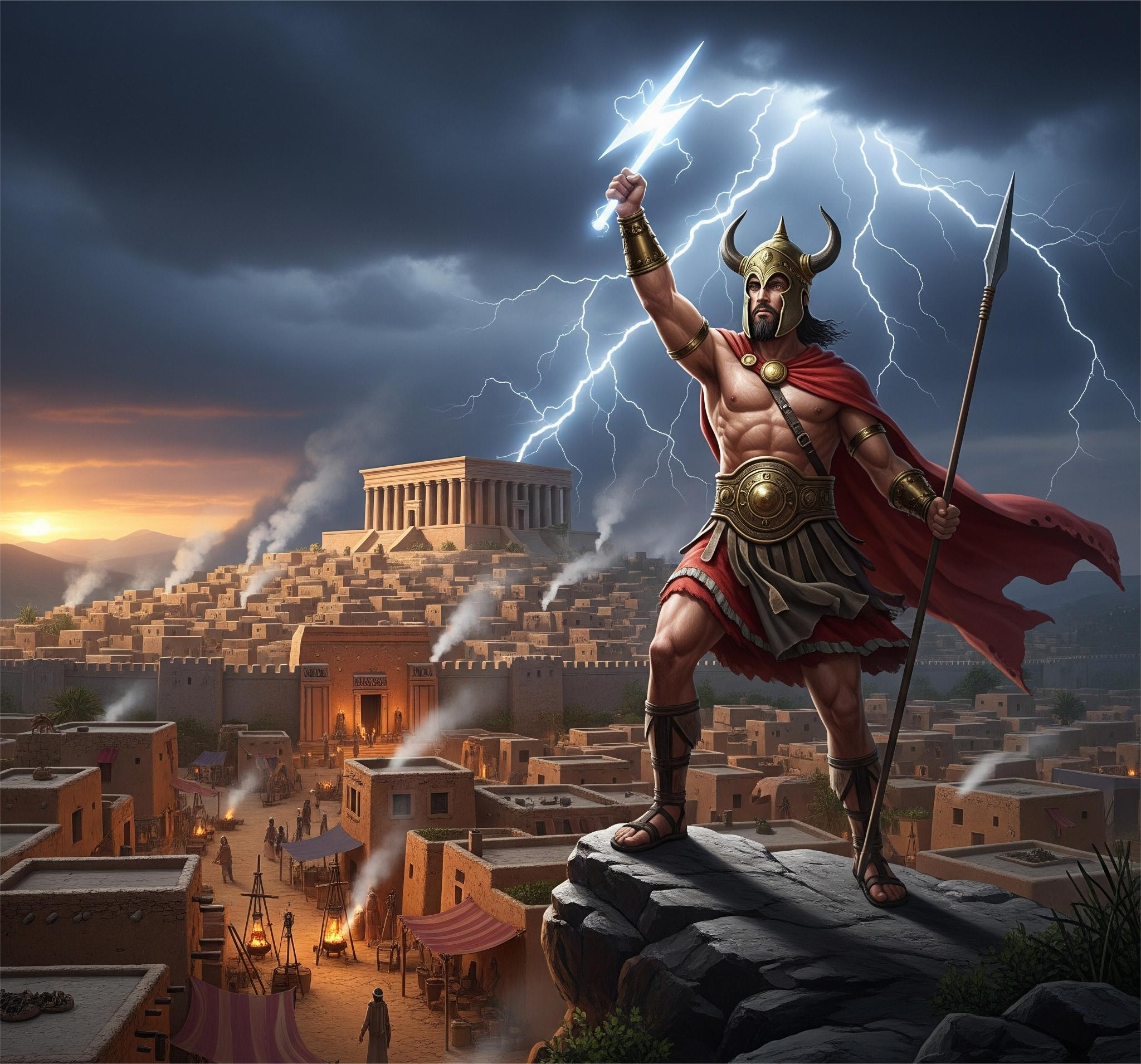
In the ancient world, few natural forces were as powerful or unpredictable as storms. Thunder, lightning, and sudden rainstorms could destroy crops or bring life-saving water to dry lands. It is therefore not surprising that many early civilizations worshipped storm gods—deities believed to control the weather and ensure agricultural fertility.
Across the region known as the Levant, several closely related storm gods appeared in different cultures. Though their names and myths varied, their attributes were remarkably similar.
One of the most prominent was Baal. In Canaanite religion, Baal was the master of thunder and rain. He was often depicted wielding a lightning bolt while standing atop a mountain or riding on storm clouds. According to myth, Baal battled chaotic sea monsters and forces of drought to ensure the fertility of the land.
Closely related to Baal was Hadad. Hadad’s worship spread across Syria and Mesopotamia, where he was associated with powerful thunderstorms that swept across the region’s plains. Temples dedicated to Hadad often stood on high ground, symbolically connecting the god with the heavens.
Further north, the Hurrian and Hittite cultures worshipped Teshub. Teshub was depicted standing on the back of a bull while brandishing a weapon shaped like lightning. His myths describe epic battles against serpentine monsters representing chaos and the sea.
These storm gods shared more than just weather-related powers. They were also symbols of royal authority. Kings often associated themselves with storm gods to emphasize their ability to bring order and prosperity to their lands.
The similarities among these deities likely arose through cultural exchange. Trade networks and diplomatic relations connected the civilizations of the ancient Near East, allowing myths and religious ideas to spread across regions. Over centuries, local traditions blended together, producing overlapping pantheons and shared mythological themes.
Storm gods were therefore not only religious figures but also cultural bridges linking multiple civilizations.