The discovery of the Dead Sea Scrolls is often cited as the greatest archaeological find of the 20th century. It was an event that bridged the gap between modern history and the biblical past, triggered not by a professional excavation, but by a chance moment in the desert heat.
1. The Lost Goat and the Hidden Cave
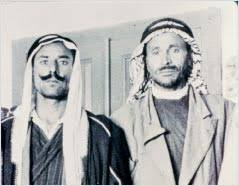
In late 1946 or early 1947, a young Bedouin shepherd named Muhammed edh-Dhib was searching for a stray goat along the limestone cliffs of Qumran, near the northwest shore of the Dead Sea.
The Sound of Breaking Pottery: To check if his goat had wandered into a narrow cave opening, he tossed a rock inside. Instead of a bleat, he heard the distinct sound of pottery shattering.
The First Encounter: Crawling inside, he found several large, handleless jars. Most were empty, but one contained three bundles of old parchment wrapped in linen. These were the first of what would eventually become a collection of nearly 1,000 scrolls.
2. From the Desert to the Market
Initially, the significance of the find was completely unknown. The Bedouin took the scrolls to a cobbler and antiquities dealer in Bethlehem named Kando.
The Black Market: The scrolls were sold for a small sum (roughly $28) to various figures, including Athanasius Samuel, the Archbishop of the Syrian Orthodox Monastery in Jerusalem.
The Recognition: It wasn't until 1948, when scholars at the American Schools of Oriental Research (ASOR) saw photographs of the scrolls, that their antiquity was confirmed. They realized the text was written in an archaic form of Hebrew that predated any known biblical manuscripts by a millennium.
3. The Library of the Essenes
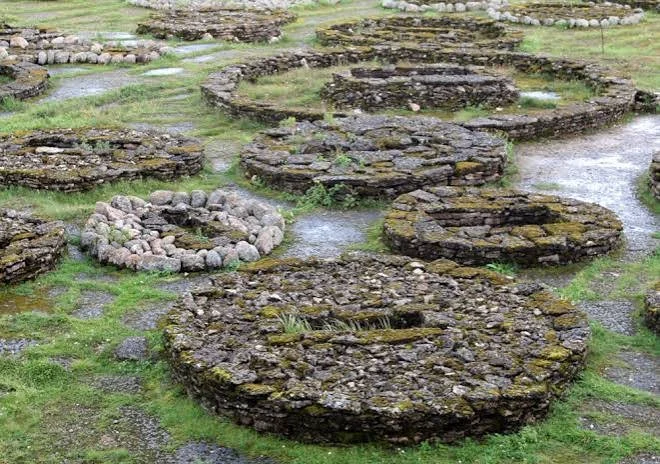
Archaeologists eventually identified 11 caves containing scrolls. Most scholars believe the scrolls belonged to a sectarian Jewish group called the Essenes, who lived in a communal settlement at Qumran.
The Scriptorium: Qumran featured a dedicated room for copying texts. As the Roman army approached during the First Jewish-Roman War (66–73 CE), the community likely hid their library in the nearby caves to protect it from destruction.
The Preservation: The hyper-arid environment of the Dead Sea—with its low humidity and stable temperatures—acted as a natural time capsule, preserving the delicate parchment and papyrus for nearly 2,000 years.
4. What Was Found?
The scrolls are written primarily in Hebrew, with some in Aramaic and Greek. They are divided into three main categories:
Biblical Manuscripts: Every book of the Hebrew Bible (the Old Testament) was represented, except for the Book of Esther. The Great Isaiah Scroll is the most famous, standing as a nearly complete 24-foot-long parchment.
Apocryphal Texts: Books like Enoch and Jubilees that were not included in the final biblical canon but were important to the community.
Sectarian Rules: Documents like the "Community Rule" and the "War Scroll," which detailed the daily life, beliefs, and apocalyptic expectations of the Essenes.
5. The Copper Scroll
Unlike the others made of leather or papyrus, Cave 3 yielded a scroll made of pure copper. When finally "unrolled" (by sawing it into strips), it was found to be a treasure map. It listed 64 secret locations across Judea where massive quantities of gold, silver, and incense were supposedly buried. To this day, none of the treasure has been found.
The discovery of the scrolls transformed our understanding of ancient religious history. Today, the most significant pieces are housed in the Shrine of the Book in Jerusalem, under a white dome designed to resemble the lids of the jars in which the boy first found them.