• MAIN PAGE
  • LATEST NEWS
    • Lost Cities
    • Archaeology's Greatest Finds
    • Underwater Discoveries
    • Greatest Inventions
    • Studies
    • Blog
  • PHILOSOPHY
  • HISTORY
  • RELIGIONS
    • Africa
    • Anatolia
    • Arabian Peninsula
    • Balkan Region
    • China - East Asia
    • Europe
    • Eurasian Steppe
    • Levant
    • Mesopotamia
    • Oceania - SE Asia
    • Pre-Columbian Civilizations of America
    • Iranian Plateau - Central Asia
    • Indus Valley - South Asia
    • Japan
    • The Archaeologist Editor Group
    • Scientific Studies
    • Aegean Prehistory
    • Historical Period
    • Byzantine Middle Ages
    • Predynastic Period
    • Dynastic Period
    • Greco-Roman Egypt
  • Rome
  • PALEONTOLOGY
  • About us
Menu

The Archaeologist

  • MAIN PAGE
  • LATEST NEWS
  • DISCOVERIES
    • Lost Cities
    • Archaeology's Greatest Finds
    • Underwater Discoveries
    • Greatest Inventions
    • Studies
    • Blog
  • PHILOSOPHY
  • HISTORY
  • RELIGIONS
  • World Civilizations
    • Africa
    • Anatolia
    • Arabian Peninsula
    • Balkan Region
    • China - East Asia
    • Europe
    • Eurasian Steppe
    • Levant
    • Mesopotamia
    • Oceania - SE Asia
    • Pre-Columbian Civilizations of America
    • Iranian Plateau - Central Asia
    • Indus Valley - South Asia
    • Japan
    • The Archaeologist Editor Group
    • Scientific Studies
  • GREECE
    • Aegean Prehistory
    • Historical Period
    • Byzantine Middle Ages
  • Egypt
    • Predynastic Period
    • Dynastic Period
    • Greco-Roman Egypt
  • Rome
  • PALEONTOLOGY
  • About us

The Hidden Underground Cities of Cappadocia

December 6, 2025

Exploring the Vast Subterranean World Beneath Ancient Turkey

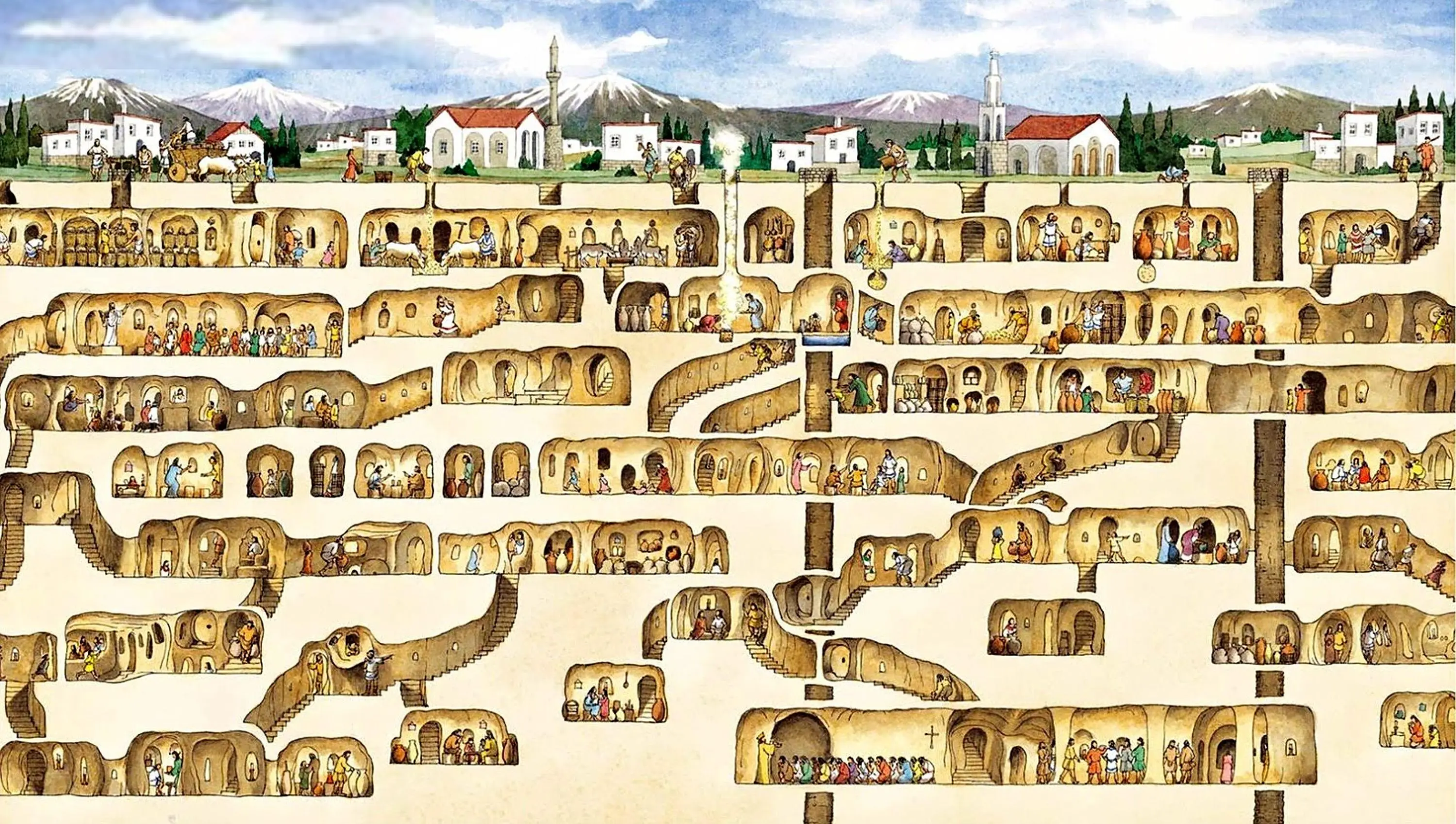
The region of Cappadocia in Turkey is famous for its dramatic rock formations but even more astonishing are the cities carved beneath the earth. These massive complexes housed thousands of people and served as refuges in times of conflict.

Engineering Marvels Beneath the Surface

Cities like Derinkuyu and Kaymakli stretch multiple levels underground, featuring ventilation shafts, storage rooms, stables, and worship spaces. Ingenious sliding stone doors protected entrances and kept inhabitants safe during invasions.

Life in the Underground

People could live for months in these subterranean spaces. Archaeologists believe they were used by early Christians and earlier local groups seeking shelter. The design shows remarkable planning, cooperation, and engineering mastery.

A Landscape Full of Secrets

New tunnels and chambers are still being discovered, suggesting that Cappadocia’s underground network is even larger than previously imagined.
← The Role of the Sun in Ancient WorshipThe Ancient Science of Alchemy and Immortality →
Featured
image_2026-01-21_005324993.png
Jan 20, 2026
Opinion Three centuries of Roman limescale reveals a dirty secret about Pompeii’s public baths
Jan 20, 2026
Read More →
Jan 20, 2026
image_2026-01-21_004225896.png
Jan 20, 2026
People In China Kept Leopard Cats As Pets For 3,500 Years, Before Domestic Cats Arrived Via The Silk Road
Jan 20, 2026
Read More →
Jan 20, 2026
image_2026-01-21_003142971.png
Jan 20, 2026
Gloucestershire village set to appear on BBC series after special discovery
Jan 20, 2026
Read More →
Jan 20, 2026
image_2026-01-21_002216046.png
Jan 20, 2026
600-year-old medieval trade shipwreck discovered in Danish strait
Jan 20, 2026
Read More →
Jan 20, 2026
image_2026-01-21_000945999.png
Jan 20, 2026
The Earliest-Known Astronomical Observatory in the Americas May Offer New Insights
Jan 20, 2026
Read More →
Jan 20, 2026
image_2026-01-21_000021924.png
Jan 20, 2026
Archaeologists Confirm Fano Discovery as Vitruvius’ Legendary Basilica: A Turning Point for Classical Architecture
Jan 20, 2026
Read More →
Jan 20, 2026
read more

Powered by The archaeologist