The Minoan Scripts: The Unsolved Linear A and Cretan Hieroglyphs
Introduction
The civilization of Minoan civilization (c. 3000–1100 BCE) developed some of the earliest writing systems in Europe. Among these are Cretan Hieroglyphs and Linear A, two scripts that remain only partially understood. Despite decades of study, Linear A has never been fully deciphered, making it one of archaeology’s greatest linguistic mysteries.
Cretan Hieroglyphs
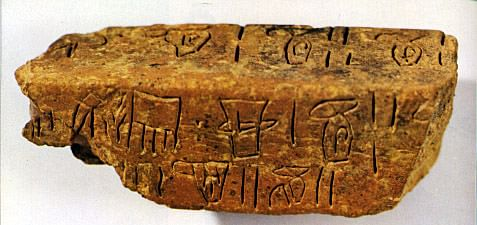
Cretan Hieroglyphs are the earliest known writing system of Minoan Crete, dating to around 2000–1700 BCE.
Key Features
Pictographic symbols (animals, tools, abstract shapes)
Mostly found on seals and clay tablets
Likely used for administration and record-keeping
Limited number of surviving inscriptions
Purpose
Most scholars believe Cretan Hieroglyphs were used for:
Administrative records
Trade documentation
Religious or ritual labeling
However, because the script is not fully deciphered, its exact meaning remains uncertain.
Linear A
Linear A appeared slightly later than Cretan Hieroglyphs and was used from approximately 1800–1450 BCE.
Characteristics
More abstract than hieroglyphs
Written mainly on clay tablets
Found in palaces such as Knossos
Consists of syllabic signs and numerical symbols
Why It Is Important
Linear A is significant because:
It represents a developed administrative writing system
It influenced later Greek writing systems
It provides insight into Minoan economy and society
The Decipherment Problem
Unlike Linear B, which was deciphered in the 1950s by Michael Ventris, Linear A remains unreadable.
Reasons for Difficulty
Unknown language behind the script (not clearly Greek or Indo-European)
Limited number of surviving inscriptions
Repetition of symbols without clear context
Possible use of multiple dialects or languages
Because of these issues, scholars can only make partial guesses about meaning, especially in numerical and administrative texts.
Relationship Between Scripts
Linear A likely influenced Linear B, which was used by the Mycenaean civilization.
While Linear B was adapted to write an early form of Greek, Linear A represents the earlier, undeciphered Minoan language.
Archaeological Evidence
Most Linear A and Cretan Hieroglyphic inscriptions have been found in:
Palace archives (especially Knossos and Phaistos)
Religious sites
Seals and tablets used for trade and administration
These findings suggest a highly organized bureaucratic system in Minoan society.
Modern Research
Researchers continue to study the scripts using:
Digital imaging of inscriptions
Comparative linguistic analysis
Statistical pattern recognition
Study of related scripts like Linear B
Despite these efforts, Linear A remains undeciphered.
Conclusion
The Minoan scripts—Cretan Hieroglyphs and Linear A—offer a fascinating glimpse into one of Europe’s earliest advanced civilizations. While Cretan Hieroglyphs remain partially understood and Linear A remains unsolved, both systems reveal the complexity of Minoan administration, culture, and trade. Until Linear A is deciphered, the voice of the Minoans will remain one of history’s enduring mysteries.