Unraveling the Purpose Behind Peru’s Enormous Desert Geoglyphs
Stretching across Peru’s coastal desert are hundreds of colossal designs known as the Nazca Lines. Visible mainly from the air, these geoglyphs depict animals, geometric patterns, and long lines that run for kilometers. Their sheer scale raises one question: Why were they created?
What the Geoglyphs Look Like
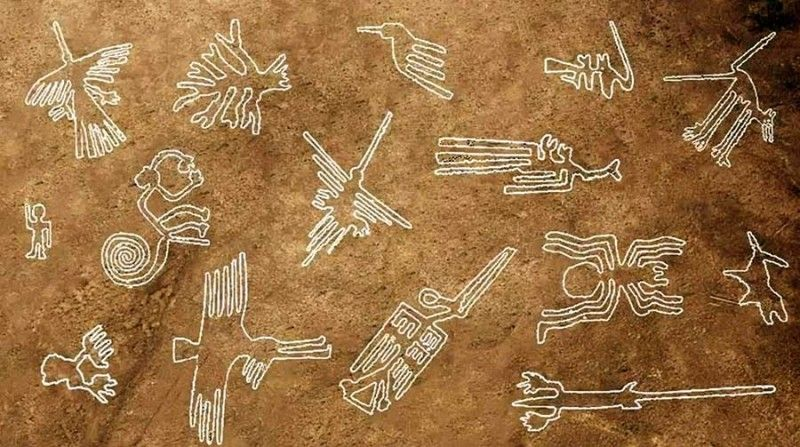
The Nazca Lines include images of hummingbirds, spiders, monkeys, and human-like figures. Some designs are small, while others cover massive expanses. Their precision suggests careful planning and communal labor.
Theories Behind Their Purpose
Scholars have proposed several interpretations:
1. Ritual Pathways
Some researchers believe people walked along these lines during ceremonies. The act of moving through the desert landscape may have been part of spiritual or seasonal rituals.
2. Astronomical Markers
Certain lines appear aligned with solstices or celestial events. If intentional, this orientation suggests the Nazca people used the geoglyphs as giant calendars or cosmic guides.
3. Offerings to Sky Beings
One theory argues that the Lines were meant for gods who looked down from above. Their visibility from the sky supports the idea that they were spiritual messages or symbolic gestures.
4. Water Symbols
In the desert, water meant survival. Some shapes resemble water creatures, suggesting the Lines could have been prayers for rainfall or fertility.
While their exact purpose remains debated, the Nazca Lines continue to fascinate researchers and travelers alike.