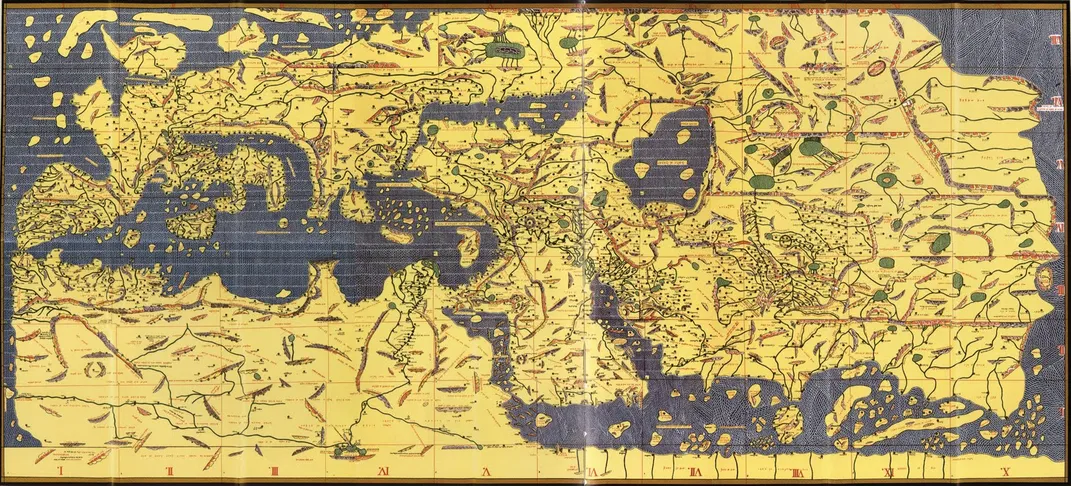
How Civilizations in Mesopotamia, China, and Greece First Charted the World
Before satellites and digital mapping tools, early societies developed surprisingly sophisticated ways to represent the world around them. The earliest maps reveal how ancient people understood geography, resource distribution, and cosmic order.
Mesopotamia: The World Carved in Clay
The oldest maps come from ancient Mesopotamia. Inscribed on clay tablets, these early records show cities, rivers, and agricultural land. Some tablets even present the world as a circular landscape surrounded by water, reflecting Babylonian cosmology rather than geographic accuracy.
These maps served practical purposes—managing irrigation, dividing land, and organizing trade routes—and show how essential written geography was for early state administration.
China: Precision and Statecraft
Ancient Chinese maps stand out for their accuracy. Created on silk, wood, and bronze, they portrayed mountains, rivers, roads, and administrative boundaries in impressive detail. Early Chinese rulers relied on these maps to manage vast territories, oversee military campaigns, and maintain order.
By the Han dynasty, Chinese mapmakers were using grids and scaled distances, techniques far ahead of their time.
Greece: Mapmaking Meets Philosophy
Greek scholars pioneered conceptual geography. Thinkers like Anaximander and Hecataeus attempted to understand Earth’s shape, the arrangement of continents, and the relationship between known territories. Later, Ptolemy transformed mapmaking into a scientific discipline by introducing coordinates and mathematical calculations.
Although Greek maps were not always precise, they provided the intellectual foundation for modern cartography.