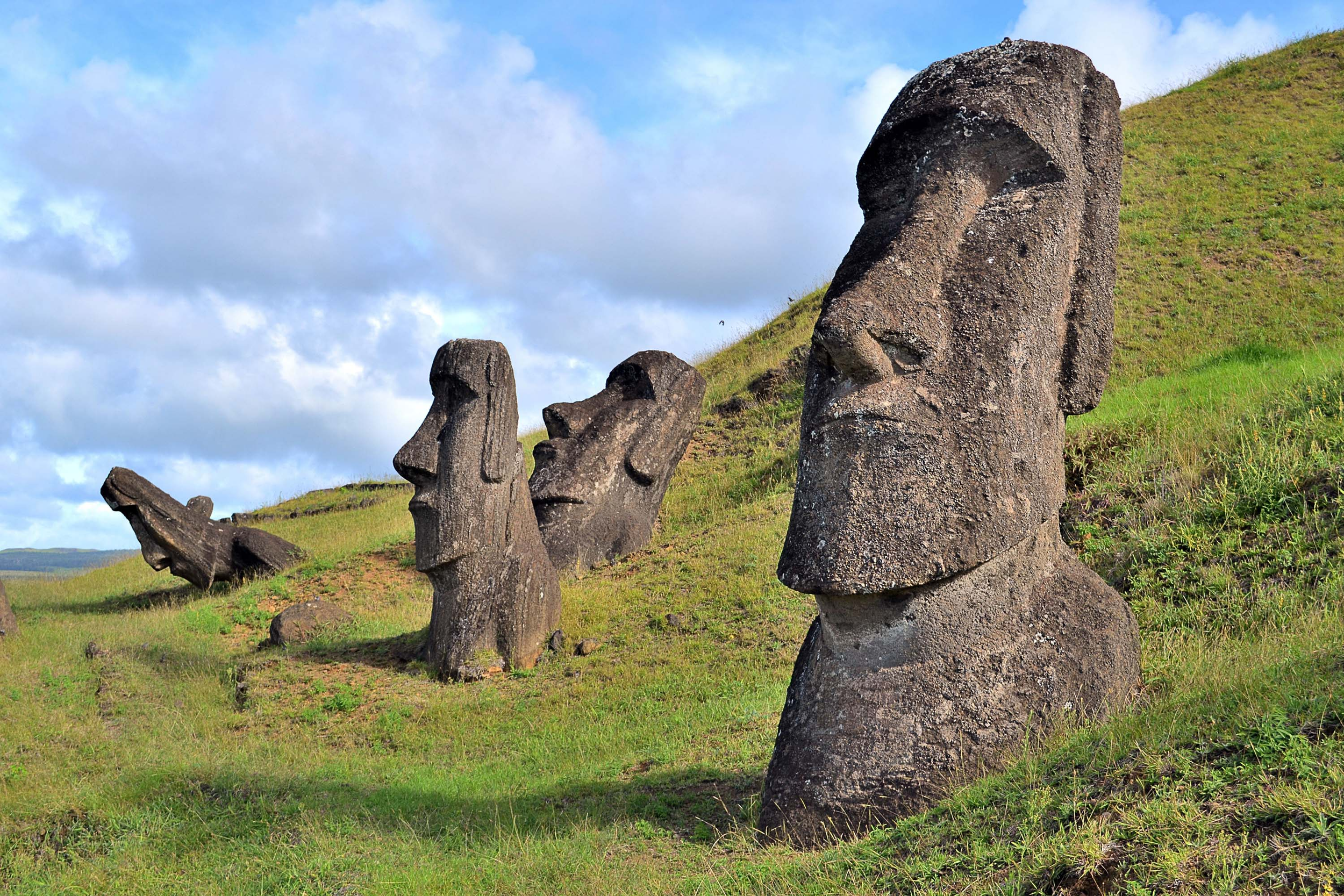
The Moai statues of Easter Island are massive stone figures carved by the Rapa Nui people between 1400 and 1650 CE. They embody ancestor worship and social hierarchy.
Carving and Transportation
Carved from volcanic tuff, Moai were transported using sleds, rollers, or a “walking” method over distances up to 20 kilometers. Their construction showcases ingenuity and coordination.
Cultural Significance
Moai represented ancestral spirits, ensuring protection, fertility, and prosperity. Positioned to face inland, they symbolically watched over communities.
Legacy and Preservation
Easter Island’s Moai remain a testament to human creativity, cultural identity, and the ability to manipulate the environment on a grand scale.