• MAIN PAGE
  • LATEST NEWS
    • Lost Cities
    • Archaeology's Greatest Finds
    • Underwater Discoveries
    • Greatest Inventions
    • Studies
    • Blog
  • PHILOSOPHY
  • HISTORY
  • RELIGIONS
    • Africa
    • Anatolia
    • Arabian Peninsula
    • Balkan Region
    • China - East Asia
    • Europe
    • Eurasian Steppe
    • Levant
    • Mesopotamia
    • Oceania - SE Asia
    • Pre-Columbian Civilizations of America
    • Iranian Plateau - Central Asia
    • Indus Valley - South Asia
    • Japan
    • The Archaeologist Editor Group
    • Scientific Studies
    • Aegean Prehistory
    • Historical Period
    • Byzantine Middle Ages
    • Predynastic Period
    • Dynastic Period
    • Greco-Roman Egypt
  • Rome
  • PALEONTOLOGY
  • About us
Menu

The Archaeologist

  • MAIN PAGE
  • LATEST NEWS
  • DISCOVERIES
    • Lost Cities
    • Archaeology's Greatest Finds
    • Underwater Discoveries
    • Greatest Inventions
    • Studies
    • Blog
  • PHILOSOPHY
  • HISTORY
  • RELIGIONS
  • World Civilizations
    • Africa
    • Anatolia
    • Arabian Peninsula
    • Balkan Region
    • China - East Asia
    • Europe
    • Eurasian Steppe
    • Levant
    • Mesopotamia
    • Oceania - SE Asia
    • Pre-Columbian Civilizations of America
    • Iranian Plateau - Central Asia
    • Indus Valley - South Asia
    • Japan
    • The Archaeologist Editor Group
    • Scientific Studies
  • GREECE
    • Aegean Prehistory
    • Historical Period
    • Byzantine Middle Ages
  • Egypt
    • Predynastic Period
    • Dynastic Period
    • Greco-Roman Egypt
  • Rome
  • PALEONTOLOGY
  • About us

The Mystery of the Sea Peoples

December 19, 2025

Origins, Invasions, and Impact on Ancient Mediterranean Civilizations

Introduction to the Sea Peoples
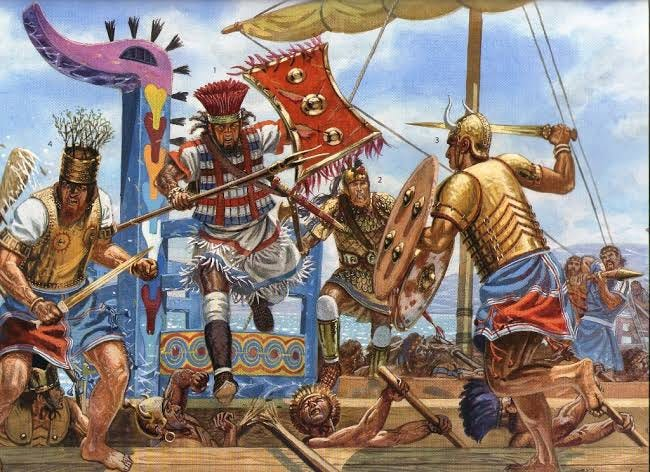
The Sea Peoples were confederations of maritime raiders who attacked Eastern Mediterranean kingdoms around 1200 BCE. Their origins remain debated, but their invasions contributed to the Bronze Age Collapse.

Invasions and Strategies
Texts from Egypt, such as those of Pharaoh Ramesses III, describe coordinated assaults on Egypt and surrounding regions. These invasions disrupted trade, destroyed cities, and weakened established kingdoms.

Cultural and Economic Impact
The raids caused population displacement, disrupted commerce, and accelerated political fragmentation. Some scholars argue that the Sea Peoples indirectly facilitated the rise of smaller, localized powers after the collapse.

Archaeological Evidence
Ruins showing widespread destruction, weapons, and changes in settlement patterns provide clues about their presence. While identity remains uncertain, their legacy is evident in the reshaping of Mediterranean civilizations.

Historical Legacy
The Sea Peoples highlight the vulnerability of interconnected societies to external pressures. Their impact offers insights into migration, conflict, and adaptation in ancient history.

← The Royal Tombs of UrThe Lost Library of Ashurbanipal →
Featured
image_2026-02-03_191542268.png
Feb 3, 2026
Wreck of ancient Roman ship found off coast of Puglia
Feb 3, 2026
Read More →
Feb 3, 2026
image_2026-02-03_185334562.png
Feb 3, 2026
England May Hold the Lost Grave of a Legendary Viking Warlord
Feb 3, 2026
Read More →
Feb 3, 2026
image_2026-02-03_185028605.png
Feb 3, 2026
Lost knife belonging to WW1 soldier to be displayed at archaeology open day in Susse
Feb 3, 2026
Read More →
Feb 3, 2026
image_2026-02-03_184056677.png
Feb 3, 2026
Neanderthals and early humans may have interbred over a vast area
Feb 3, 2026
Read More →
Feb 3, 2026
image_2026-02-03_184007492.png
Feb 3, 2026
Medieval Burial Found in Croatian Bronze Age Burial Mound
Feb 3, 2026
Read More →
Feb 3, 2026
image_2026-02-03_183912818.png
Feb 3, 2026
Contents of 1,900-Year-Old Roman Vial Analyzed
Feb 3, 2026
Read More →
Feb 3, 2026
read more

Powered by The archaeologist