The Qin Shi Huang Necropolis: Why We Haven’t Opened the Emperor’s Tomb
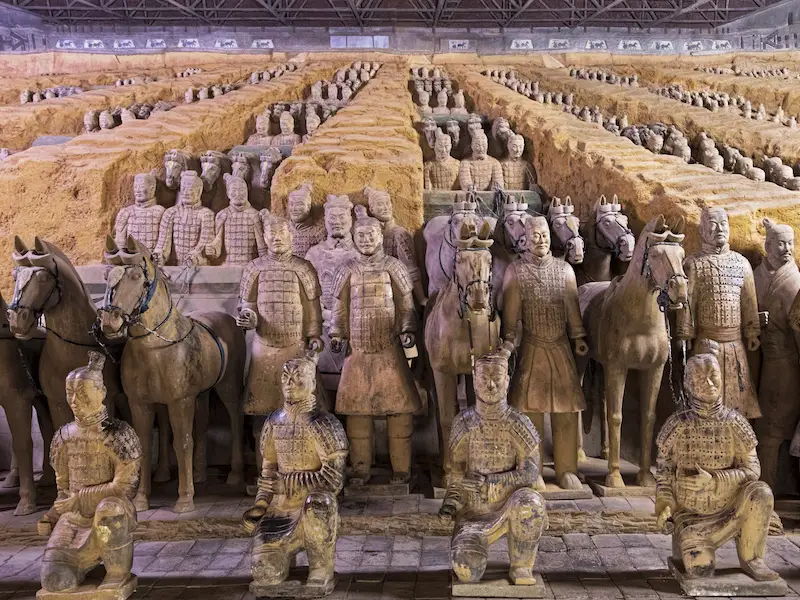
The burial complex of Qin Shi Huang is one of the greatest archaeological sites in the world. Located near Xi'an, the vast Mausoleum of the First Qin Emperor is famous for the nearby Terracotta Army—but the emperor’s actual tomb remains sealed.
Despite decades of research, archaeologists have deliberately chosen not to open it. Here’s why.
1. A Massive and Mysterious Complex
The necropolis is far more than just a tomb.
Scale: Covers around 56 square kilometers
Construction: Built by hundreds of thousands of workers
Design: Modeled as a miniature empire for the afterlife
Central Tomb: Still buried beneath a large earthen mound
Ancient records suggest the tomb contains palaces, treasures, and even entire landscapes.
2. Ancient Descriptions of the Tomb
The historian Sima Qian provides the most detailed account.
Rivers of Mercury: Flowing like real rivers
Ceiling of Stars: Representing the heavens
Mechanical Traps: Designed to protect the tomb
Precious Treasures: Gold, jade, and artifacts
While some details may be exaggerated, modern science has supported at least one claim.
3. The Mercury Problem
Scientific studies have found unusually high levels of mercury in the soil.
Soil Testing: Indicates mercury concentration around the tomb
Supports Ancient Texts: Suggests “rivers of mercury” may be real
Health Risk: Mercury vapor is highly toxic
Environmental Danger: Opening the tomb could release harmful substances
This alone makes excavation risky for archaeologists.
4. Preservation Concerns
Opening the tomb could cause irreversible damage.
Air Exposure: Could destroy delicate artifacts
Oxidation: Paintings and materials may rapidly deteriorate
Past Lessons: Early excavation of the Terracotta Army led to color fading within minutes
Unknown Materials: The tomb may contain fragile organic items
Without the right technology, opening it could mean losing priceless history forever.
5. Technological Limitations
Modern archaeology is careful and slow for a reason.
Non-Invasive Methods: Ground-penetrating radar and remote sensing are preferred
Lack of Safe Techniques: No guaranteed way to preserve everything inside
Future Possibilities: Waiting for better technology
Archaeologists believe it’s better to wait than risk destruction.
6. Cultural and Ethical Considerations
There are also cultural reasons for leaving the tomb sealed.
Respect for the Dead: The tomb is the emperor’s final resting place
Cultural Heritage: Considered sacred by many
Government Policy: China has chosen preservation over excavation
This reflects a balance between science and cultural values.
7. What We Know Without Opening It
Even without entering the tomb, discoveries around it are extraordinary.
Terracotta Army: Thousands of life-sized soldiers
Weapons and Tools: Advanced craftsmanship
Massive Layout: Indicates a highly organized empire
Symbolism: Reflects beliefs about the afterlife and power
The surrounding finds already provide deep insight into Qin dynasty life.
Conclusion
The tomb of Qin Shi Huang remains one of the greatest unopened mysteries in archaeology. While the temptation to explore it is strong, the risks—scientific, environmental, and cultural—are even greater.
For now, the decision is clear: protect first, explore later.
Sometimes, the most responsible way to study history is knowing when not to disturb it.