• MAIN PAGE
  • LATEST NEWS
    • Lost Cities
    • Archaeology's Greatest Finds
    • Underwater Discoveries
    • Greatest Inventions
    • Studies
    • Blog
  • PHILOSOPHY
  • HISTORY
  • RELIGIONS
    • Africa
    • Anatolia
    • Arabian Peninsula
    • Balkan Region
    • China - East Asia
    • Europe
    • Eurasian Steppe
    • Levant
    • Mesopotamia
    • Oceania - SE Asia
    • Pre-Columbian Civilizations of America
    • Iranian Plateau - Central Asia
    • Indus Valley - South Asia
    • Japan
    • The Archaeologist Editor Group
    • Scientific Studies
    • Aegean Prehistory
    • Historical Period
    • Byzantine Middle Ages
    • Predynastic Period
    • Dynastic Period
    • Greco-Roman Egypt
  • Rome
  • PALEONTOLOGY
  • About us
Menu

The Archaeologist

  • MAIN PAGE
  • LATEST NEWS
  • DISCOVERIES
    • Lost Cities
    • Archaeology's Greatest Finds
    • Underwater Discoveries
    • Greatest Inventions
    • Studies
    • Blog
  • PHILOSOPHY
  • HISTORY
  • RELIGIONS
  • World Civilizations
    • Africa
    • Anatolia
    • Arabian Peninsula
    • Balkan Region
    • China - East Asia
    • Europe
    • Eurasian Steppe
    • Levant
    • Mesopotamia
    • Oceania - SE Asia
    • Pre-Columbian Civilizations of America
    • Iranian Plateau - Central Asia
    • Indus Valley - South Asia
    • Japan
    • The Archaeologist Editor Group
    • Scientific Studies
  • GREECE
    • Aegean Prehistory
    • Historical Period
    • Byzantine Middle Ages
  • Egypt
    • Predynastic Period
    • Dynastic Period
    • Greco-Roman Egypt
  • Rome
  • PALEONTOLOGY
  • About us

The Role of Sacred Animals in Ancient Mythology

November 29, 2025

Creatures That Bridged the Human and Divine Worlds

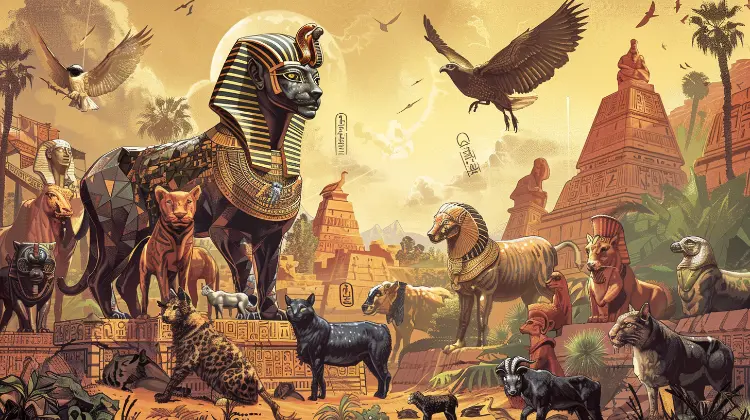
Animals held deep symbolic meaning in ancient cultures. They represented gods, natural forces, virtues, and mysteries that people could not explain.

Bulls in Minoan Crete

The bull symbolized power and fertility. Frescoes show rituals involving acrobatic bull-leaping. The Minotaur myth likely emerged from these traditions.

Cats in Egypt

Cats represented:

  • Protection

  • Grace

  • Divine favor

They were connected to the goddess Bastet and protected homes from pests and spiritual harm.

Wolves in Norse Myth

Wolves symbolized both destruction and protection. Fenrir represented chaos, while Odin’s wolves, Geri and Freki, symbolized loyalty and companionship.

Snakes in Many Cultures

Snakes represented:

  • Rebirth (shedding skin)

  • Healing

  • Mystery

They played key roles in Greek, Indian, and Mesoamerican traditions.

Across the world, animals served as powerful metaphors for divine forces and human nature.
← The Story of the Rosetta Stone: Cracking the Hieroglyphic CodeThe Lost City of Ubar: Arabia’s Atlantis →
Featured
image_2026-01-13_145551915.png
Jan 13, 2026
Archaeologists Say They’ve Unearthed a Massive Medieval Cargo Ship That’s the Largest Vessel of Its Kind Ever Found
Jan 13, 2026
Read More →
Jan 13, 2026
image_2026-01-13_142940648.png
Jan 13, 2026
600-year-old Viking shipwreck is the largest of its kind
Jan 13, 2026
Read More →
Jan 13, 2026
image_2026-01-13_141554876.png
Jan 13, 2026
The wild reason ancient statues always have tiny p*nises, because I bet you’ve wondered
Jan 13, 2026
Read More →
Jan 13, 2026
image_2026-01-13_135852029.png
Jan 13, 2026
Carnoustie Stone Age hall challenges view of Scotland’s early people
Jan 13, 2026
Read More →
Jan 13, 2026
image_2026-01-13_135115162.png
Jan 13, 2026
Archaeologists Found an Entirely New Language Among the Ruins of an Ancient Empire
Jan 13, 2026
Read More →
Jan 13, 2026
image_2026-01-13_134311101.png
Jan 13, 2026
Poison Detected on 60,000-Year-Old Arrowheads
Jan 13, 2026
Read More →
Jan 13, 2026
read more

Powered by The archaeologist