The Roman Emperor Hadrian: The Villa at Tivoli
Introduction
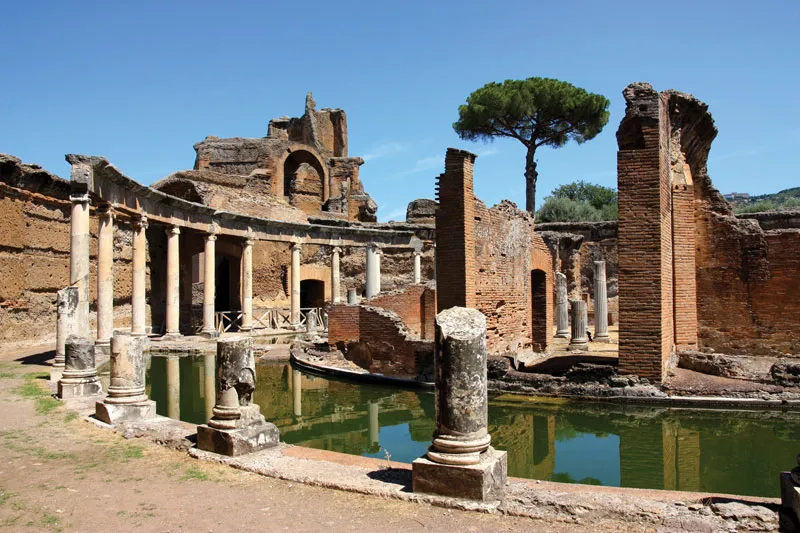
The Villa at Tivoli, also known as Hadrian's Villa, was one of the most magnificent residences of the Roman Empire. Built by Hadrian during the 2nd century CE, the vast complex served as a retreat from the political demands of Rome and reflected the emperor's appreciation for architecture, art, and cultures throughout the empire.
Emperor Hadrian
Hadrian ruled the Roman Empire from 117 to 138 CE. He is remembered as one of Rome's most capable emperors, known for:
Strengthening and consolidating the empire rather than expanding it.
Promoting architecture, engineering, and public works.
Traveling extensively throughout Roman territories.
Constructing famous projects such as Hadrian's Wall.
His travels inspired many of the architectural features incorporated into his villa.
Location and Purpose
Hadrian's Villa is located near the town of Tivoli, about 30 kilometers east of Rome.
The villa was designed to:
Serve as an imperial residence.
Provide a peaceful retreat from Rome.
Host government officials and foreign visitors.
Display the wealth and power of the emperor.
Covering more than 120 hectares, it functioned almost like a small city.
Architectural Features
The Canopus
One of the villa's most famous sections is the Canopus, a long ornamental pool lined with statues and columns.
It was inspired by a canal connecting the Egyptian city of Alexandria to the town of Canopus. This area reflects Hadrian's admiration for Egyptian culture.
The Maritime Theatre
The Maritime Theatre consisted of:
A circular island structure.
A surrounding water moat.
Private rooms and gardens.
Historians believe it may have served as Hadrian's personal retreat within the larger villa.
Libraries and Gardens
The complex contained:
Greek and Latin libraries.
Bath complexes.
Gardens and fountains.
Dining halls.
Temples and ceremonial spaces.
These features demonstrated the emperor's interest in education, philosophy, and luxury.
Cultural Influences
Hadrian traveled throughout the empire and incorporated architectural ideas from many regions, including:
Greece
Egypt
Asia Minor
The Near East
As a result, the villa became a showcase of the diverse cultures under Roman rule.
Archaeological Importance
Today, Hadrian's Villa is one of the best-preserved examples of Roman architecture and engineering.
Archaeologists have discovered:
Elaborate mosaics.
Marble sculptures.
Decorative fountains.
Advanced water systems.
Evidence of sophisticated urban planning.
The site provides valuable insight into imperial life during the height of the Roman Empire.
Modern Recognition
In 1999, UNESCO designated Hadrian's Villa as a UNESCO World Heritage Site because of its exceptional historical and architectural significance.
Conclusion
Hadrian's Villa at Tivoli stands as one of the greatest architectural achievements of ancient Rome. Combining influences from across the empire, the villa reflects Emperor Hadrian's vision, cultural curiosity, and power. Today, its ruins continue to offer a remarkable glimpse into the luxury, innovation, and artistic achieThe Roman Emperor Hadrian: The Villa at Tivoli
Introduction
The Villa at Tivoli, also known as Hadrian's Villa, was one of the most magnificent residences of the Roman Empire. Built by Hadrian during the 2nd century CE, the vast complex served as a retreat from the political demands of Rome and reflected the emperor's appreciation for architecture, art, and cultures throughout the empire.
Emperor Hadrian
Hadrian ruled the Roman Empire from 117 to 138 CE. He is remembered as one of Rome's most capable emperors, known for:
Strengthening and consolidating the empire rather than expanding it.
Promoting architecture, engineering, and public works.
Traveling extensively throughout Roman territories.
Constructing famous projects such as Hadrian's Wall.
His travels inspired many of the architectural features incorporated into his villa.
Location and Purpose
Hadrian's Villa is located near the town of Tivoli, about 30 kilometers east of Rome.
The villa was designed to:
Serve as an imperial residence.
Provide a peaceful retreat from Rome.
Host government officials and foreign visitors.
Display the wealth and power of the emperor.
Covering more than 120 hectares, it functioned almost like a small city.
Architectural Features
The Canopus
One of the villa's most famous sections is the Canopus, a long ornamental pool lined with statues and columns.
It was inspired by a canal connecting the Egyptian city of Alexandria to the town of Canopus. This area reflects Hadrian's admiration for Egyptian culture.
The Maritime Theatre
The Maritime Theatre consisted of:
A circular island structure.
A surrounding water moat.
Private rooms and gardens.
Historians believe it may have served as Hadrian's personal retreat within the larger villa.
Libraries and Gardens
The complex contained:
Greek and Latin libraries.
Bath complexes.
Gardens and fountains.
Dining halls.
Temples and ceremonial spaces.
These features demonstrated the emperor's interest in education, philosophy, and luxury.
Cultural Influences
Hadrian traveled throughout the empire and incorporated architectural ideas from many regions, including:
Greece
Egypt
Asia Minor
The Near East
As a result, the villa became a showcase of the diverse cultures under Roman rule.
Archaeological Importance
Today, Hadrian's Villa is one of the best-preserved examples of Roman architecture and engineering.
Archaeologists have discovered:
Elaborate mosaics.
Marble sculptures.
Decorative fountains.
Advanced water systems.
Evidence of sophisticated urban planning.
The site provides valuable insight into imperial life during the height of the Roman Empire.
Modern Recognition
In 1999, UNESCO designated Hadrian's Villa as a UNESCO World Heritage Site because of its exceptional historical and architectural significance.
Conclusion
Hadrian's Villa at Tivoli stands as one of the greatest architectural achievements of ancient Rome. Combining influences from across the empire, the villa reflects Emperor Hadrian's vision, cultural curiosity, and power. Today, its ruins continue to offer a remarkable glimpse into the luxury, innovation, and artistic achievements of the Roman world.vements of the Roman world.