The Roman Legions in Judea: The Siege of Jerusalem
Introduction
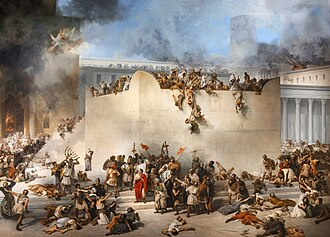
The Siege of Jerusalem (70 CE) was one of the most devastating events in ancient history. It occurred during the First Jewish–Roman War, when the forces of the Roman Empire besieged and destroyed the city of Jerusalem, including the Second Temple. The campaign was led by Roman forces under the future emperor Titus.
Background: Rising Tensions in Judea
The conflict began in the province of Judea, where growing unrest against Roman rule escalated into full rebellion in 66 CE.
Causes of tension included:
Heavy Roman taxation
Religious and cultural friction
Political corruption among Roman-appointed governors
Desire for Jewish autonomy
The rebellion became known as the First Jewish–Roman War.
Roman Military Response
Rome responded by deploying elite legions, including:
Legio V Macedonica
Legio X Fretensis
Legio XV Apollinaris
These units were highly trained professional soldiers of the Roman military system.
The overall command eventually fell to Titus, son of Emperor Vespasian.
The Siege of Jerusalem (70 CE)
Encirclement of the City
Roman forces surrounded Jerusalem, cutting off:
Food supplies
Water access
Escape routes
This tactic aimed to weaken the defenders through starvation and exhaustion.
Internal Conflict
Inside the city, different Jewish factions fought each other, weakening resistance. This internal division made the defense less effective.
Roman Assault
The Romans:
Built siege walls and ramps
Used battering rams and siege towers
Systematically breached the city’s fortifications
The fighting was intense and prolonged, lasting several months.
Destruction of the Second Temple
One of the most significant outcomes was the destruction of the Second Temple of Jerusalem.
This event:
Marked a turning point in Jewish history
Ended centralized temple worship
Led to major changes in Jewish religious practice
Aftermath of the Siege
The fall of Jerusalem had far-reaching consequences:
Massive loss of life and enslavement of survivors
Destruction of the city’s infrastructure
Strengthening of Roman control over Judea
Dispersion of Jewish populations (later associated with the Jewish diaspora)
The war officially ended in 73 CE with the fall of the fortress of Masada.
Historical Significance
The siege is significant because it:
Demonstrates Roman military engineering and discipline
Marks a major moment in Jewish history and identity
Illustrates the power of imperial Rome in suppressing rebellion
Shows the devastating impact of urban siege warfare in antiquity
Conclusion
The Siege of Jerusalem in 70 CE was a defining moment in ancient history. It highlighted the might of the Roman legions and the consequences of rebellion against imperial power. The destruction of the Second Temple remains one of the most important and tragic events in Jewish and Roman history, shaping religious and political developments for centuries to come.