The Viking Age Mercenaries: The Varangian Guard in Byzantium
Introduction
The Varangian Guard was one of the most famous mercenary units of the medieval world. Formed in the Byzantine Empire, it was primarily composed of warriors from Scandinavia and later Anglo-Saxon England. These warriors were known for their loyalty, strength, and fearsome reputation in battle.
Origins of the Varangian Guard
The Guard emerged in the late 10th century CE under the Byzantine emperor Basil II.
Why Foreign Warriors?
The Byzantines preferred foreign mercenaries because:
They were less likely to be involved in court politics
They had strong battlefield reputations
They were considered highly loyal to the emperor who paid them
Many early Varangians came from the Viking world of Scandinavia and the Kievan Rus’.
Role in the Byzantine Empire
The Varangian Guard served as elite protectors of the emperor in Byzantine Empire.
Duties Included:
Personal bodyguard of the emperor
Participation in major military campaigns
Guarding imperial palaces and treasures
Enforcing imperial authority in critical situations
Their loyalty was famously directed to the emperor rather than local factions.
Weapons and Fighting Style
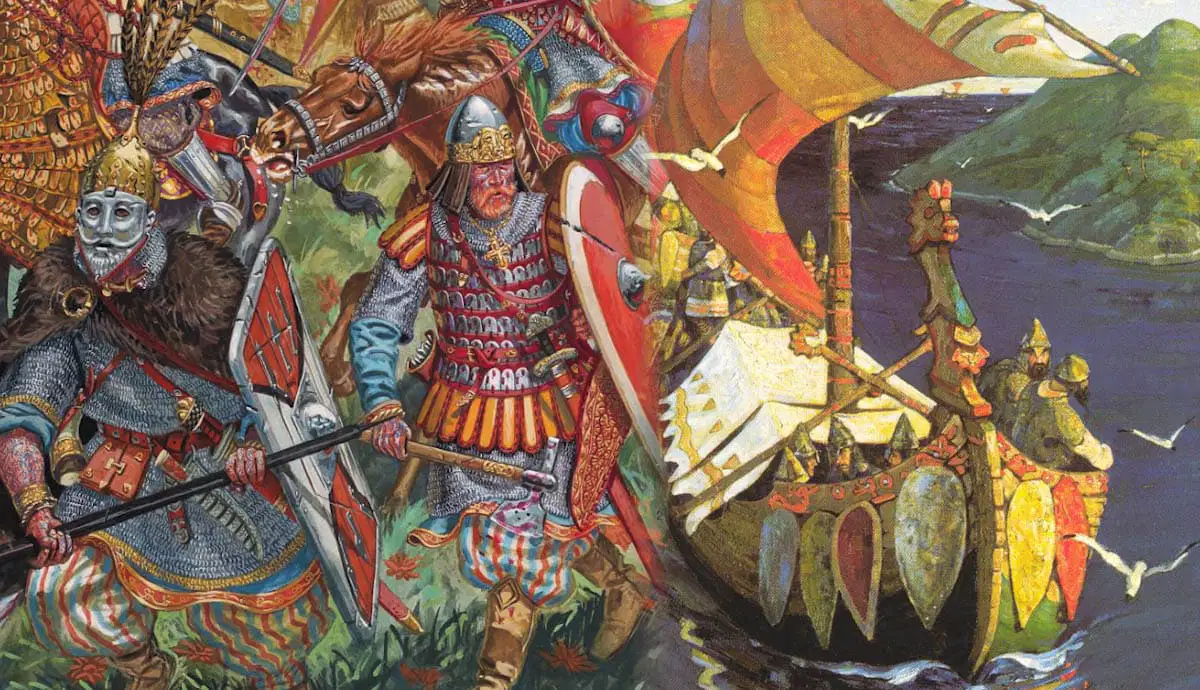
Varangians were known for their heavy infantry combat style.
Common Weapons:
Large two-handed axes
Swords and spears
Heavy shields
They were often used as shock troops in battles, breaking enemy lines with powerful axe strikes.
The Varangians in Constantinople
The capital of the Byzantine Empire, Constantinople, was where the Varangian Guard was stationed.
They were present during:
Imperial ceremonies
Coronations
Court security operations
Defense of the imperial palace complex
Their distinctive appearance and foreign origin made them both feared and respected.
Famous Varangian Warriors
One of the most well-known groups of Varangians came from England after the Norman Conquest of 1066. Many displaced Anglo-Saxon warriors joined the Guard, seeking service in Byzantium.
Reputation and Loyalty
The Varangian Guard gained a reputation for:
Extreme loyalty to the emperor
Brutal effectiveness in combat
Resistance to corruption and bribery
Byzantine sources often describe them as the emperor’s “axe-bearing protectors.”
Decline of the Varangian Guard
Over time, the Guard became less distinctively Norse as recruitment expanded to other groups.
Their importance declined after:
The weakening of Byzantine power after the Fourth Crusade (1204 CE)
Increasing reliance on local and Latin mercenaries
Political instability within the empire
Legacy
The Varangian Guard remains one of the most iconic mercenary units in history. It represents the blending of Viking martial culture with Byzantine imperial tradition.
Their legacy includes:
Strong Norse influence in medieval Mediterranean warfare
Cultural exchange between Northern Europe and Byzantium
A lasting image of Viking warriors serving in imperial courts
Conclusion
The Varangian Guard symbolized loyalty, strength, and cultural fusion in the medieval world. Serving as elite protectors of the Byzantine emperors, these Viking-origin warriors became an essential part of imperial power in Constantinople and left a lasting mark on both Norse and Byzantine history.