The Viking Age Swords: The Pattern-Welding Technique
Introduction
During the Viking Age (approximately 793–1066 CE), swords were among the most prized and prestigious weapons. Owning a sword symbolized wealth, status, and military skill. One of the most remarkable techniques used by Viking blacksmiths was pattern welding, a method that produced strong, flexible, and visually distinctive blades.
What is Pattern Welding?
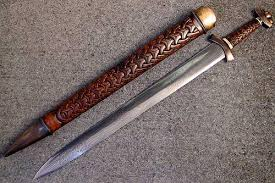
Pattern welding is a metalworking technique in which blacksmiths forge together strips of iron and steel. These strips are twisted, folded, and hammered repeatedly to create a single blade with decorative patterns.
The resulting blade displayed distinctive wavy or spiral designs along its surface, making each sword unique.
How the Technique Worked
The process involved several steps:
Strips of iron and steel were heated in a forge.
The heated strips were twisted into various patterns.
Multiple twisted rods were welded together by hammering them while hot.
A harder steel edge was often attached to improve cutting performance.
The blade was shaped, sharpened, and polished.
This combination of metals helped create a weapon that balanced strength and flexibility.
Advantages of Pattern-Welded Swords
Strength
Combining different types of metal reduced the likelihood of the blade breaking during combat.
Flexibility
The sword could absorb impact without becoming too brittle.
Sharpness
Steel edges allowed the blade to maintain a sharper cutting surface.
Appearance
The intricate patterns demonstrated the skill of the blacksmith and increased the weapon's value.
Viking Swords and Society
Among the Vikings, swords were more than weapons. They were symbols of social status and were often passed down through generations.
Many swords:
Were given personal names.
Appeared in legends and sagas.
Were buried with their owners.
Served as signs of wealth and prestige.
Because producing a sword required significant skill and resources, only wealthy warriors could usually afford one.
Famous Viking Sword Types
Some Viking swords are classified according to the Petersen Typology, developed by Norwegian archaeologist Jan Petersen. This system categorizes swords based on the design of their hilts and guards.
Another famous group includes the Ulfberht swords, renowned for their exceptional craftsmanship and advanced metallurgy.
Decline of Pattern Welding
As metalworking technology improved during the late Viking Age and Middle Ages, blacksmiths gained access to higher-quality steel. This reduced the need for pattern welding because stronger, more uniform blades could be produced from a single type of steel.
By the 11th century, pattern welding became less common, though its decorative influence continued in later sword-making traditions.
Historical Importance
Pattern welding represents one of the most advanced metallurgical techniques of the early medieval period. It demonstrates the skill of Viking craftsmen and their ability to create weapons that were both functional and beautiful.
Conclusion
The pattern-welding technique played a vital role in the production of Viking Age swords. By combining different metals into intricate designs, Viking blacksmiths created blades that were durable, effective, and visually striking. These swords remain important artifacts today, providing insight into Viking technology, warfare, and culture.