L'Anse aux Meadows National Historic Site
4.8
🏛️ Historical place
ClosedOpens at 9.00 am
The L'Anse aux Meadows National Historic SiteClick to open side panel for more information—located on the northernmost tip of Newfoundland, Canada—stands as the only authenticated Norse settlement in North America. Discovered in 1960 by Helge and Anne Stine Ingstad, this site provides definitive archaeological proof of a transatlantic crossing that occurred roughly 500 years before the arrival of Christopher Columbus.
I. The Nature of the Settlement: Not a Colony, but a Gateway
Archaeological consensus suggests that L'Anse aux Meadows was not intended to be a permanent, self-sustaining colony. Instead, it served as a highly specialized base camp or a "gateway" site. Its primary function was threefold:
Ship Repair and Maintenance: The site featured a well-equipped iron-smelting forge and a carpenter’s workshop, which were essential for repairing the Norse knarrs (cargo ships) after their arduous voyages across the North Atlantic.
Exploration Outpost: It served as a staging ground for deeper expeditions into the Gulf of St. Lawrence, likely to scout for resources like timber, wild grapes, and fur—commodities that were scarce in the Norse settlements of Greenland.
Seasonal Habitation: Analysis of the sod-walled longhouses suggests a seasonal occupation, occupied by a relatively small group—likely no more than 70 to 90 people—for short periods before they returned to Greenland or Iceland.
II. Archaeological Evidence and "Vinland"
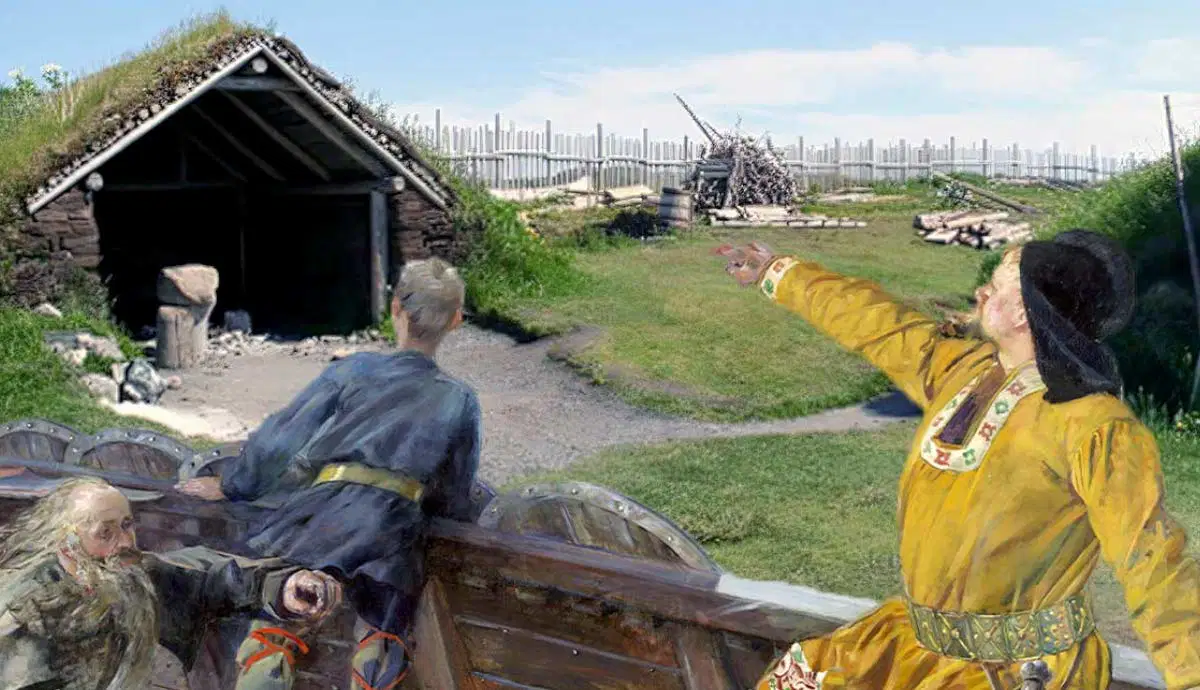
The site consists of eight turf-walled structures, which were meticulously excavated to reveal the classic Norse building style of the period.
The Forgery: The discovery of iron-rivets and slag in a designated iron-working hut was a "smoking gun," as the indigenous people of the region did not practice iron metallurgy at the time. This proved the site was definitively Norse.
The Spindle Whorl: The recovery of a stone spindle whorl, used in the production of woollen yarn, is particularly significant because it indicates the presence of women. This suggests that the expedition was a collaborative domestic effort, not merely a male-only raiding party.
Vinland Connection: Most scholars correlate this site with the "Vinland" (Land of Wine) described in the Saga of the Greenlanders and the Saga of Erik the Red. While those sagas contain mythical embellishments, L'Anse aux Meadows provides the physical reality behind the epic narratives of Norse voyages across the Ginnungagap.
III. Daily Life and Trade
The artifacts found at the site offer a stark contrast between Norse life and the local environment.
Norse Materials: The discovery of a bronze cloak pin, common in 11th-century Norse fashion, demonstrates the continuity of Norse material culture even at the very edge of the known world.
Integration and Interaction: Evidence suggests that while the Norse occupied the site, they likely had encounters with indigenous populations—the Dorset and later the Beothuk—though the nature of these encounters (peaceful trade versus hostile skirmishes) remains a subject of intense archaeological debate.
IV. Abandonment and Historical Legacy
The site was abandoned after perhaps only a few years of intermittent use. The reasons remain speculative but likely involved the difficulty of maintaining a supply line across such a vast distance, the lack of sufficient land for sustained agriculture, and the logistical challenges of living in a harsh, unfamiliar climate.
Despite its short life, the site fundamentally altered our understanding of human migration. It proved that the North Atlantic was a bridge, not a barrier, and that Viking maritime technology—unrivaled in its ability to navigate open oceans—had successfully navigated the "New World" centuries before it was formalized in European history.