• MAIN PAGE
  • LATEST NEWS
    • Lost Cities
    • Archaeology's Greatest Finds
    • Underwater Discoveries
    • Greatest Inventions
    • Studies
    • Blog
  • PHILOSOPHY
  • HISTORY
  • RELIGIONS
    • Africa
    • Anatolia
    • Arabian Peninsula
    • Balkan Region
    • China - East Asia
    • Europe
    • Eurasian Steppe
    • Levant
    • Mesopotamia
    • Oceania - SE Asia
    • Pre-Columbian Civilizations of America
    • Iranian Plateau - Central Asia
    • Indus Valley - South Asia
    • Japan
    • The Archaeologist Editor Group
    • Scientific Studies
    • Aegean Prehistory
    • Historical Period
    • Byzantine Middle Ages
    • Predynastic Period
    • Dynastic Period
    • Greco-Roman Egypt
  • Rome
  • PALEONTOLOGY
  • About us
Menu

The Archaeologist

  • MAIN PAGE
  • LATEST NEWS
  • DISCOVERIES
    • Lost Cities
    • Archaeology's Greatest Finds
    • Underwater Discoveries
    • Greatest Inventions
    • Studies
    • Blog
  • PHILOSOPHY
  • HISTORY
  • RELIGIONS
  • World Civilizations
    • Africa
    • Anatolia
    • Arabian Peninsula
    • Balkan Region
    • China - East Asia
    • Europe
    • Eurasian Steppe
    • Levant
    • Mesopotamia
    • Oceania - SE Asia
    • Pre-Columbian Civilizations of America
    • Iranian Plateau - Central Asia
    • Indus Valley - South Asia
    • Japan
    • The Archaeologist Editor Group
    • Scientific Studies
  • GREECE
    • Aegean Prehistory
    • Historical Period
    • Byzantine Middle Ages
  • Egypt
    • Predynastic Period
    • Dynastic Period
    • Greco-Roman Egypt
  • Rome
  • PALEONTOLOGY
  • About us

The Voynich Manuscript: New Linguistic Approaches to History’s Most Mysterious Book

April 17, 2026

The Voynich Manuscript: New Linguistic Approaches to History’s Most Mysterious Book

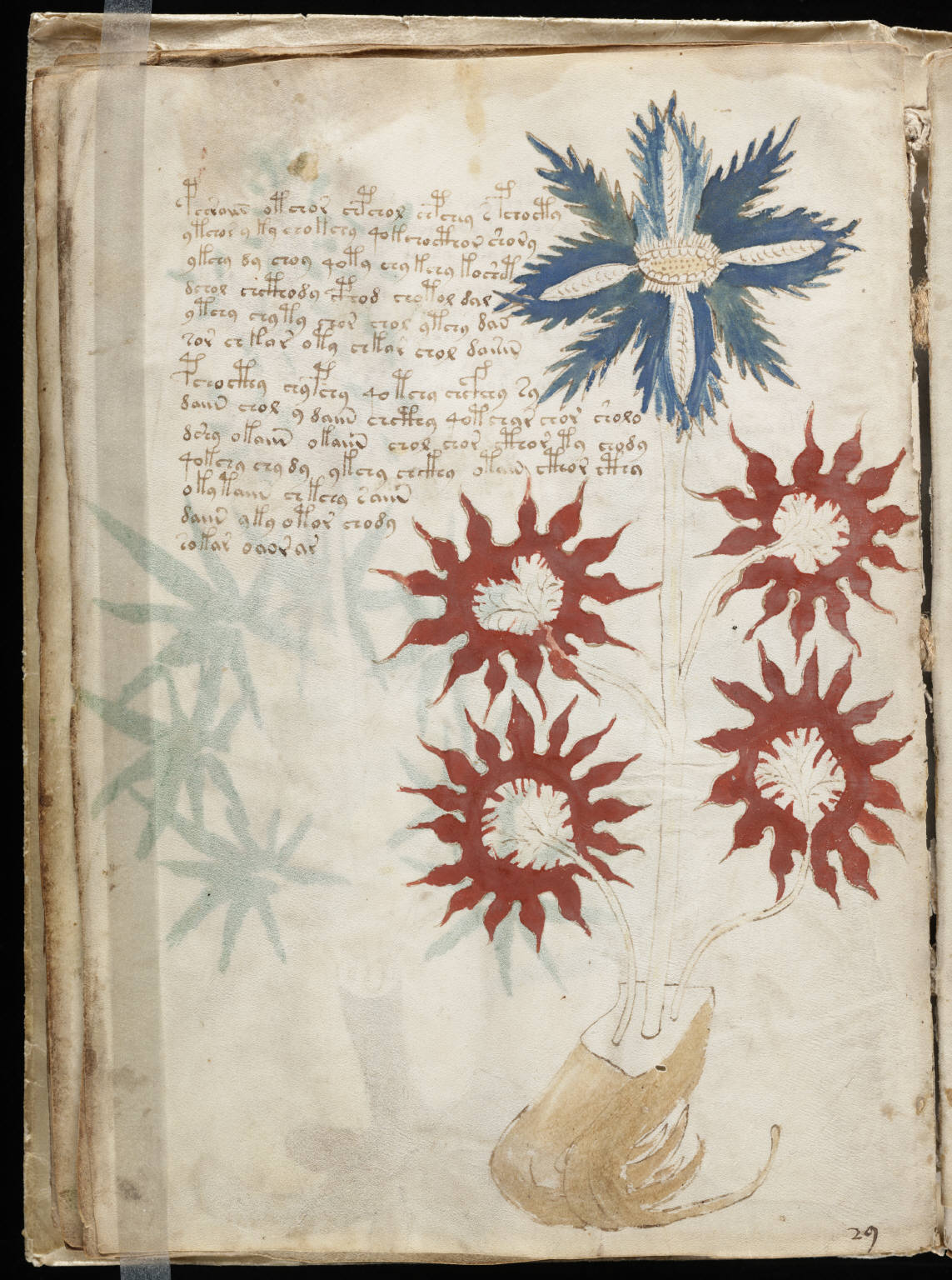
For centuries, the Voynich Manuscript has been the ultimate "unbreakable code." Written in an unknown script by an unknown author and filled with bizarre illustrations of non-existent plants, astrological charts, and naked figures in green baths, it has defeated the world’s greatest minds—from Cold War codebreakers to modern AI algorithms. However, recent years have seen a shift. Instead of treating it purely as a cryptographic puzzle, scholars are applying new linguistic approaches that suggest the book isn’t a hoax, but a sophisticated record of a lost dialect or a pioneering attempt at a constructed language.

The Linguistic Battlefield: Cipher or Language?

The primary debate surrounding the manuscript is whether the "Voynichese" text is a cipher (a message hidden behind substituted characters) or a natural language written in a unique alphabet. Traditional cryptanalysis failed because the text follows Zipf’s Law, which states that in any natural language, the frequency of a word is inversely proportional to its rank in the frequency table. Most hoaxes or random gibberish don't adhere to this pattern.

Recent linguistic studies have focused on computational linguistics. In 2018, researchers at the University of Alberta used "algorithmic decipherment" to suggest the language might be an encoded form of Hebrew, albeit with the vowels removed and the letters rearranged. Others argue for Proto-Romance, suggesting the manuscript is a compendium of medical advice written in a vulgar Latin dialect that existed before the Romance languages fully diverged.

The "Universal Language" Theory

Another emerging theory is that the manuscript represents a constructed language (conlang). During the late medieval and early Renaissance periods, there was an intellectual obsession with creating a "universal language" that could perfectly describe the essence of things. Under this lens, the strange botanical drawings aren't failed attempts at drawing real plants, but rather "philosophical plants" categorized by a logical, albeit forgotten, linguistic system.

Why it Matters Today

The Voynich Manuscript is more than a curiosity; it is a test case for how we understand the evolution of human thought. If it is a medical text in a lost dialect, it offers a window into medieval European folk medicine that was never officially recorded. If it is a cipher, it represents a level of cryptographic sophistication that predates the modern era by centuries. As AI continues to map the patterns of human communication, the Voynich remains the final frontier—a silent book waiting for the right linguistic key to turn the lock.


← Lost Civilizations of the Sahara: Evidence of a Once-Green Desert EmpireArchaeologists Unearthed a 6,200-Year-Old Megastructure. Its Purpose Is Still a Mystery. →
Featured
image_2026-04-15_232853833.png
Apr 17, 2026
The Sutton Hoo Helmet: Symbolism and Power in Anglo-Saxon England
Apr 17, 2026
Read More →
Apr 17, 2026
image_2026-04-15_232812659.png
Apr 17, 2026
Neanderthal Art: Challenging the Notion of Our "Primitive" Cousins
Apr 17, 2026
Read More →
Apr 17, 2026
image_2026-04-15_232658559.png
Apr 17, 2026
The Mystery of the Moai: How the Rapa Nui Truly Moved Their Giants
Apr 17, 2026
Read More →
Apr 17, 2026
image_2026-04-15_232557087.png
Apr 17, 2026
Lost Civilizations of the Sahara: Evidence of a Once-Green Desert Empire
Apr 17, 2026
Read More →
Apr 17, 2026
image_2026-04-15_232332327.png
Apr 17, 2026
The Voynich Manuscript: New Linguistic Approaches to History’s Most Mysterious Book
Apr 17, 2026
Read More →
Apr 17, 2026
image_2026-04-15_223718373.png
Apr 17, 2026
Archaeologists Unearthed a 6,200-Year-Old Megastructure. Its Purpose Is Still a Mystery.
Apr 17, 2026
Read More →
Apr 17, 2026
read more

Powered by The archaeologist