Be prepared for "Euro summer" in Florence to look a little different this year.
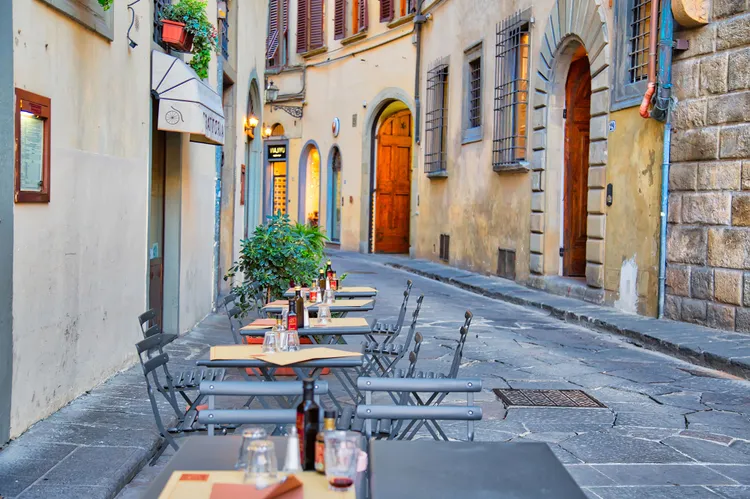
Outdoor dining on a street in Florence, Italy.
Florence Tightens Rules on Outdoor Dining in Historic Center
Florence—long celebrated for its vibrant street life, iconic food culture, and Renaissance charm—has introduced sweeping new regulations that are reshaping how the city looks and feels.
As of February 2026, outdoor dining has been banned on 60 of the city’s most historic streets, while stricter rules now apply to 73 additional roads. Within just 20 days of enforcement, authorities had already issued 30 fines.
Protecting a UNESCO Heritage Site
The new measures, which took effect on February 11, represent Florence’s most significant update to public space regulations in 15 years. Developed by the city government in collaboration with cultural authorities, the policy aims to safeguard the historic center of UNESCO World Heritage status.
Officials are targeting the visual clutter that grew during the COVID-19 pandemic—such as plastic coverings, branded umbrellas, and oversized terrace setups—that altered the city’s traditional streetscape.
Where Outdoor Dining Is Affected
The restrictions vary depending on location:
Fully banned areas include streets near Ponte Vecchio, Uffizi Gallery, and Via Roma
Partially restricted zones allow outdoor seating but under strict guidelines
Across the city, plastic materials and visible advertising are no longer allowed. Instead, restaurants are encouraged to decorate with seasonal plants and flowers to better match Florence’s historic aesthetic.
Broader Changes Coming Soon
The outdoor dining ban is just one part of a wider effort to manage public space. Starting April 1, rental e-scooters will also be prohibited in the historic center, further reducing modern intrusions in key tourist areas.
Mixed Reactions From Experts and Businesses
The new rules have sparked debate among locals and experts. Some heritage specialists, including academics from University of Bologna, argue that the regulations still fall short, focusing too much on appearances rather than limiting overall crowding.
Meanwhile, restaurant owners—especially small, traditional trattorias—warn that losing outdoor seating could seriously impact their survival, as indoor space is already limited.
Legal Challenges Begin
Opposition is also taking a legal turn. The historic Caffè Giubbe Rosse, established in 1897, is leading a lawsuit against the city. Several neighboring businesses in Piazza della Repubblica have joined the challenge, claiming the rules are being applied unfairly compared to nearby establishments.
A Changing Dining Experience
As the debate continues, one thing is clear: Florence’s famous dining scene is entering a new phase. Visitors this season can expect a different atmosphere—one that balances preserving the city’s historic beauty with the realities of modern tourism and local business needs.