Introduction
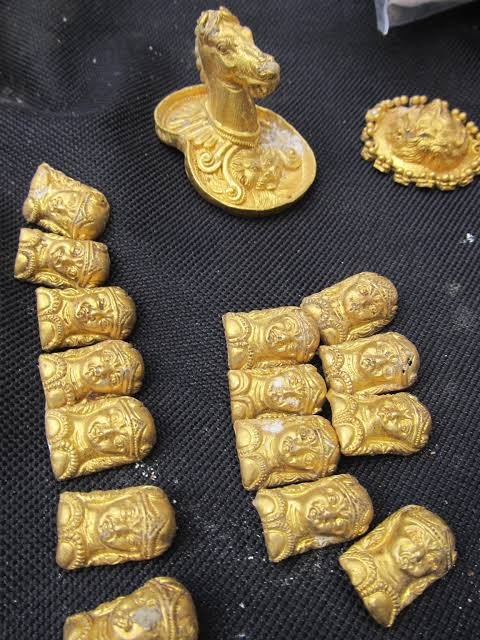
The Thracians were one of the most populous, militarily formidable, and culturally brilliant civilizations of the ancient Mediterranean, occupying a vast territory that encompassed modern Bulgaria, northern Greece, and parts of Romania and Turkey. Described by Herodotus as second in number only to the Indians, the Thracians were renowned across the classical world as fierce mercenaries, expert horse-breeders, and peerless metallurgists who created breathtaking hoards of intricate gold jewelry and silver armor. Yet, because the Thracians lacked a unified written script of their own, their history was written almost entirely by their Greek and Roman rivals, who frequently stereotyped them as fractured, uncultured barbarians prone to tribal infighting.
A central mystery persisted for centuries: what happened to this massive population of golden warriors after their territory was formally annexed by the Roman Empire, and how much of their biological heritage survived into the modern populations of the Balkans? To answer this, paleogenomic researchers undertook a comprehensive study of ancient DNA extracted from Bulgaria’s spectacular Thracian burial mounds.
The Genetic Signature of the Valley of the Kings
The breakthrough in mapping Thracian population dynamics came from sequencing human remains discovered within the monumental stone tombs of Bulgaria’s "Valley of the Thracian Kings." These tombs, often covered by immense earthen barrows, preserved the skeletons of both high-ranking aristocratic warriors buried with their gold-trimmed armor and common citizens from surrounding settlements. The genome-wide data revealed that the Thracians possessed a distinct, highly homogenized genetic profile that emerged during the Middle-to-Late Bronze Age. This profile was characterized by a balanced blend of Early European Farmer ancestry, Western Hunter-Gatherer elements, and a significant influx of steppe-derived Yamnaya DNA.
Paternally, the Thracian warriors were characterized by specific branches of Y-chromosome haplogroups, including sub-lineages of I2, R1a, and E-V13, reflecting a deep, indigenous lineage stabilization that occurred over centuries of localized development. Crucially, the genetic data tracked what happened during the turbulent transition from late antiquity to the early Middle Ages.
When the Roman and Byzantine empires collapsed along the Danube frontier, Bulgaria was settled by large numbers of Slavic-speaking migrants. The paleogenomic timeline shows that rather than completely wiping out the local population, the incoming Slavs heavily admixed with the existing indigenous Thracian substrate. Modern Bulgarians, Macedonians, and neighboring populations carry a substantial biological inheritance from these ancient steppe-derived warriors, showing that while the Thracian language and political structures were completely erased by Latinization and subsequent Slavic cultural assimilation, their physical DNA was successfully preserved within the modern Slavic-speaking populations of the eastern Balkans.
Conclusion
The archaeogenetic investigation into Thracian DNA fundamentally alters the historical narrative of southeastern Europe, rescuing the Thracians from their status as a "vanished" ancient people. The molecular data demonstrates that a population's genetic legacy can heavily endure long after their language, religion, and material culture have been entirely submerged by historical migrations.
The brilliant artisans who crafted the Panagyurishte gold treasure and the elite horsemen who fought the legions of Rome never truly disappeared; instead, their biological signatures were woven directly into the fabric of the modern Bulgarian genome. Ultimately, Thracian paleogenomics bridges the gap between ancient myth and modern identity, proving that the golden warriors of the Balkans left.