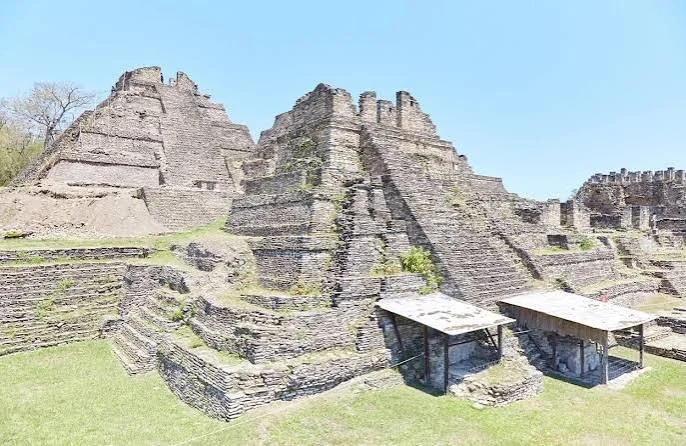
Perched on a hillside overlooking the Ocosingo Valley in Chiapas, Mexico, Toniná is a unique Classic period Maya site defined by its vertical architecture. Unlike lowland cities like Tikal or Copán, which spread across flat plains, Toniná's builders transformed an entire natural hillside into a massive, seven-tiered acropolis, creating a single, colossal 71-meter-tall step-pyramid structure that dominates the landscape.
This multi-level acropolis is a complex maze of stone temples, vaulted administrative chambers, long galleries, and elite burial vaults connected by a web of stone staircases. At the sixth level sits the famous Temple of the Inscriptions, a sanctuary decorated with extensive stucco reliefs and hieroglyphic panels. These inscriptions record a detailed, aggressive history of military victories, the capture of foreign lords, and the performance of sacred bloodletting rituals by Toniná's rulers.
The site is famous for its distinct artistic style, which favored highly expressive, fully three-dimensional stone and stucco sculptures over traditional flat relief carvings. The acropolis walls display large, dramatic murals, including the "Frieze of the Four Suns," a complex limestone relief depicting a skeletal death god holding decapitated heads, representing the underworld layers of Maya cosmology. Toniná operated as a fierce, militaristic state that specialized in high-altitude defensive warfare, using its towering acropolis to watch over the trade routes connecting the Chiapas highlands with the Usumacinta river basin.