Aztec-Era Domestic Structure Unearthed in Tlatelolco
Archaeologists from the National Institute of Anthropology and History (INAH) have uncovered a domestic structure containing three human burials, a stone tlecuil, and a significant collection of Aztec III–style ceramics. The findings are associated with Late Postclassic Tlatelolca settlements dating from 1325 to 1521.
The Tlatelolca were a Nahuatl-speaking group originally part of the Mexica who settled in central Mexico in the 13th century. They later separated from the Mexica and established Mexico-Tlatelolco as an altepetl, or city-state. After the Battle of Tlatelolco in 1473, the city was incorporated into Tenochtitlan and required to pay tribute every eighty days.
The domestic structure was excavated along Eje Central Lázaro Cárdenas in the Guerrero neighborhood, near the Tlatelolco Archaeological Zone.
Project director Jimena Rivera Escamilla noted that studies have identified evidence of three distinct periods of Mexica and Tlatelolca occupation at the site. One of the most notable findings is the absence of lakebed deposits in the area, which provides new insights into the local environment during the period of settlement.
Insights into Ancient Tlatelolco Settlement and Burial Practices
The findings indicate the presence of stable ground during the Late Postclassic period, providing valuable clues about the boundaries of the ancient islet and the settlement zones between Tlatelolco and Tenochtitlan.
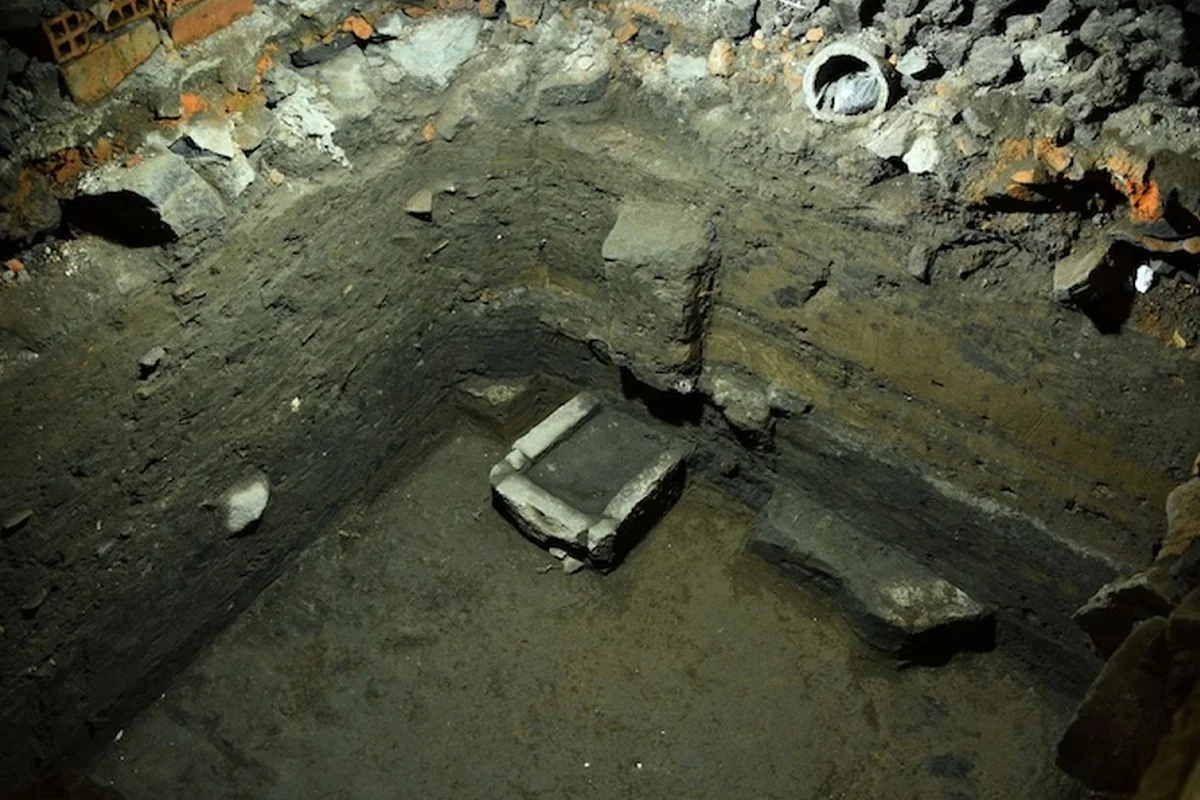
To study the area’s stratigraphy, archaeologists opened nine exploratory trenches, each measuring two metres per side, along with a test pit and a 3.85-metre-deep well. These investigations revealed 24 distinct layers of clay, reflecting multiple phases of human occupation and terrain modification.
The three burials correspond to the most recent occupation phase, while earlier layers contained traces of walls, floor fragments, and the stone tlecuil.
Archaeologists note that the tlecuil, together with spindle whorls, bowls, multicoloured obsidian blades, figurines, and a seal depicting a monkey associated with the wind god Ehécatl, indicates that the structure functioned as a domestic household for a family of moderate social standing.
The burials themselves are notable: one is a young infant, placed face-up in an oval pit with offerings including a Texcoco-style biconical cup and animal bones; the second is a newborn; and the third is a young adult positioned in a foetal posture.