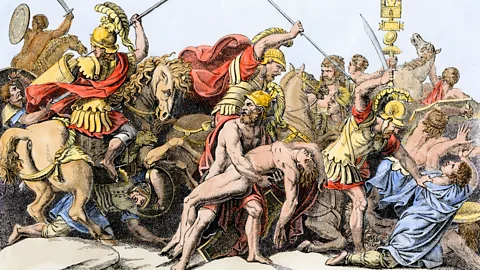
The Trojan War, described in the Iliad, is one of the most famous stories in history. It tells of heroes, gods, and a legendary conflict between the Greeks and the city of Troy. However, archaeological discoveries at Hisarlik suggest that this story may be based on real historical events, though not exactly as described in myth.
1. The Site of Troy
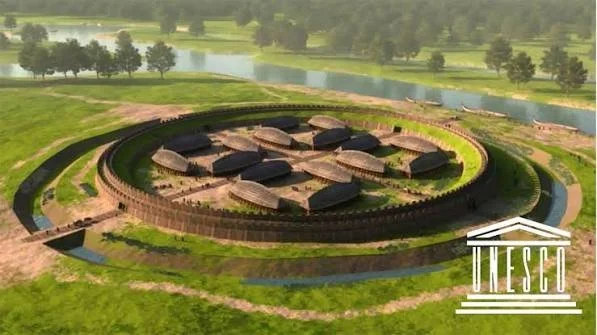
Hisarlik is widely accepted as the location of ancient Troy.
Location: Situated in modern Turkey, near the Dardanelles, a strategic waterway linking the Aegean and Black Seas.
Excavation: First excavated by Heinrich Schliemann in the 1870s, who believed he had found Homer’s Troy.
Multiple Layers: Archaeologists discovered at least nine major layers (Troy I–IX), showing that the city was destroyed and rebuilt many times over thousands of years.
This proves that Troy was not just a myth—it was a real city with a long and complex history.
2. Evidence of Conflict
Several layers of Hisarlik show signs of destruction, suggesting warfare.
Troy VI & VII: These layers (around 1700–1100 BCE) are the strongest candidates for the historical Trojan War.
Destruction Signs: Burned structures, broken walls, and scattered weapons indicate violent events.
Human Remains: Some evidence suggests sudden death and possible siege conditions.
Repeated Conflicts: The city appears to have faced multiple attacks over time, not just one major war.
This suggests that the Trojan War may not have been a single event, but rather a combination of several conflicts remembered as one story.
3. Myth vs Reality
The Iliad, attributed to Homer, mixes history with mythology.
Oral Tradition: The story was passed down for centuries before being written, allowing exaggeration and changes.
Gods and Heroes: Divine interventions and superhuman characters are likely symbolic rather than factual.
Trojan Horse: There is no archaeological evidence of a giant wooden horse. It may represent a trick, siege engine, or metaphor for infiltration.
No Unified War Evidence: Archaeology does not support a single large-scale war involving all Greek states, as described in the epic.
Instead, the Iliad may reflect real tensions between Mycenaean Greeks and Anatolian cities, shaped into a dramatic narrative.
4. Archaeological Insights
Excavations at Hisarlik reveal a thriving and strategic city.
Fortifications: Massive stone walls and towers show that Troy was well-defended.
Trade Importance: Its location allowed control over trade routes, making it wealthy and desirable.
Urban Life: Houses, storage areas, and artifacts show a developed society.
Cultural Connections: Evidence suggests interaction with both Greek and Anatolian cultures.
These findings explain why Troy would have been a target for conflict—it was economically and strategically valuable.
5. Historical Significance
The Trojan War highlights how myth and history can merge over time. Archaeology helps uncover the truth behind legendary stories, revealing that even famous myths may have real foundations.
It also shows how storytelling preserves history, even if details change across generations.
Do you think myths are based more on real events, or shaped mainly by imagination and storytelling?